Fertilizer granulators are core equipment in fertilizer production, capable of transforming powdered raw materials into uniform, well-formed granular fertilizer; this effectively improves fertilizer utilization rates and facilitates storage and application. Based on granulation processes, operating principles, and applicable raw materials, the mainstream fertilizer granulators on the market fall into four categories. These cater to diverse production needs—such as organic, compound, and inorganic fertilizers—and are widely used in fertilizer processing plants of all sizes.
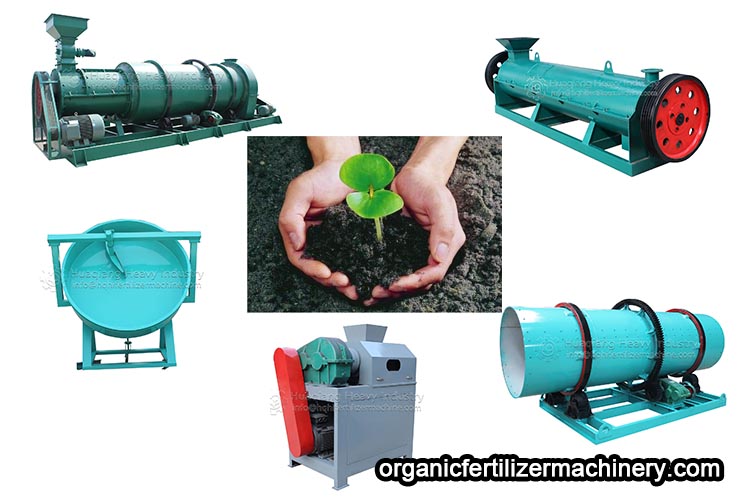
The disc granulator is the most commonly used wet granulation equipment for small- and medium-sized fertilizer production. It relies on the steady rotation of an inclined disc to cause materials—mixed with moisture and binders—to tumble and agglomerate continuously. Fine particles gradually adhere to one another and grow, ultimately forming round, uniform granules. This equipment features a simple structure and ease of operation, offering high granulation rates and excellent granule quality. With low setup and maintenance costs, it is particularly well-suited for the refined production of organic and compound fertilizers. Its main drawback is its reliance on a wet process, requiring subsequent drying and cooling; thus, it is best suited for small- to medium-scale production lines.
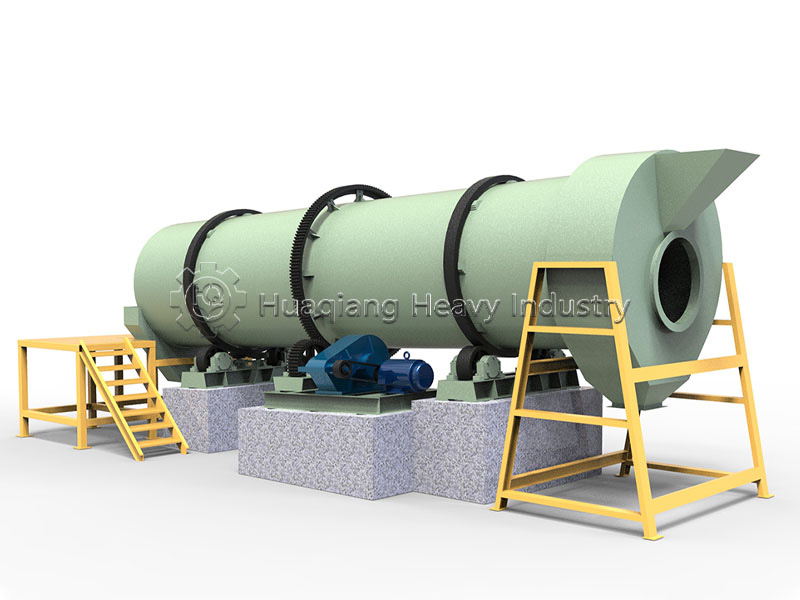
The rotary drum granulator is a mainstay in large-scale compound fertilizer production lines, also utilizing a wet granulation process. The equipment employs a large, continuously rotating drum combined with a binder spray system, causing materials inside to undergo friction, compression, and agglomeration. Its greatest advantages are high output, stable operation, and strong adaptability; it can process various inorganic and organic material mixtures, making it ideal for large-scale, assembly-line production. However, the equipment is bulky and requires a large footprint, as well as extensive auxiliary drying and dust-removal systems, resulting in relatively high initial investment costs.
The double-roller extrusion granulator is a popular dry granulation device. It requires no water or binders, instead using the mechanical pressure of two counter-rotating rollers to directly compress dry powder materials into shape. The process is simple and eliminates the need for subsequent drying, significantly saving energy and production costs. Granules are formed in a single step at ambient temperature, resulting in high hardness and resistance to caking. Granule shapes can be customized by changing molds, offering great versatility. Widely used in the production of compound fertilizers, trace-element fertilizers, and inorganic fertilizers, it is a preferred choice for energy-efficient production in small- and medium-sized factories.
Flat-die pellet machines are primarily designed for granulating high-fiber materials, specifically catering to coarse-fiber organic fertilizer feedstocks such as crop stalks and livestock manure. The equipment utilizes pressure rollers to force material through the holes of a flat die, creating dense, stable cylindrical granules. Highly adaptable to coarse-fiber materials and capable of producing a uniform output, these machines effectively resolve issues associated with loose or hard-to-mold organic fertilizer raw materials, making them ideal for the processing and production of various biomass-based organic fertilizers.
In summary, different fertilizer granulators offer distinct advantages: wet-process equipment yields high-quality granules, while dry-process equipment is energy-efficient and highly productive. Enterprises can select the most suitable model based on production scale, raw material types, and product requirements to enhance both the quality and efficiency of fertilizer production.



.jpg)