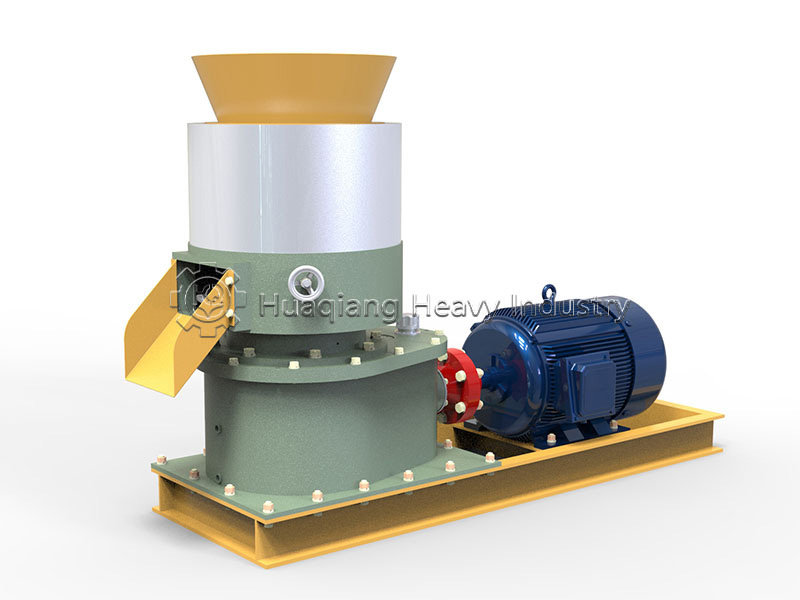
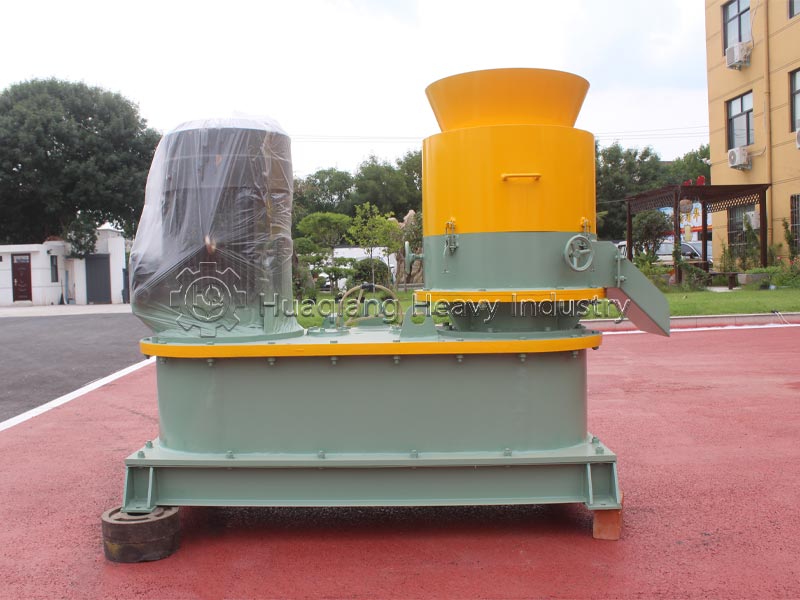
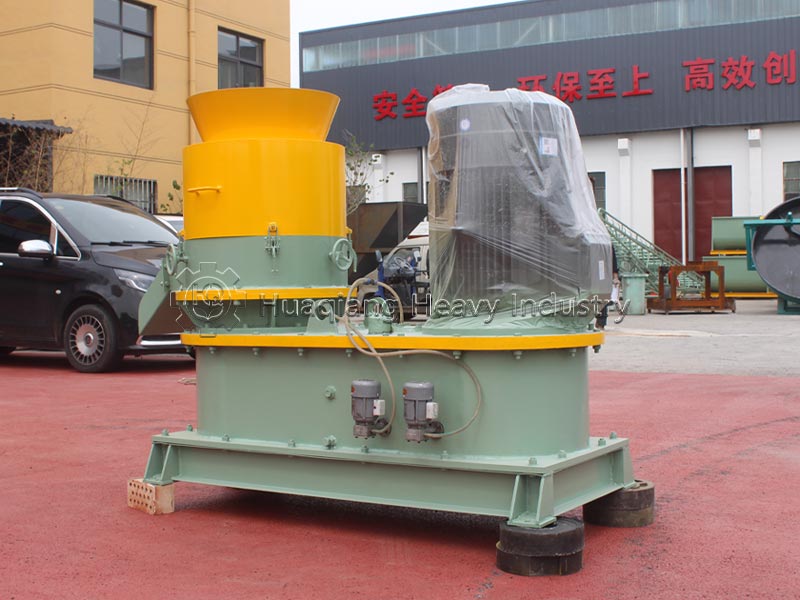
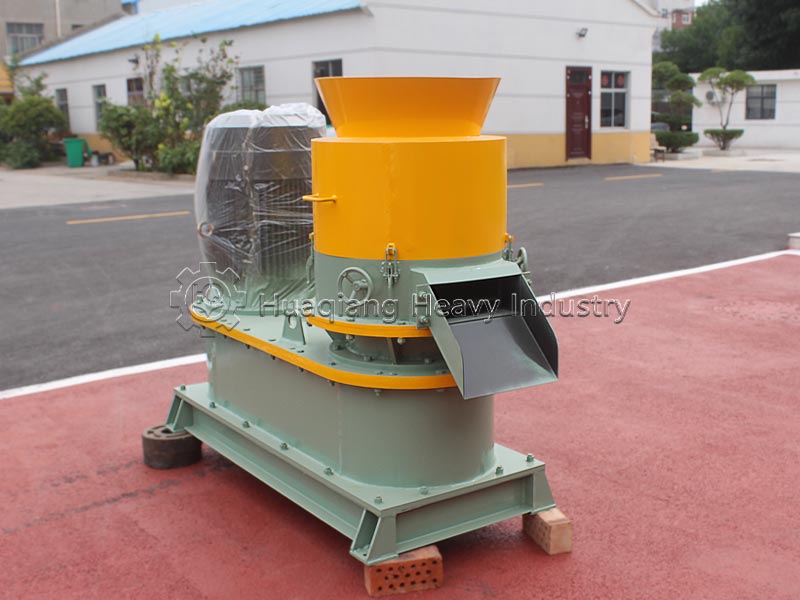
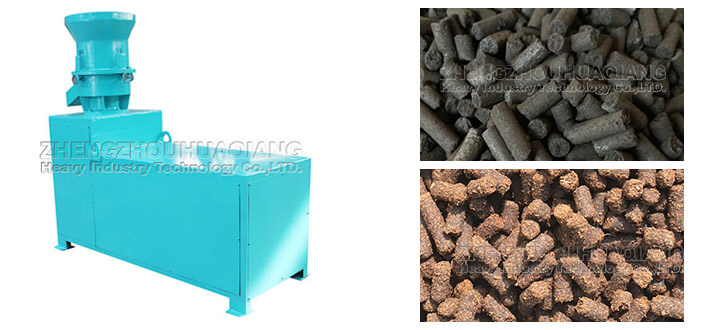
Compared to ring-die pellet machines, the flat-die model features a simpler, more compact structure; its core components consist merely of a horizontally positioned perforated flat die and several pressure rollers, avoiding the complex transmission and mounting systems found in ring-die machines. This design difference offers several tangible benefits: a smaller equipment footprint, lower investment costs, and relatively lower requirements for operation and maintenance.
The working principle of the flat die pellet machine is based on extrusion molding using a die and rollers. The process is as follows:
An electric motor drives the main shaft to rotate via a gearbox, causing the pressure rollers to move in a circular path over a stationary flat die. Material enters from the feed hopper and is evenly distributed across the flat die by gravity and a material-spreading device. The rotating pressure rollers continuously roll over the material layer, forcibly pressing the material into the die holes. Inside the holes, the material undergoes compression, molding, and shaping before being extruded from the bottom. A rotating cutter slices the extruded cylindrical material into pellets of a specific length, which are then discharged from the machine by a scraper.
Some models feature a conical roller design, ensuring that the linear speeds at both ends of the roller match those of the inner and outer circumferences of the die. This eliminates slippage-induced friction between the roller and the die, reduces resistance and kinetic energy loss, and extends the service life of the die.
Flat-die pellet machines have a wide range of applications, primarily including:
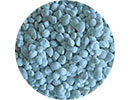
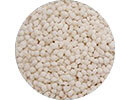
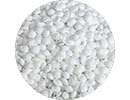
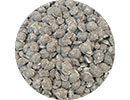
Organic fertilizer: Production of cylindrical pellets for bio-organic fertilizers, compound fertilizers, and blended fertilizers.
Feed processing: Processing of feed pellets for the livestock and aquaculture industries.
Biomass fuel: Pelletizing biomass raw materials such as sawdust, straw, and rice husks.
Chemical industry: Granulation of powdered materials such as catalysts, additives, clay, lead oxide, and zinc oxide.
Environmental engineering: Treatment of municipal solid waste and industrial waste.
The production process for making fertilizer with a flat-die pellet machine is as follows:
Fermented and decomposed organic materials (such as chicken manure, cattle manure, and straw) are broken down using a crusher, with the moisture content controlled between 18% and 25%. Hard objects, such as stones and pieces of iron, are inspected for and removed from the raw materials.
The pre-treated raw materials are proportioned according to the formula using an automatic batching system and mixed thoroughly in a mixer.
The mixed material is fed into the flat-die pellet machine; under the pressure of the rollers, it is extruded through the die holes to form cylindrical granules. This process improves upon conventional organic granulation methods, as it eliminates the need to dry or pulverize the raw materials prior to granulation.The extruded cylindrical material is cut into granules of the desired length. Granule length is controlled by adjusting the cutter; alternatively, the cylindrical granules can undergo further rounding and shaping to become spherical granules.
Depending on requirements, the granules may pass through a dryer and cooler, followed by classification via a screening machineand final packaging.
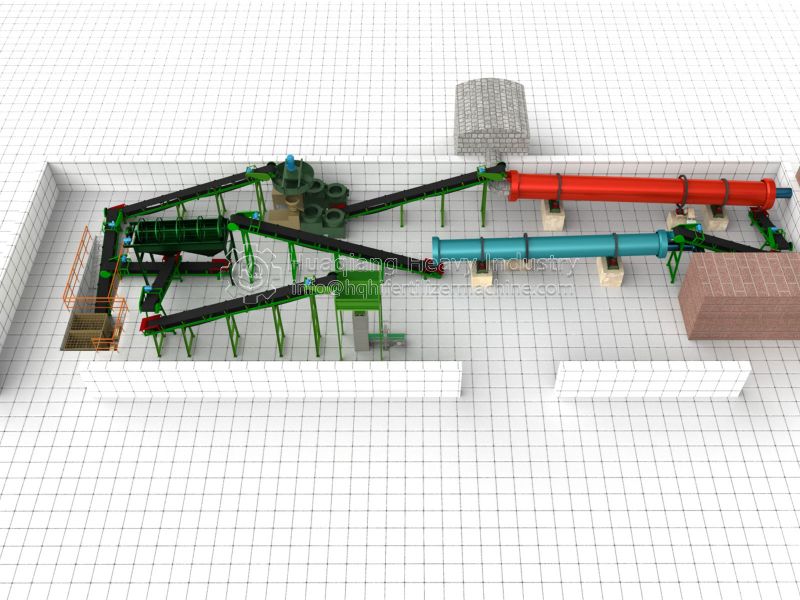
Key reasons for choosing the Huaqiang flat-die pellet machine include: the equipment utilizes a national-standard pure copper motor, ensuring stable power and low energy consumption; core components are made of high-manganese alloy steel, making the flat die and pressure rollers highly resistant to wear and impact; the machine body features an anti-corrosion coating, enabling long-term resistance to corrosive, sticky materials such as decomposed manure and straw powder; the purchase cost is lower than that of comparable products, while energy consumption is low and maintenance is simple; and the company offers comprehensive solutions ranging from individual units to complete production lines, including free trial runs using your own materials.
| Model | KP-210 | KP-260 | KP-400 | KP-500 |
| Capacity (t/h) | 0.2-0.3 | 0.4-0.5 | 1-1.2 | 2-5 |
| Pelleting Rate (%) | >95% | >95% | >95% | >95% |
| Rotation Speed(r/min) | 370 | 260 | 260 | 125 |
| Power(Kw) | 7.5 | 11 | 30 | 55 |
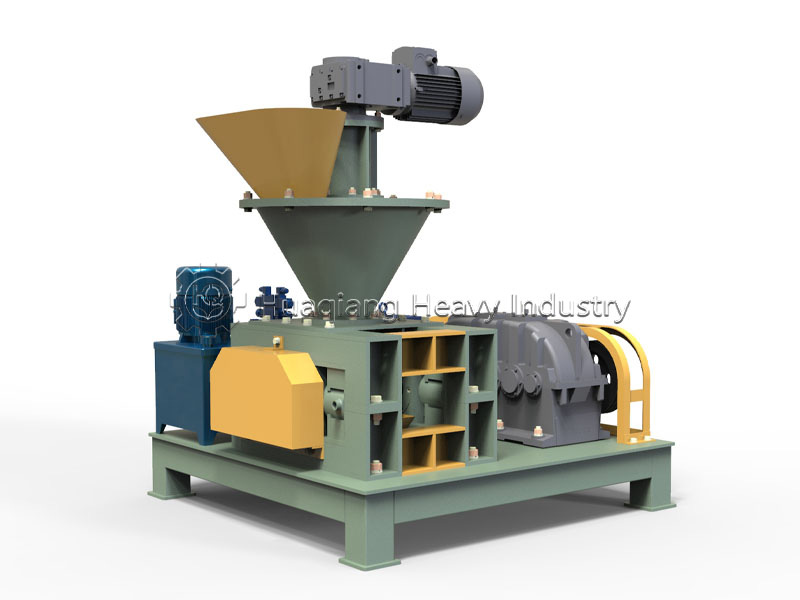
Our company provides clients with complex fertilizer complete sets of equipment technical service, after many years of research and development experience of the compound fertilizer granulator equipment manufacturing , and the meticulous manufacture of hi

This machine is one of the main (biological) organic fertilizer production equipment produced by our company. It is the fertilizer machinery which has been studied, improved and carefully manufactured on the basis of advanced granulating machine at home and abroad.

This series of granulator is a new patented product developed by our company and the Agricultural Machinery Research Institute. It is designed and manufactured by the new technology of wet continuous push rod granulation.