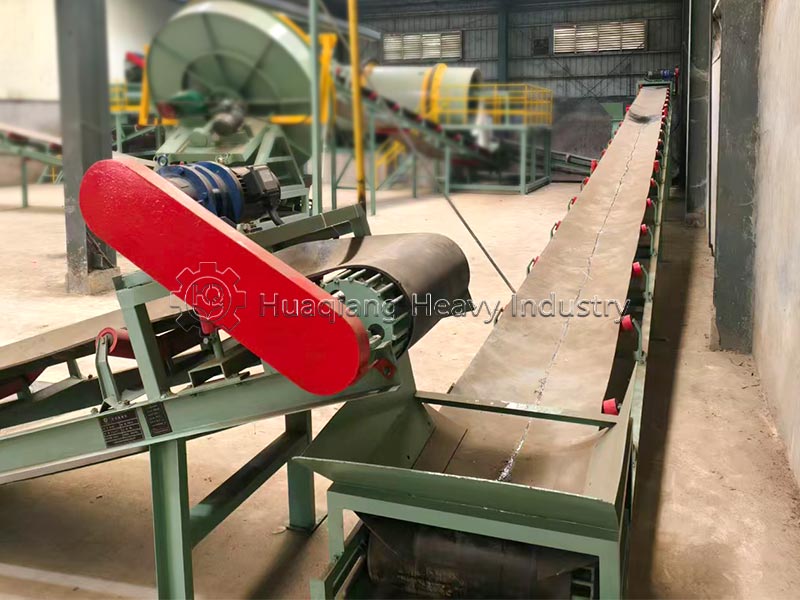
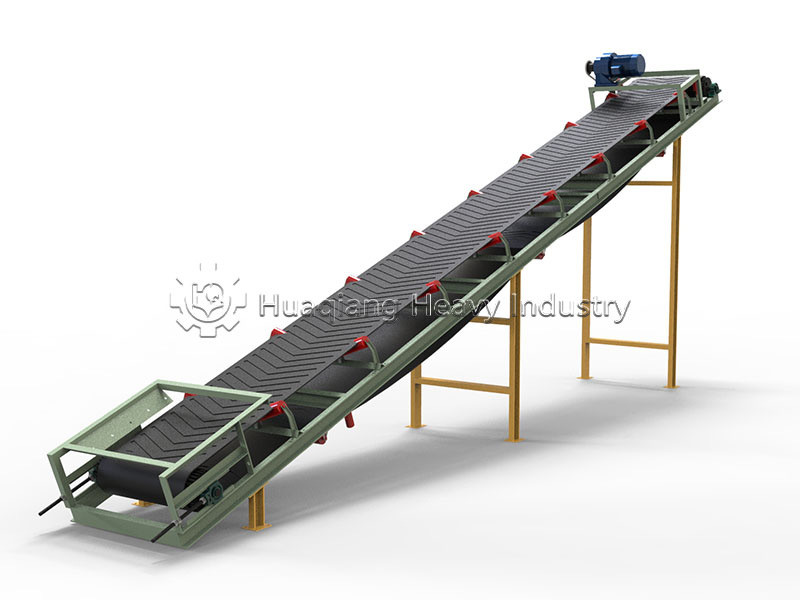
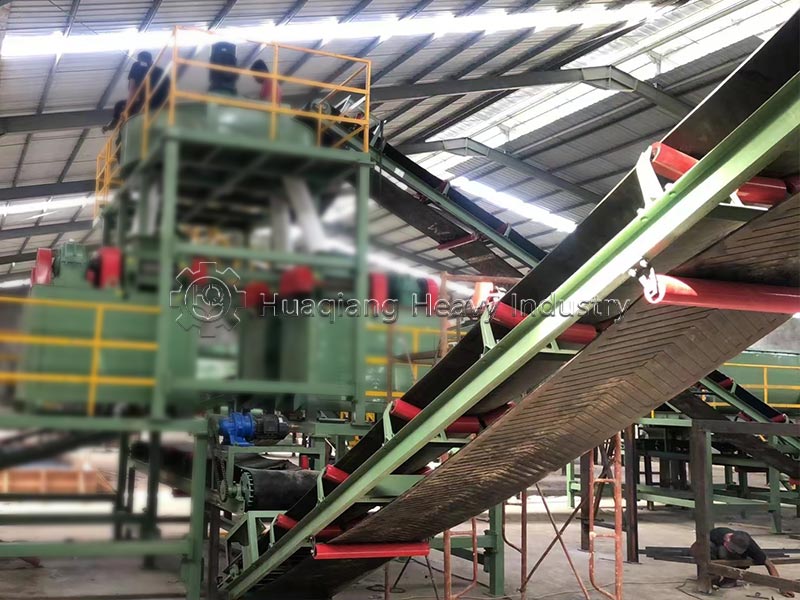
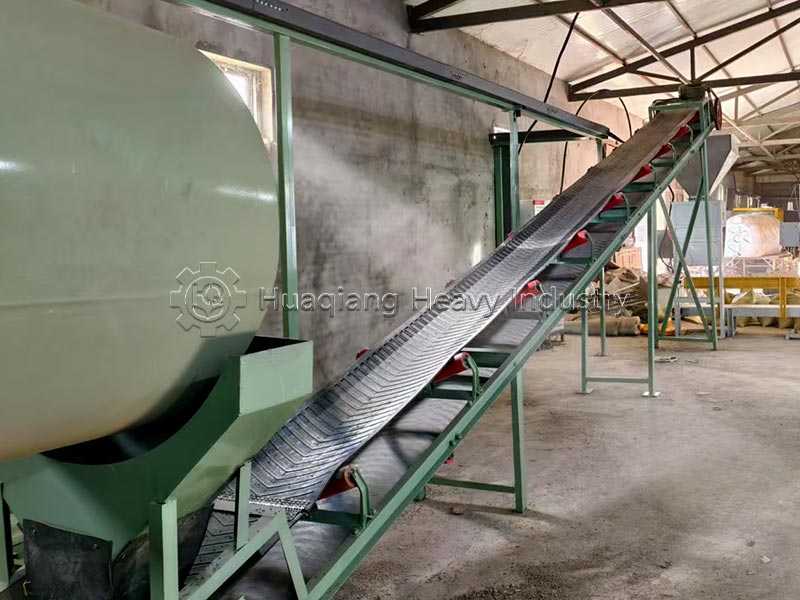
Belt conveyor is a mechanical equipment widely used in material handling systems, used for continuous transportation of various bulk materials or packaged items, such as coal, ore, sand, packaging boxes, etc. It uses one or more circular belts as load-bearing and traction components to achieve efficient and stable transportation of materials, and is widely used in various industries such as mining, ports, construction, chemical, and food processing.
The main structure and components of a belt conveyor include:
Conveyor belt: made of materials such as rubber, canvas, or metal, forming a continuous circular belt for carrying materials.
Drive device: usually includes a motor, reducer, and drive drum, providing power for the conveyor belt.
Reversing drum: used to change the direction of the conveyor belt, usually located at the end of the conveyor.
Support frame and idler: The support frame is used to support the entire conveyor structure, while the idler supports the conveyor belt to reduce running resistance.
Tensioning device: Ensure the appropriate tension of the conveyor belt during operation to avoid slipping or loosening.
Cleaning device: used to remove residual materials on the surface of the conveyor belt and keep the belt clean.
Safety devices: such as emergency stop switches, deviation alarms, etc., used to ensure the safety of operators and equipment.
The working principle of a belt conveyor is relatively simple:
Start: The driving device is activated to drive the conveyor belt to rotate by driving the drum.
Material conveying: Materials are placed on a conveyor belt and transported to the designated location as the belt continues to run.
Direction change and unloading: After the conveyor belt reaches the end of the reversing drum, it changes direction and the material is unloaded from the end of the conveyor belt under the action of gravity.
Continuous and efficient: It can achieve continuous transportation of materials and improve production efficiency.
Wide applicability: capable of handling various bulk materials and packaged items, with strong adaptability.
Smooth operation: The continuous operation of the conveyor belt and the support of the rollers ensure the smoothness of material transportation.
Easy to maintain: The structure is relatively simple and the maintenance cost is low.
High flexibility: By adjusting the length and tilt angle of the conveyor belt, it can adapt to different conveying needs and terrain conditions.
Good safety: equipped with multiple safety devices to ensure the safety of operators and equipment.
| Belt Width (mm) |
Conveying length(m) Power(kw) |
Conveying speed (m/s) |
Delivery quantity (t/h) |
||
| 500 | ≤12 3 |
12-20 4-5.5 |
20-30 5.5-7.5 |
1.3-1.6 | 78-191 |
| 650 | ≤12 4 |
12-20 5.5 |
20-30 7.5-11 |
1.3-1.6 | 131-323 |
| 800 | ≤6 4 |
6-15 5.5 |
15-30 7.5-15 |
1.3-1.6 | 278-546 |
| 1000 | ≤10 5.5 |
10-20 7.5-11 |
20-40 11-22 |
1.3-2.0 | 435-853 |
| 1200 | ≤12 7.5 |
10-20 11 |
20-30 15-30 |
1.3-2.0 | 655-1284 |
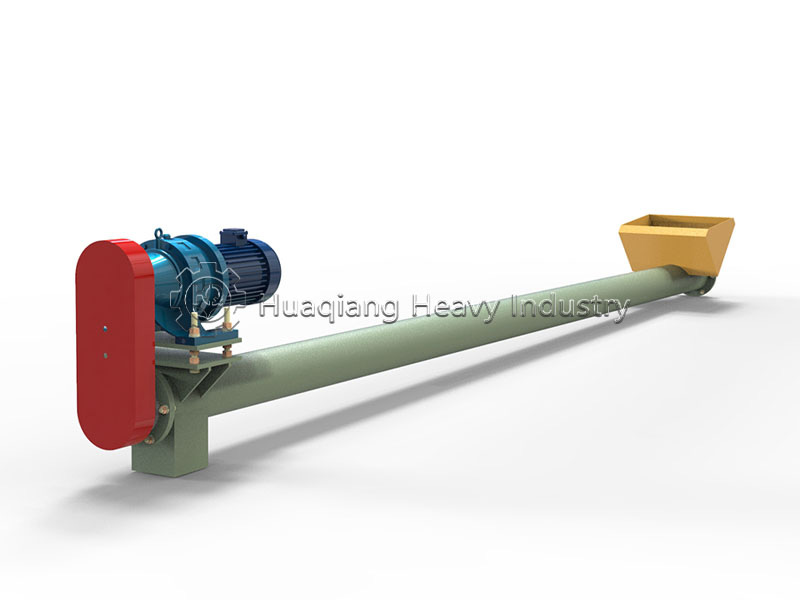
The screw conveyor is a product designed by our company, which combines the experience of all kinds of screw conveyor at home and abroad. The product can meet the transportation of various materials and be matched with all kinds of mixing machines.
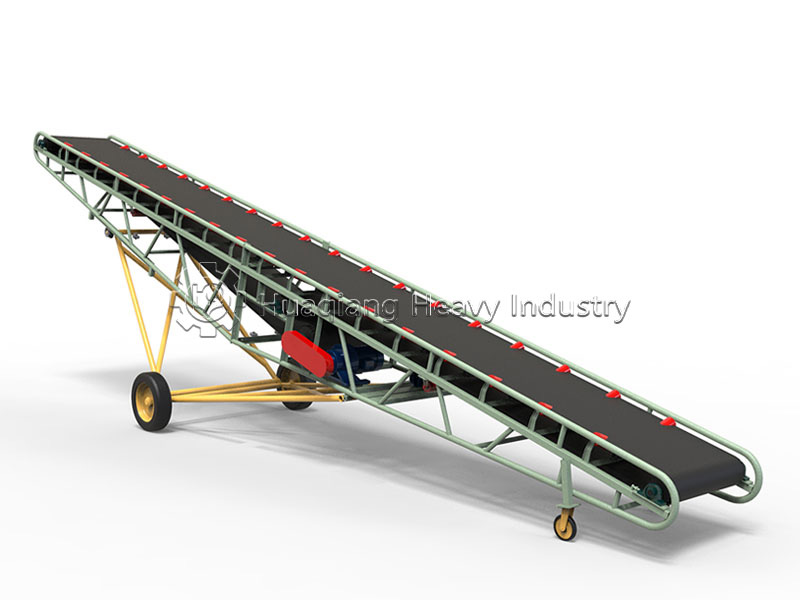
Compared with the ordinary belt conveyor, it increases the mobile device, because the mobile device makes the mobile belt conveyor with the superior maneuverability, and can be driven or traced to the suitable place for loading and unloading of goods acco
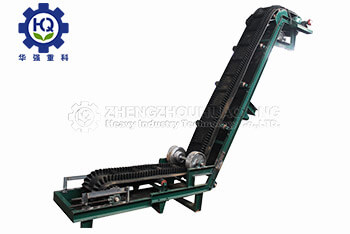
This series of products is mainly suitable for high inclined continuous conveying of bulk materials. With the conveyor belt with corrugated side plate and diaphragm plate, the transmission angle is 0 ~ 90°.