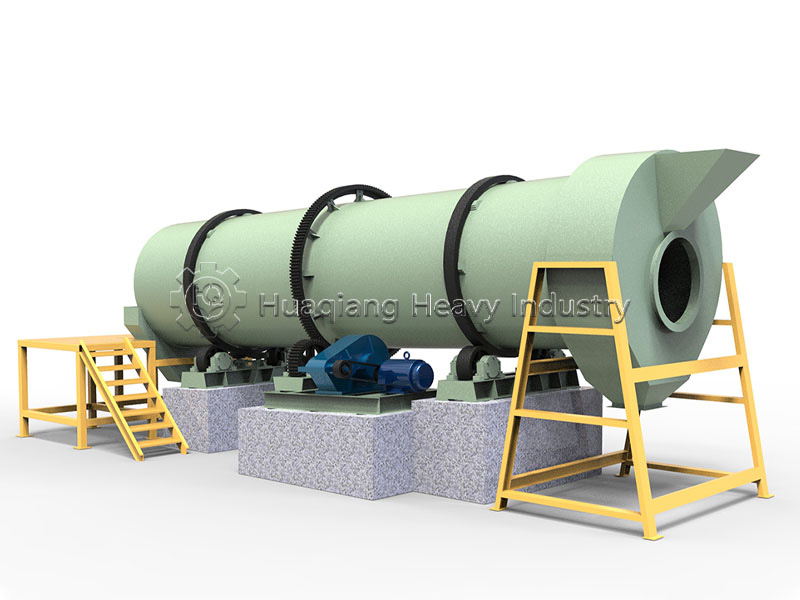
In modern fertilizer production line, granulators are indispensable core equipment. Traditional powdered fertilizers suffer from numerous problems such as easy dust generation, clumping, poor fertilizer efficiency, and high losses. Granulators, through physical processing, transform powdered and fragmented raw materials into uniform and regular granular fertilizers, fundamentally optimizing fertilizer quality and adapting to the needs of large-scale production and agricultural planting. They are key equipment for improving fertilizer quality and efficiency.
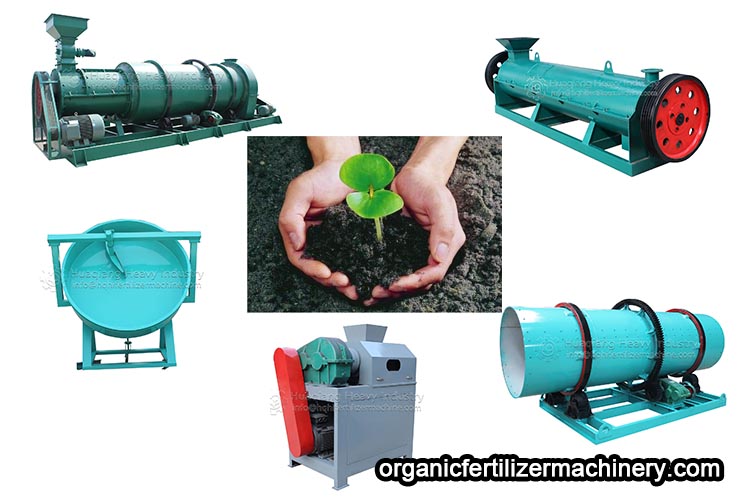
Granulators can significantly optimize the physical properties of fertilizers and reduce storage and transportation losses. Powdered fertilizers are loose in texture, easily absorb moisture, clump, and are easily dispersed by the wind, resulting in significant losses during storage, transportation, and handling, and also polluting the environment. Granulated fertilizers processed by granulators have a compact structure, uniform particle size, and strong stability. They are less prone to moisture absorption and deterioration, effectively avoiding dust waste, significantly reducing storage and transportation losses, and extending the fertilizer's shelf life. They are suitable for long-distance transportation and long-term storage, reducing the production and operating costs for enterprises.
Granulators can improve fertilization effects and support scientific planting. Powdered fertilizers are prone to uneven application, with excessively high concentrations causing root burn and insufficient concentrations leading to nutrient deficiencies. Furthermore, nutrients are easily washed away by rainwater. Granular fertilizers, on the other hand, are evenly distributed, have strong adhesion, and allow for precise control of application rates. The granular structure also enables slow nutrient release, preventing instantaneous nutrient loss, extending the fertilizer's effectiveness period, and allowing crops to continuously and evenly absorb nutrients. This significantly improves fertilizer utilization, reduces the frequency of fertilization, and lowers the intensity of agricultural labor.
In addition, granulators enable nutrient blending and resource regeneration. During production, nitrogen, phosphorus, potassium, and trace elements are uniformly solidified in each fertilizer granule, preventing nutrient separation and ensuring balanced nutrient content in every granule. Simultaneously, granulators can process agricultural waste such as livestock manure and straw into organic granular fertilizer, achieving resource recycling and contributing to the development of green agriculture.
In summary, granulators take into account fertilizer quality, production efficiency, application effect, and environmental benefits. They are essential equipment for modern industrialized and standardized fertilizer production, laying a solid foundation for efficient agricultural production.



.jpg)