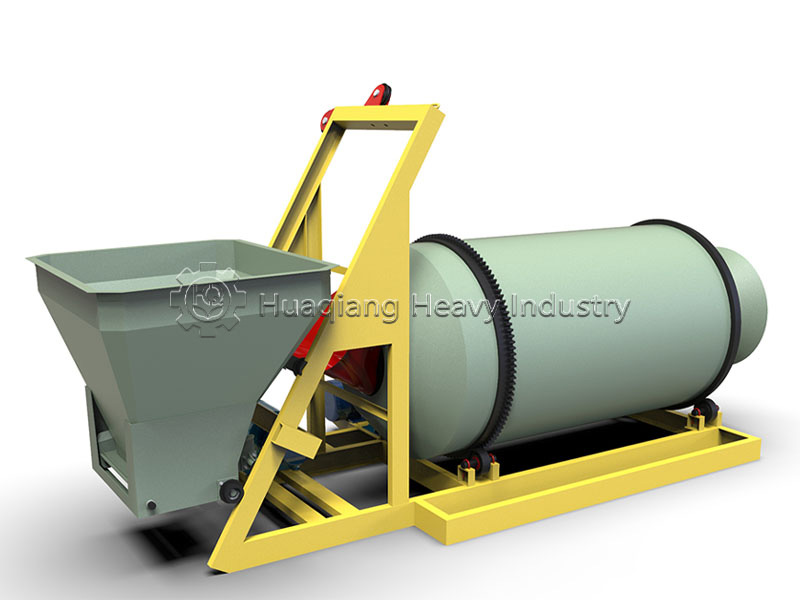
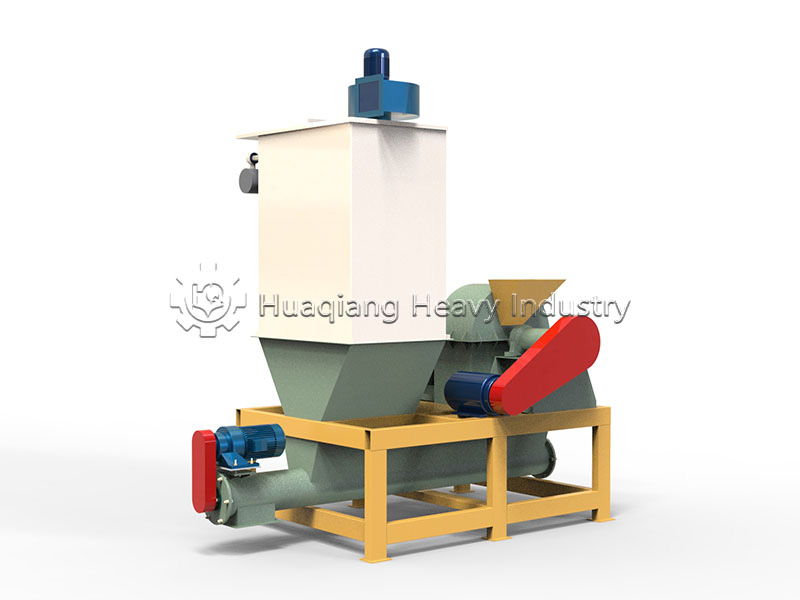
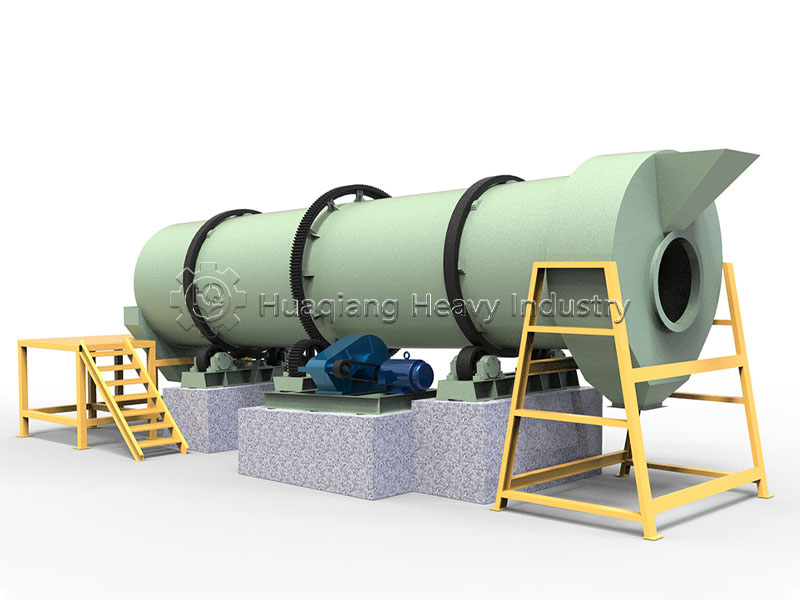
Granulation is the core stage in organic fertilizer production; it directly determines the appearance, strength, storage and transport characteristics, and field application performance of the final granules. Drawing on extensive experience in equipment integration, Huaqiang Heavy Industry notes that the industry primarily utilizes two categories—wet granulation (agglomeration) and dry granulation (extrusion)—encompassing four specific processes: disc granulation, rotary drum granulation, stirring-tooth (agitation) granulation, and flat-die extrusion granulation. Each is suited to specific raw materials and production scenarios.
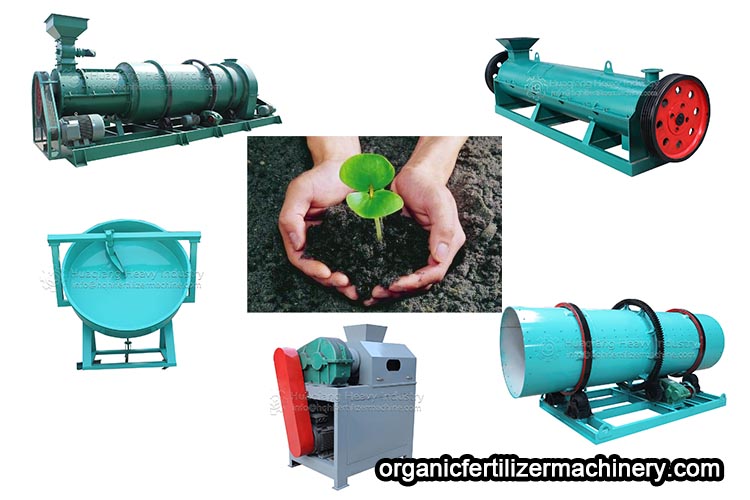
Disc granulation is a classic wet-agglomeration process. As an inclined disc rotates, raw materials roll continuously under the influence of centrifugal force and friction. With the addition of sprayed water, the powdered material gradually agglomerates into spherical granules. This process is intuitive to operate, requires a moderate level of investment, and produces uniform, rounded granules. It is well-suited for small-to-medium-scale production of organic fertilizers and organic-inorganic compound fertilizers. Its drawbacks include high sensitivity to the moisture content of raw materials, a relatively high proportion of recycled material (fines), and a dependency on the fineness of the raw materials for consistent granule formation.
Rotary drum granulation is also a wet process. It relies on an inclined, rotating drum to tumble the material, while steam or liquid sprays facilitate the binding of powder into granules. This method offers high single-unit capacity, making it ideal for continuous, large-scale production (tens of thousands of tons or more). Its strengths lie in operational stability and high output; however, it requires auxiliary drying and cooling systems, leading to high energy consumption and a large physical footprint. Furthermore, the high-temperature drying process can degrade the activity of beneficial microorganisms, so it is typically used for organic fertilizers where high microbial viability is not a primary requirement.
Stirring-tooth (agitation) granulation has become widely adopted in recent years. It utilizes high-speed rotating "teeth" to shear, knead, and agglomerate high-moisture fermented materials. This process is particularly well-suited for raw materials with high moisture content, such as fermented livestock manure or biogas residue, as it eliminates the need for rigorous pre-drying. It offers rapid granulation and produces rounded particles, making it suitable for medium-to-large-scale production lines. Compared to disc or rotary drum methods, it demonstrates superior compatibility with high-moisture organic matter, making it a popular choice for bio-organic fertilizer production. A notable drawback is that the stirring teeth are wear-prone components, requiring regular maintenance and replacement.
Flat-die extrusion granulation is a dry-process technique. Material is pressed by rollers through die holes to form cylindrical granules with a dense structure, making it well-suited for biomass-based organic fertilizer feedstocks. A rounding machine (spheronizer) can be added to refine the shape of the granules. This process requires no water and eliminates the need for a drying stage, resulting in lower energy consumption. Its drawbacks include limited per-unit production capacity and a raw, cylindrical granule shape—achieving a more polished appearance requires an additional rounding step. Consequently, this method is primarily used in small-scale organic fertilizer or straw-based organic fertilizer production lines.
In summary, there is no single "best" granulation process for organic fertilizer. The optimal choice depends on a comprehensive assessment of factors such as the feedstock's moisture content and fiber content, the required production scale, whether biological agents (microbes) are to be added, and market expectations regarding the appearance of the granules. While wet-granulation processes excel in terms of granule aesthetics, dry-extrusion processes offer advantages in energy efficiency and the elimination of drying stages. Selecting the appropriate granulation method is essential for ensuring consistent product quality and effectively controlling production costs.