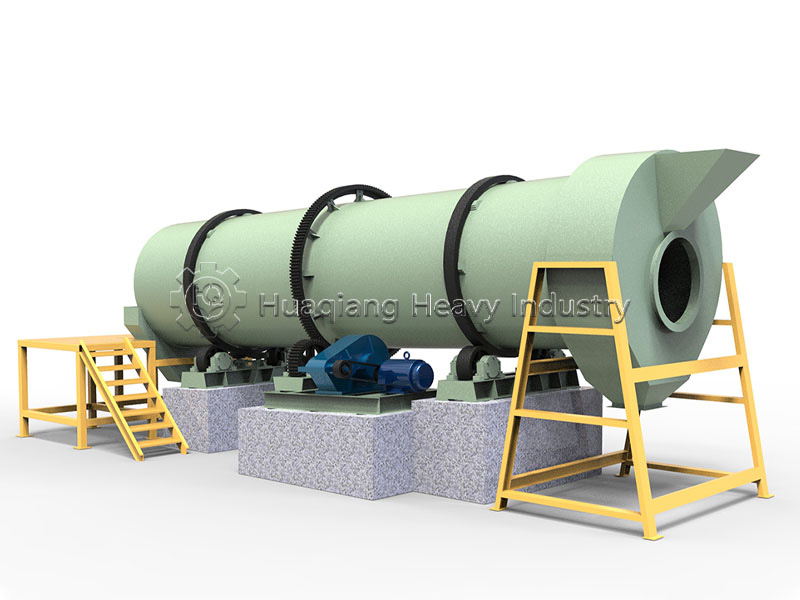
Fertilizer granulators are core equipment in the production of organic fertilizers and compound fertilizers. The mainstream models on the market are mainly divided into four categories: disc granulators, rotary drum granulators, roller extrusion granulators, and flat die pellet machines. Different models have significant differences in granulation principles, capacity, granulation effect, and suitable raw materials, directly determining production efficiency and fertilizer quality, and adapting to different scales of production needs.
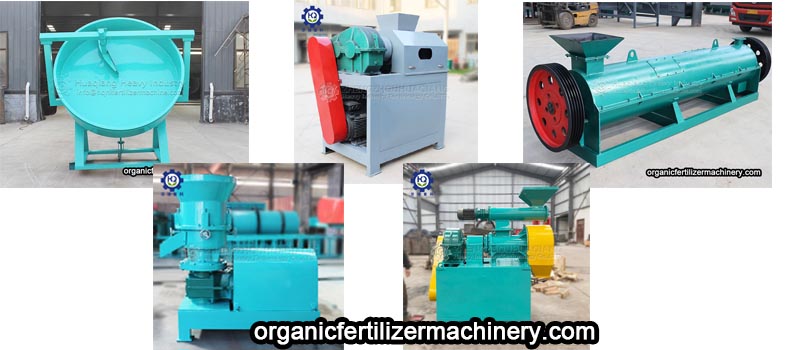
Disc granulators are commonly used in small and medium-sized production. They rely on the centrifugal force generated by the rotation of an inclined disc to make the material roll and agglomerate into granules, belonging to the wet granulation process. They have a simple structure, low operating threshold, low investment cost, and a pelletizing rate of over 90%, producing round and uniform granules. However, their shortcomings are obvious: limited capacity, and the raw materials need to have a certain degree of viscosity. They are suitable for livestock manure, straw organic fertilizer, etc., but not suitable for dry, non-sticky materials, and are mostly used in small fertilizer processing plants.
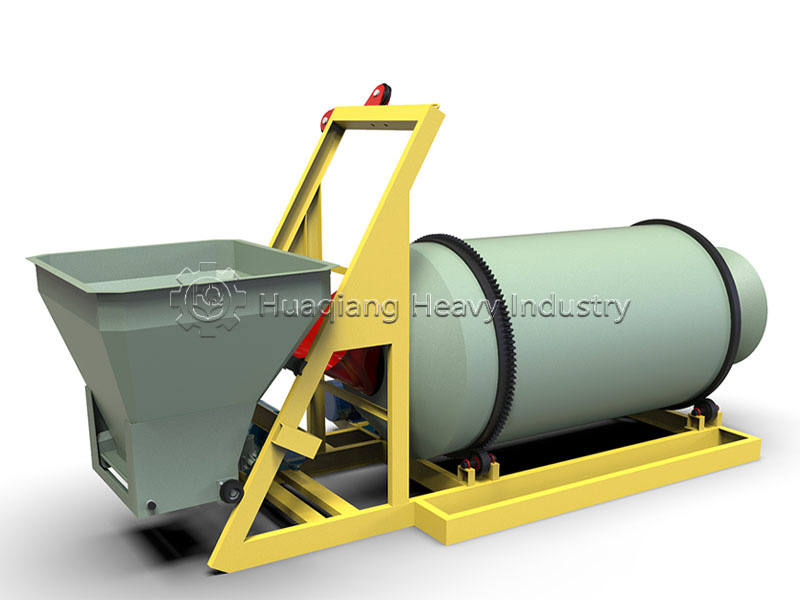
Rotary drum granulators are suitable for large-scale industrial production. They also use the wet adhesion granulation principle, using the continuous rotation of the drum to drive the material to roll and adhere into shape. This equipment boasts high capacity, stable operation, and continuous operation, making it suitable for large-scale compound fertilizer production. Its disadvantages include a large footprint, high energy consumption, and generally low granule hardness, making it prone to slight pulverization during storage. It requires complementary drying equipment to improve the process.
The double-roller extrusion granulator uses dry, high-pressure extrusion molding, eliminating the need for water addition, humidification, or drying. It is suitable for various dry powders, including non-sticky mineral fertilizers and compound fertilizer raw materials, producing granules with high hardness, minimal clumping, and no nutrient loss. Its drawbacks include irregular columnar granules with generally lower quality and moderate capacity, making it suitable for medium-sized production lines where granule appearance is less critical and high efficiency and energy saving are prioritized.
The flat die pellet machine is specifically designed for refined organic fertilizer production. It uses rollers to extrude materials, resulting in compact granules, high forming rate, and no material return. It is suitable for high-organic-content raw materials, producing low-moisture finished products and significantly reducing drying energy consumption, making it suitable for high-end organic fertilizer production. However, the equipment wears out faster, leading to relatively higher maintenance costs.
In summary, the selection of a granulator should be based on the production scale, raw material characteristics, and finished product requirements. For small-scale civilian production, disc granulators are recommended; for large-scale compound fertilizer production, rotary drum granulators are recommended; for dry raw materials, roller granulators are preferred; and for high-end organic fertilizer production, flat die pellet machines are suitable.



.jpg)