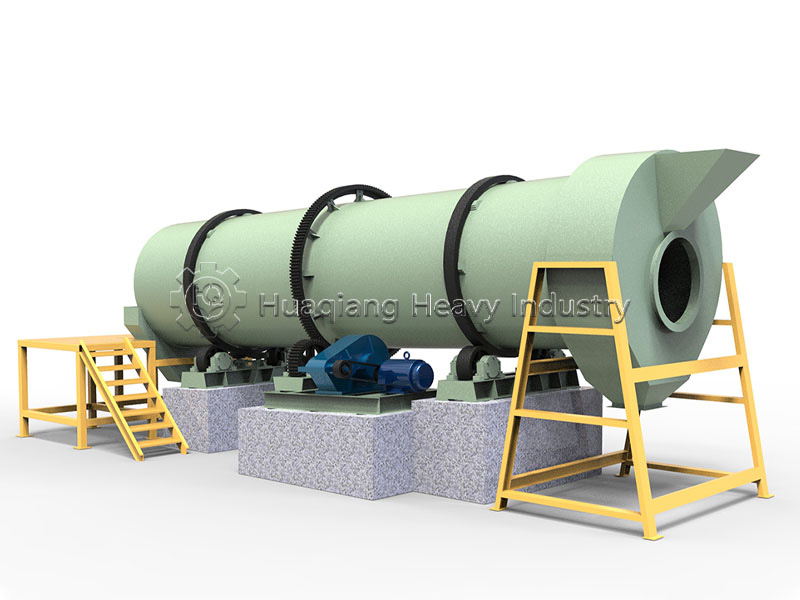
In the production of organic fertilizers, the granulation stage is a pivotal step that determines both product quality and market competitiveness. Thanks to its unique process advantages, wet granulation has emerged as the dominant method currently employed in the industry. Widely adopted across various organic fertilizer production lines, this technique effectively balances production efficiency with the assurance of fertilizer quality, thereby injecting powerful momentum into the development of green agriculture.
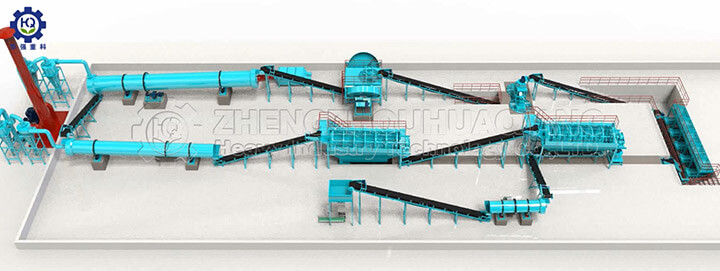
The most prominent advantage of wet granulation lies in the superior quality of the resulting granules and the stability of the molding process. This technique achieves this by precisely regulating the material's moisture content within an optimal "golden range" of 25% to 30%. By utilizing moisture to activate the inherent cohesiveness of the materials, and under the influence of mechanical force, raw inputs are agglomerated into granules. The resulting granules are round, plump, and uniform in size—with diameter deviations kept within a reasonable tolerance—and possess a clean, aesthetically pleasing appearance, thereby significantly enhancing the product's commercial value. Furthermore, the granules formed via wet granulation feature a dense internal structure, boasting a compressive strength of 10–15 N. This ensures that the breakage rate during transport remains below 5% and prevents clumping or mold growth during storage; the fertilizer retains its loose, granular state over extended periods, thereby substantially reducing losses associated with transportation and storage.
Broad raw material adaptability and high resource utilization efficiency constitute another major highlight of wet granulation. The process is capable of handling virtually all types of organic raw materials—ranging from high-moisture inputs such as livestock and poultry manure or biogas residue to low-cohesion materials like crop straw or sawdust—by simply adjusting the proportions of moisture and binding agents to achieve efficient granulation. This characteristic effectively resolves the complex challenges associated with processing diverse organic waste streams, transforming materials that were previously difficult to utilize into high-quality organic fertilizers. In doing so, it not only mitigates environmental pollution but also facilitates resource recycling, aligning perfectly with the principles of green development.
High production efficiency and controllable energy consumption are further attributes that align well with the requirements of large-scale industrial production. The molding success rate in wet granulation can exceed 90%—with some advanced equipment achieving rates as high as 95%—thereby drastically reducing the need for rework and minimizing raw material waste, while simultaneously enhancing production continuity. With ongoing technological advancements, intelligent wet granulation systems now feature automated parameter control capabilities, leading to significant improvements in overall equipment efficiency. Furthermore, through the optimization of drying processes, energy consumption is effectively reduced, rendering this method significantly more economically viable compared to traditional granulation techniques.
Moreover, the organic fertilizers produced through wet granulation offer a gentler and more sustained release of nutrients. The moderate moisture retained within the granules facilitates the slow decomposition of the fertilizer in the soil, thereby preventing nutrient loss, ensuring a continuous supply of nutrients for crops, and enhancing fertilization efficacy—all while minimizing adverse impacts on the soil environment.
In summary, the wet granulation process within organic fertilizer production lines—distinguished by core advantages such as superior granule quality, broad raw material compatibility, high production efficiency, and optimal nutrient release—not only meets the demands of large-scale industrial production but also supplies high-quality organic fertilizers to the agricultural sector. By fostering green and sustainable agricultural development, this technology serves as a pivotal



.jpg)