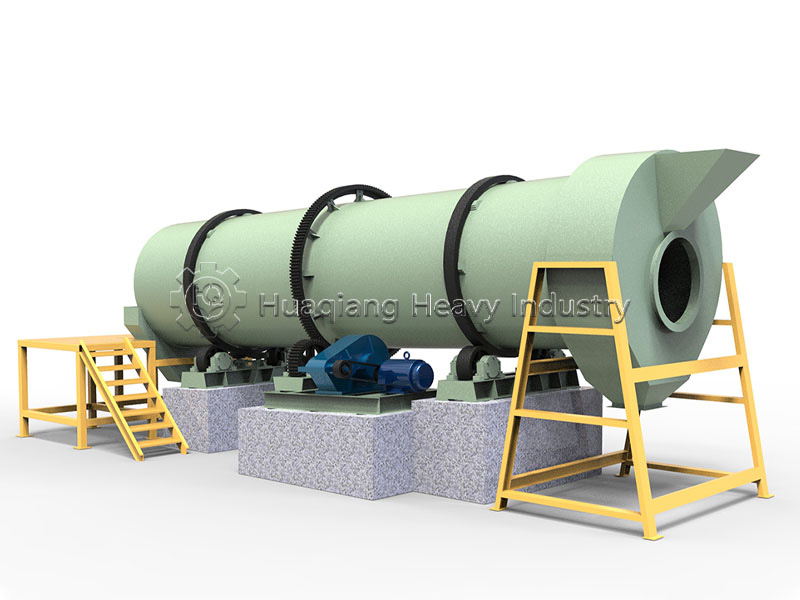
An organic fertilizer production line is the core equipment for realizing the resource utilization of organic waste and ensuring fertilizer quality. Scientific maintenance can not only extend the service life of equipment and reduce downtime, but also ensure production safety and stable product quality. Based on practical production experience, the core maintenance precautions are summarized below.
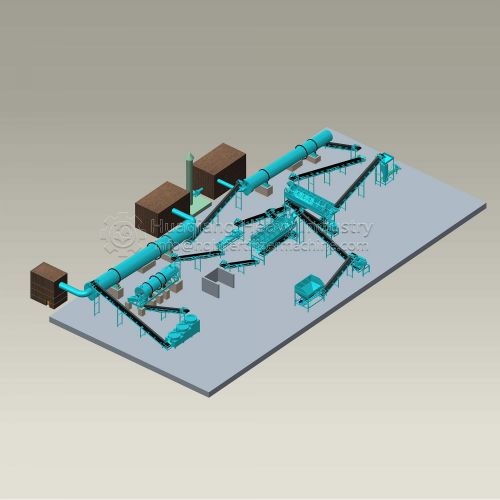
Daily cleaning is the fundamental prerequisite for maintenance. Organic materials easily accumulate in various equipment on the production line, which can lead to corrosion and blockages over time, affecting operating efficiency. After each day's production, it is necessary to thoroughly clean the internal and external residues of equipment such as crushers, mixers, and granulators, paying particular attention to cleaning the screens of the drum screener and the die holes of the granulator to prevent material agglomeration and adhesion. At the same time, regularly clean the dust around the equipment to reduce dust entering the equipment and causing wear on parts, creating a clean production environment.
Lubrication and tightening are key to stable equipment operation. Key parts of the production line, such as bearings, gears, and transmission devices, must be regularly lubricated with oil or grease according to the instruction manual. For example, the crusher bearings need to be greased twice per shift, and the gear oil in the reducer should be changed every four months to ensure adequate lubrication and reduce friction wear on parts. In addition, vibrations are generated during equipment operation, requiring regular inspection and tightening of bolts, wheel rims, and other loose parts. Newly installed components should be inspected daily to prevent equipment malfunctions caused by loosening.
Management and operational monitoring of vulnerable parts are indispensable. Vulnerable parts such as toothed claws, screens, and chains require regular checks of wear, timely replacement of damaged parts, and stockpiling of commonly used spare parts to prevent escalation of malfunctions and prolonged downtime. During operation, the equipment status must be closely monitored. If abnormal noises, overheating, or abnormal vibrations are detected, the machine should be stopped immediately for inspection. It should be restarted only after troubleshooting, and operating parameters should be recorded to establish a maintenance file for subsequent fault analysis.
Furthermore, operator training should be strengthened to ensure familiarity with operating procedures and avoid misoperation and overloading. When the equipment is to be shut down for an extended period, a thorough cleaning of the organic fertilizer production equipment is necessary, along with moisture-proof and corrosion-proof measures. The equipment should be run idle periodically to prevent components from seizing up. Only by implementing comprehensive and routine maintenance measures can the organic fertilizer production line operate continuously and efficiently, providing strong support for the development of green agriculture.



.jpg)