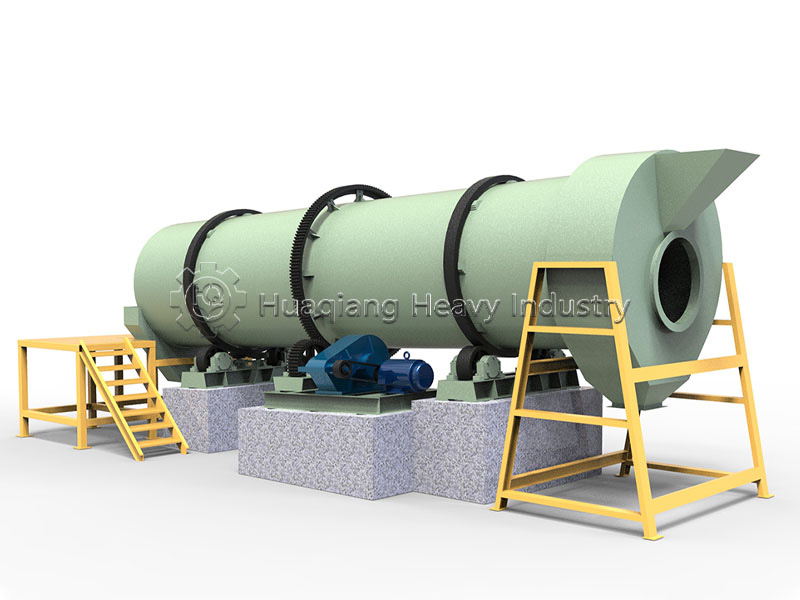
The organic fertilizer granulator is the core piece of equipment in an organic fertilizer production line; it directly determines the quality of the finished granules, production efficiency, and costs. The market offers a wide variety of granulator models suited to different scenarios; making a selection without proper analysis can easily lead to issues such as low granulation rates, mismatched production capacity, and excessive equipment wear. To select equipment that offers a high degree of suitability and cost-effectiveness, one must comprehensively consider raw material characteristics, production scale, finished product requirements, and equipment quality.
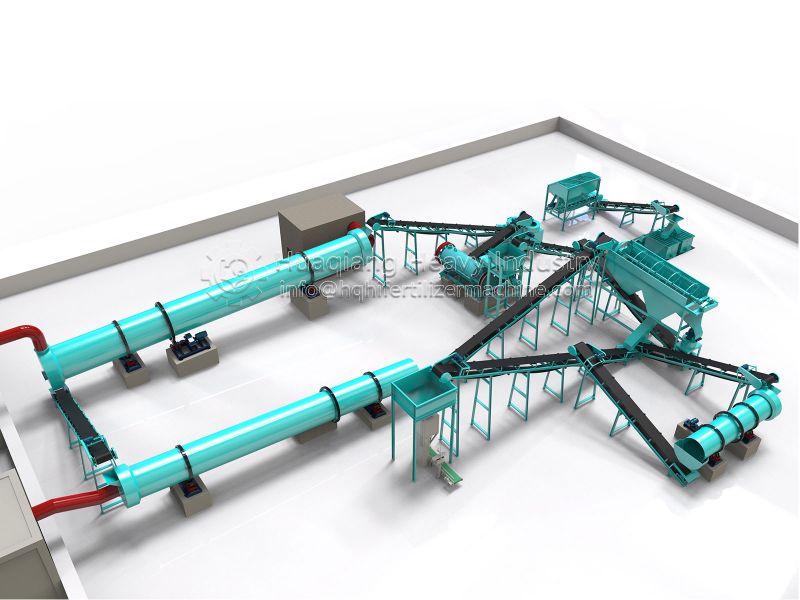
Raw material characteristics are the primary basis for selection, as different materials require vastly different machine types. Materials with moderate moisture content and good binding properties—such as livestock manure and matured sludge—are best suited for disc granulators, which produce round, uniform granules with excellent formation quality. For materials with high fiber content and poor binding properties—such as straw and dead branches—new type organic fertilizer granulators are the preferred choice; they utilize high-speed impact to form granules, effectively overcoming the difficulty of shaping such materials. Flat-die pellet machines are highly adaptable for coarse-fiber materials, thoroughly fermented organic matter, and various types of pomace or dregs. These machines employ a high-pressure extrusion process to produce cylindrical organic fertilizer granules; the material is extruded through die holes, resulting in uniform thickness, dense structure, and high hardness, thereby solving the problems of loose structure, poor formability, and fragility often associated with coarse-fiber materials. Strict control of raw material moisture content is also essential; failure to meet moisture standards directly leads to poor granule formation and high defect rates, compromising overall production performance.
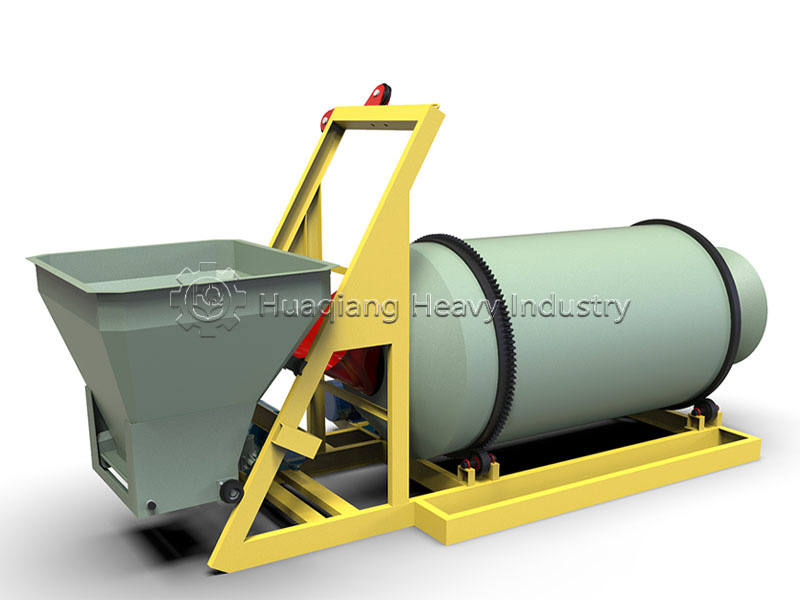
Production scale dictates the machine size and equipment type; matching equipment to actual needs prevents resource waste. Small family farms and cooperatives with a daily output of under 5 tons are well-suited for small disc granulators, which feature a compact footprint, low investment costs, simple operation, and minimal maintenance requirements. Small-to-medium-sized processing plants with a daily output of 5 to 50 tons can utilize rotary drum granulators or new type organic fertilizer granulators, both of which support continuous operation and offer stable production performance. Large-scale facilities with a daily output exceeding 50 tons should prioritize fully automated compound granulation equipment, which can be integrated into a complete production line to achieve efficient, high-volume output.
Finished product quality standards serve as a key reference point for equipment selection. For the production of high-end organic fertilizers requiring perfectly spherical, uniform granules, disc or rotary drum granulators are the preferred choice. Conversely, for standard agricultural organic fertilizers, microbial fertilizers, or ecological restoration fertilizers, cylindrical granules offer practical advantages, making flat-die pellet machines the ideal option. Cylindrical granules produced by these machines feature adjustable sizes and uniform shapes; they are solid (free of hollow cores or fines) and possess density and compressive strength far superior to conventional spherical granules. They withstand stacking and long-distance transport without crumbling or suffering significant loss. Furthermore, once applied to the soil, they dissolve and release nutrients evenly and gradually, ensuring



.jpg)