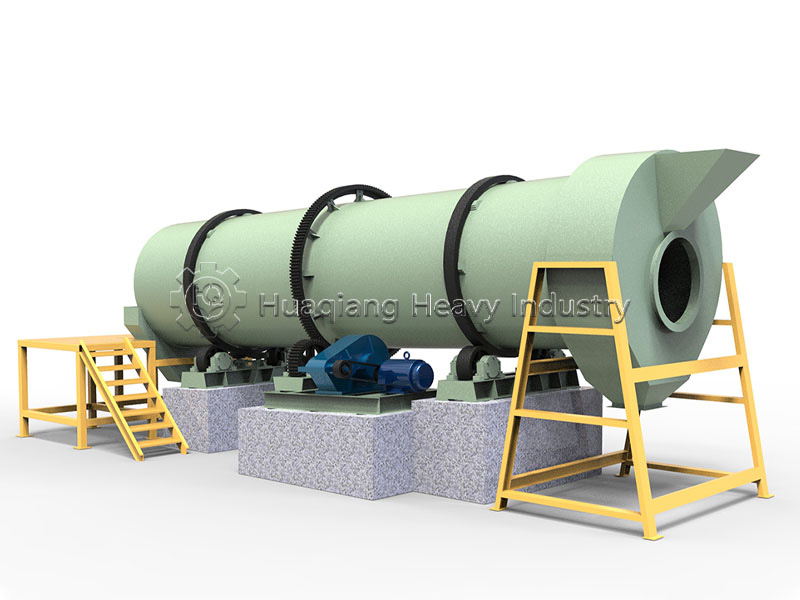
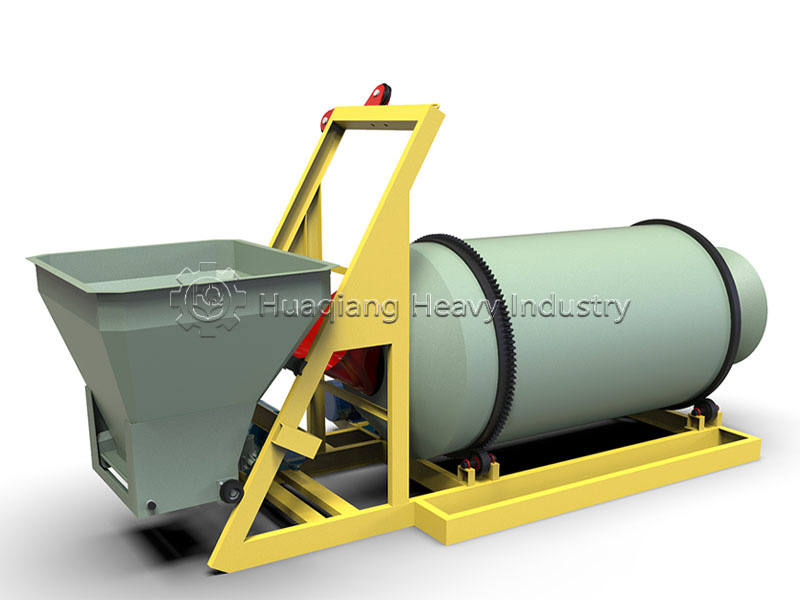
The rotary drum granulator, as a core piece of equipment in organic and compound fertilizer production lines, is widely used in large-scale production due to its simple operation and stable production capacity. However, uneven granule size is a common problem in actual operation, affecting not only product appearance and quality but also increasing subsequent screening costs and reducing production efficiency. The main causes are concentrated in three aspects: raw material characteristics, equipment parameters, and operating procedures, which require targeted investigation and solutions.
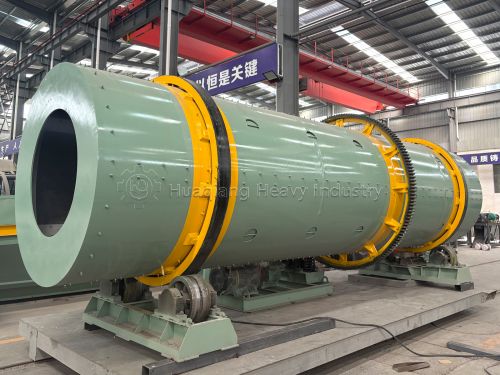
Raw material characteristics are a fundamental influencing factor and the most easily overlooked aspect. Improper control of raw material moisture content directly leads to uneven granule size. Excessive moisture easily causes material adhesion and clumping, forming large granules; insufficient moisture makes it difficult for the material to agglomerate into spheres, resulting in a large amount of fine powder. At the same time, excessive differences in raw material particle size, insufficient binder, or uneven mixing will lead to a lack of a stable core during granule formation, resulting in a mixture of different sizes and loose, fragile granules. Therefore, it is necessary to pre-screen the raw materials and accurately proportion the binder.
Unreasonable equipment parameters are a core cause. The drum rotation speed and inclination directly determine the material tumbling state and residence time. Too high a rotation speed will crush the formed granules, while too low a speed will prevent sufficient granulation; too large an inclination angle leads to the material moving too quickly and insufficient residence time, while too small an angle easily leads to excessive adhesion. In addition, wear on the inner wall of the drum and improper scraper angle will affect the uniform tumbling of the material, further exacerbating the unevenness of the granules. Regular inspection and maintenance of equipment components are necessary.
Irregular operating procedures will amplify the above problems. Fluctuations in feeding speed and uneven water or slurry spraying will lead to fluctuations in the amount of material in the machine, causing local accumulation or uneven mixing; improper temperature control and unbalanced return material ratio will affect the granule formation effect, resulting in size deviations. Failure of operators to adjust process parameters in a timely manner will also lead to unstable granule quality.
To solve the problem of uneven granule size, it is necessary to control the quality of raw materials from the source, precisely adjust equipment parameters, and standardize operating procedures. In daily production, proper raw material pretreatment, regular equipment maintenance, and optimization of process parameters can effectively improve granule uniformity, ensure product quality, reduce production losses, and fully utilize the production efficiency of the rotary drum granulator.



.jpg)