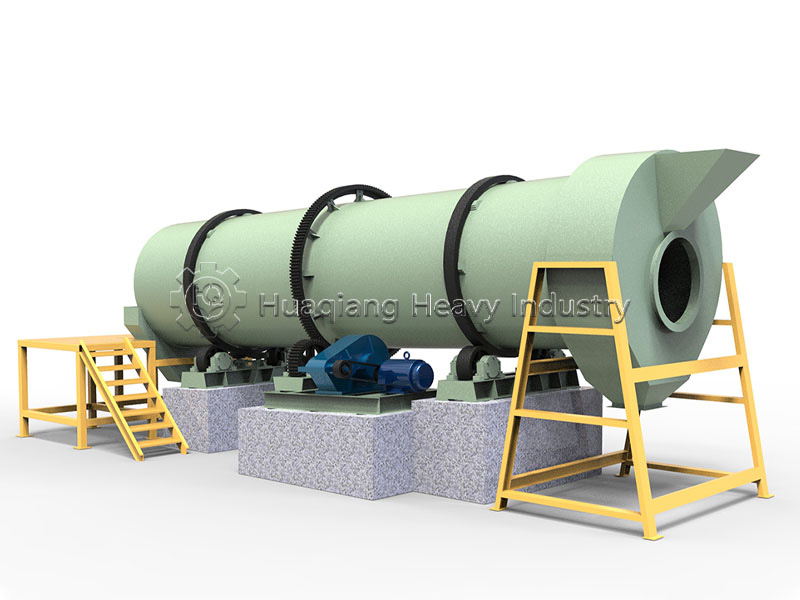
Granulation is the core process in organic fertilizer production, and the granulation effect directly determines the product's strength, uniformity, and commercial value. In an organic fertilizer production line, the granulation effect of the organic fertilizer granulator is not determined by a single factor, but rather by the combined influence of raw material characteristics, equipment condition, and process parameters. Precisely controlling these factors is key to improving granulation quality.
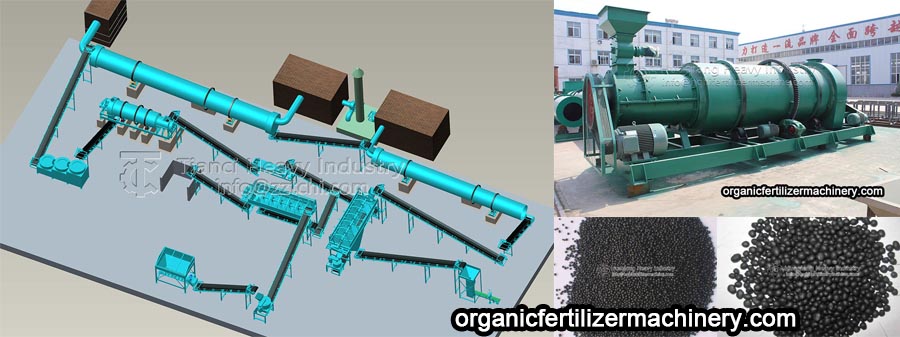
Raw material characteristics are the fundamental guarantee of granulation effect. The material particle size needs to be controlled between 0.1-3mm. Too much fine powder can lead to loose granules, while an excessive proportion of coarse particles will hinder molding. Crushing and screening are necessary to ensure uniform particle size. Water content is a core indicator; 12%-18% is the appropriate range. Too high a water content can cause the material to stick to the equipment and deform the granules, while too low a water content results in a lack of viscosity and difficulty in agglomeration. The selection and amount of binder are also crucial. Humic acid, bentonite, etc., need to be matched to the material characteristics, and the amount should be controlled at 3%-8%, otherwise, it will affect the granule binding force.
Equipment condition directly restricts granulation stability. Different models have significantly different suitability. Disc granulators are suitable for high-yield scenarios with high appearance requirements, while new type organic fertilizer granulators, with their innovative process advantages, are more suitable for complex materials such as those with high fiber and high organic matter content, and do not require the addition of binders, thus ensuring both granule purity and molding effect. Equipment wear will significantly reduce efficiency. After wear of easily damaged parts such as molds and pressure rollers, it will lead to irregular granule shapes and insufficient strength, requiring regular inspection and replacement. At the same time, equipment gap adjustment needs to be precise. For example, improper disc scraper gap will lead to material adhesion. The drum speed and double mold hole spacing of the new organic fertilizer granulator also need to be precisely calibrated, otherwise, it will affect molding consistency.
Process parameter control is key to optimizing the granulation effect. The granulation pressure needs to be adapted to the material characteristics. Insufficient pressure results in loose and fragile granules, while excessive pressure can damage the equipment and cause granule deformation. Temperature control needs to be reasonable. Too high a temperature will cause the decomposition of material components and the failure of binders, while too low a temperature results in poor material fluidity. The steam conditioning process requires the temperature to be stable at 40-60℃. The granulation time also needs to be controlled; too short a time will result in insufficient agglomeration of the materials, while too long a time will reduce production efficiency. The optimal time needs to be determined based on the equipment type and material characteristics.
In summary, improving the granulation effect of organic fertilizer granulation machines requires precise matching of raw materials, equipment, and process. During production, it is necessary to first optimize raw material pretreatment, then select appropriate equipment based on material characteristics and ensure proper maintenance, and finally determine the optimal process parameters through small-scale testing to consistently produce high-quality organic fertilizer granules.



.jpg)