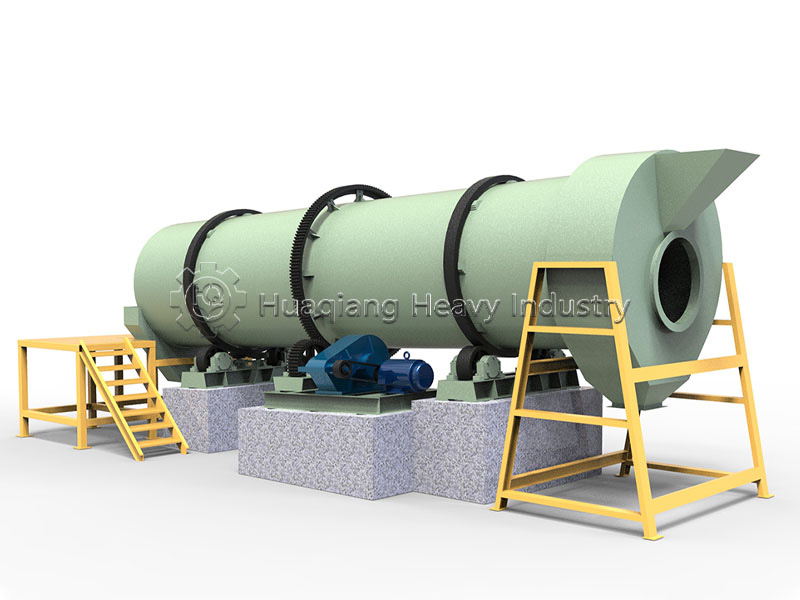
Powdered organic fertilizer is inconvenient to store and transport; furthermore, it generates dust during application and suffers from low utilization rates. Processing it into granular form is a key step in enhancing product quality and market value. Given the characteristics of powdered organic fertilizer raw materials, mainstream options on the market—such as disc granulators, flat-die pellet machines, and stirring-tooth granulators—suit different production scenarios. Farmers and processing plants can make precise selections based on production capacity, material moisture content, and product positioning.
Disc granulators are the preferred choice for small processing plants and startup operations, serving as the mainstream equipment for the wet granulation of powdered organic fertilizer. This equipment utilizes centrifugal force and friction generated by a rotating, tilted disc to cause powdered material to roll and agglomerate into spheres; it relies on ambient-temperature physical granulation rather than high-pressure processing. It is suitable for fermented powdered organic fertilizer with a moisture content exceeding 15%. Binders can be sprayed as needed to adjust granule size, achieving a granulation rate of over 90% and producing smooth, round, high-quality granules. The equipment features a simple structure, a small footprint, low cost, and ease of operation and maintenance. Its only limitation is a relatively low single-unit capacity, making it perfectly suited for the mass production needs of small-to-medium-sized lines.
Flat-die pellet machines are the top choice for dry powder processing and multifunctional mass production, serving as versatile, core equipment in the organic fertilizer industry. This equipment uses pressure rollers to force the powdered fertilizer through die holes, shaping it into granules. It accommodates both dry and wet powdered raw materials, offering excellent material compatibility without the need for complex pre-treatment. It can process fermented powder with a moisture content of 12%–20%, producing cylindrical, dense, and highly uniform granules that are resistant to crumbling and storage-stable, meeting commercial production standards. Compared to other equipment, flat-die granulators offer lower energy consumption, stable output, and low failure rates; they can process pure organic fertilizer powder as well as mixtures containing straw, mushroom residue, and livestock manure. Their only drawback is that large-scale capacity is slightly lower than that of rotary drum equipment, making them ideal for small-to-medium-sized professional plants and workshop-style mass production, effectively balancing product appearance, cost, and practicality.
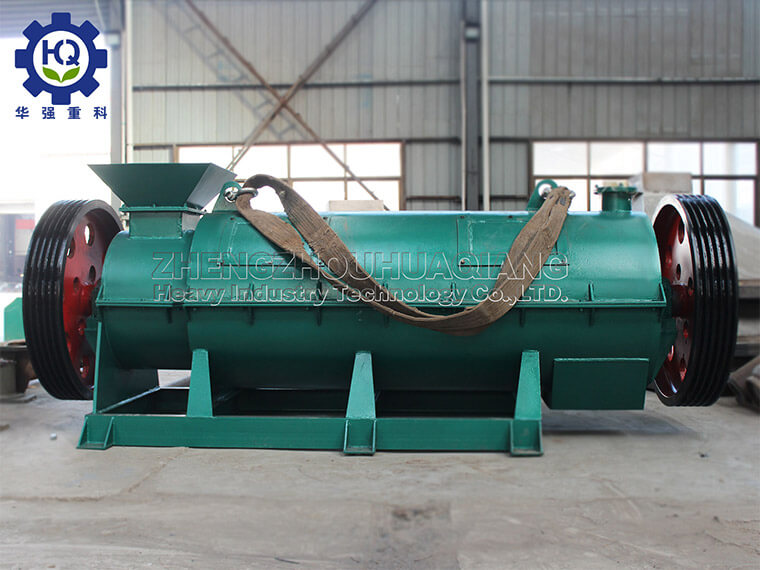
For high-capacity wet granulation and large-scale production lines, the stirring-tooth granulator is the ideal specialized equipment for organic fertilizer. It utilizes high-speed rotating teeth to strike, break up, and knead powdery materials, rapidly agglomerating them into granules with exceptional speed and efficiency; it is specifically designed for fermented, decomposed powdered organic fertilizer. The machine is highly compatible with moist powder (moisture content around 15%), requiring no repetitive pre-treatment, and ensures uniform feeding and rapid granulation for continuous production. Compared to other equipment, the stirring-tooth granulator offers higher capacity and suits large-batch assembly-line operations; the resulting granules feature moderate hardness and good permeability, allowing for balanced nutrient release. While the equipment is compact and resistant to clogging, it has strict requirements regarding material dryness—dry powder cannot be processed directly—making it best suited for medium-to-large-scale, standardized organic fertilizer production lines.
In summary: choose the disc granulator for small-to-medium scales where granule appearance is a priority; select the flat-die pellet machine for dry powder versatility and cost-effective mass production; and opt for the stirring-tooth granulator for high-yield wet granulation and large-scale operations. Selecting the right equipment based on specific needs is the key to improving quality and efficiency while reducing costs and increasing returns.



.jpg)