When investing in an organic fertilizer production line, you should look beyond just the price tag. The long-term, stable operation of a production line relies on a comprehensive set of safeguards. To minimize investment risks and ensure the successful implementation of your project, prioritize verifying the following: manufacturer qualifications, equipment quality, end-to-end service, after-sales maintenance, and contractual protections.
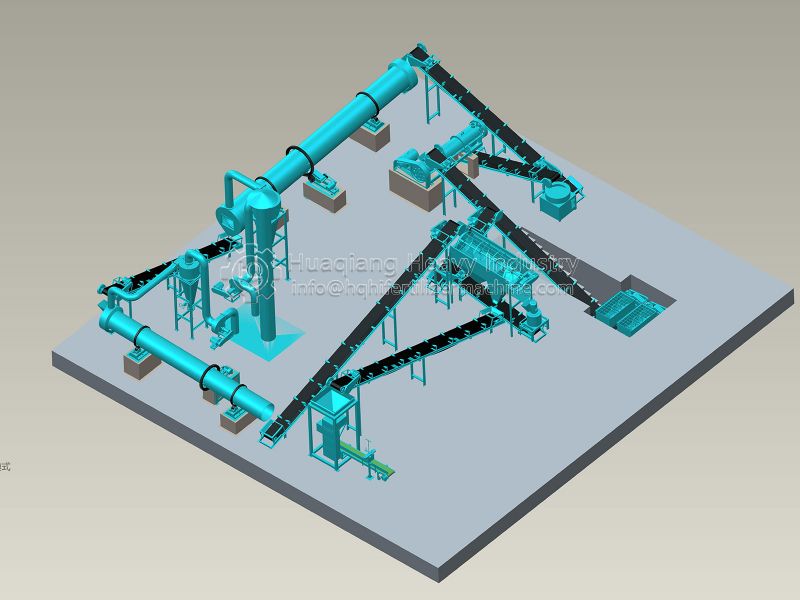
First, consider the manufacturer’s qualifications and project track record. It is best to choose an original manufacturer—one that integrates R&D, production, and installation—such as Huaqiang Heavy Industry, a company with deep expertise in the fertilizer equipment sector. Before purchasing, verify the company’s business license, quality management system certifications, and relevant patents. Review their past projects, and ideally, conduct site visits to both their manufacturing facility and the operational sites of their existing clients. An experienced manufacturer will be well-versed in the entire process—from manure fermentation and granulation to screening—helping you avoid design flaws and ensuring you aren't purchasing equipment that has been outsourced or resold by a third party.
Second, ensure the quality of the equipment before it leaves the factory. Organic fertilizer equipment operates under demanding conditions, often involving highly corrosive materials; therefore, the selection of materials for core components and rigorous pre-shipment testing are critical. A reputable manufacturer will perform both no-load and load-based test runs, providing a certificate of conformity and material testing reports. When purchasing, clarify the brands and warranty coverage for key components—such as the main machinery, motors, and bearings—and distinguish between the warranty for the equipment as a whole and that for wear-and-tear parts. This prevents situations where you might be left without support if a core component fails.
Third, evaluate the pre-sales and delivery services. Organic fertilizer projects involve complex requirements, such as facility layout and process flow planning. A high-quality manufacturer will offer on-site surveys, provide customized production line solutions, and ensure compliance with environmental impact assessment (EIA) requirements. Regarding delivery, confirm the lead time, responsibilities for transport and unloading, and the scope of installation and commissioning services. Once the production line is installed, the manufacturer should provide on-site training for your staff—covering routine inspections and basic troubleshooting—until they are capable of operating the system independently and reliably.
Fourth, consider after-sales maintenance and spare parts support—an aspect often overlooked. Because organic fertilizer equipment is subject to continuous, long-term operation, wear and tear are inevitable. Ensure that your contract explicitly outlines the response time for after-sales support, including commitments for prompt telephone assistance and the timeframe within which an engineer will arrive on-site. Additionally, verify the manufacturer’s spare parts inventory capacity and their ability to provide high-wear components promptly; this helps minimize production losses caused by downtime while waiting for parts. Long-term maintenance and regular inspection services can effectively extend the service life of your equipment.
Finally, ensure your rights are protected through the contract. All verbal commitments must be incorporated into the procurement agreement, which should clearly specify the equipment list, production capacity targets, warranty periods, scope of services, and liabilities for breach of contract. Define acceptance criteria, establish clear protocols for scenarios where production capacity or process standards are not met, and ensure there are no hidden charges.
In summary, when purchasing organic fertilizer production equipment, price should be considered only as one reference point. Five key pillars—qualifications, quality, technical processes, after-sales support, and contractual safeguards—are all essential. By selecting a reliable manufacturer and ensuring these safeguards are fully implemented, you can achieve stable operation of your organic fertilizer production line and secure a solid return on your investment.