Organic waste—such as livestock and poultry manure, crop straw, and fungal residue—can be transformed into high-quality organic fertilizer through a decomposition (composting) process. A complete organic fertilizer production line is organized into four main stages: fermentation, raw material processing, granulation, and finished product handling. Huaqiang Heavy Industry offers solutions for both powdered and granular fertilizers, tailored to specific production capacity requirements, thereby facilitating the resource utilization of solid waste from the livestock and poultry farming sectors.
_800x600.jpg)
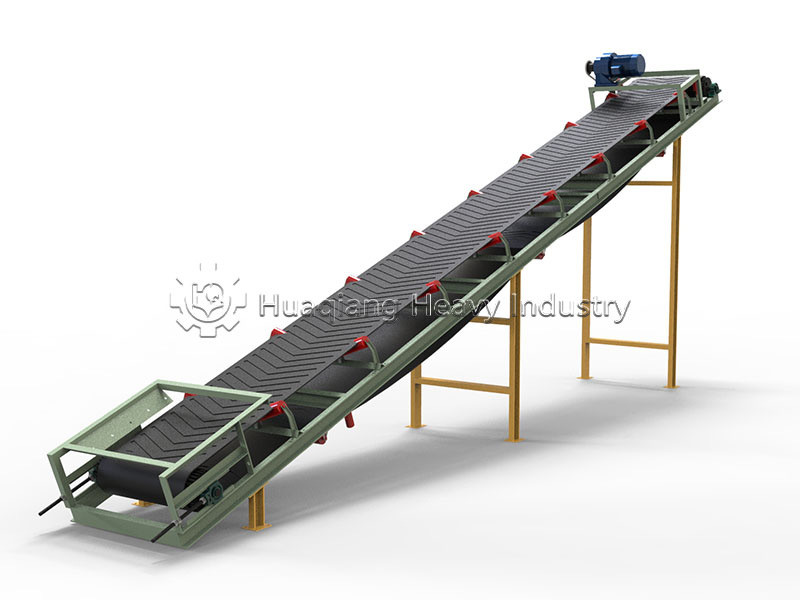
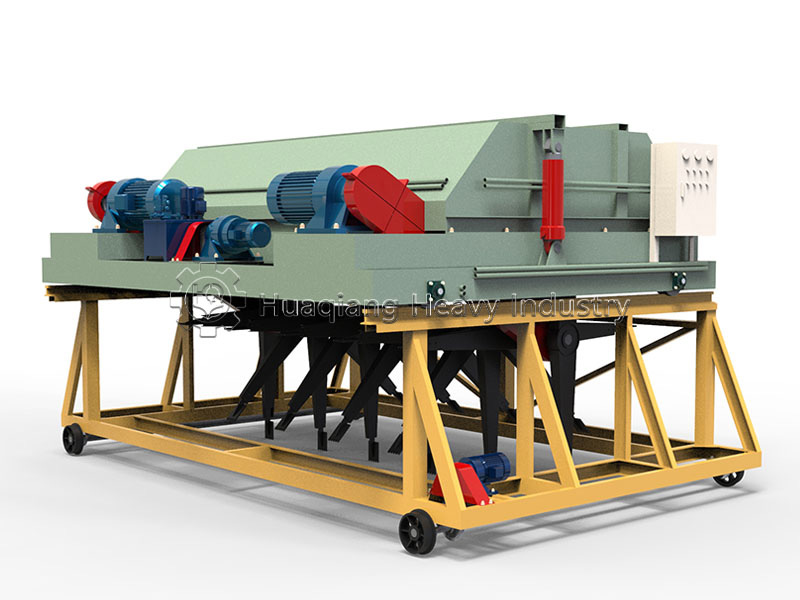
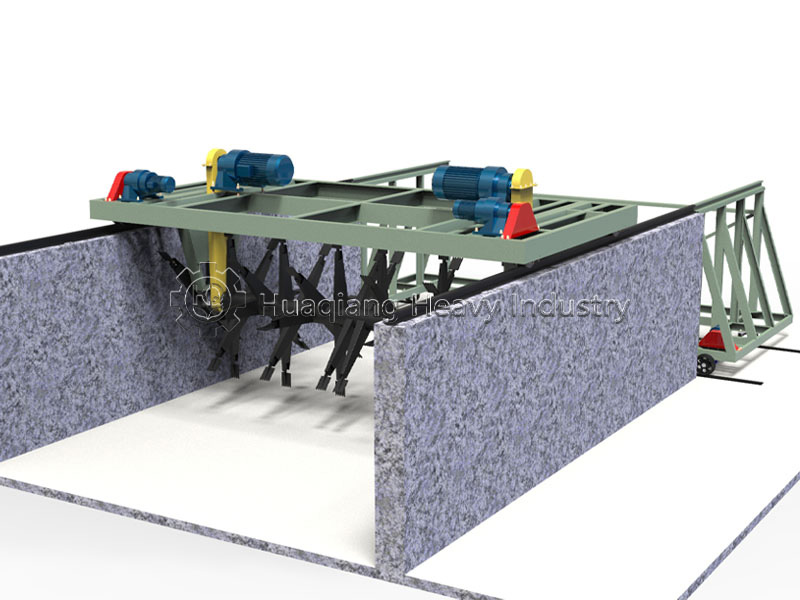
The fermentation stage serves as the foundation of organic fertilizer production, with the trough-type compost turner acting as the core piece of equipment. After raw materials are mixed with fermentation microbial agents and piled up, the compost turner continuously turns the material to supply oxygen, which accelerates decomposition, eliminates odors, and destroys insect eggs and pathogens. If the raw materials have a high moisture content, a solid-liquid separator can be integrated to reduce moisture levels and shorten the fermentation cycle. Belt conveyors are used to transport materials, ensuring a continuous fermentation process.
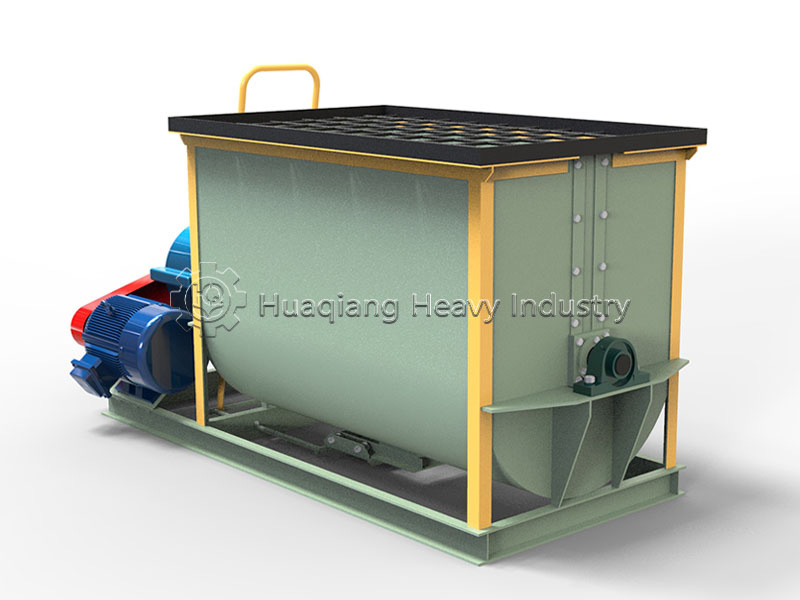
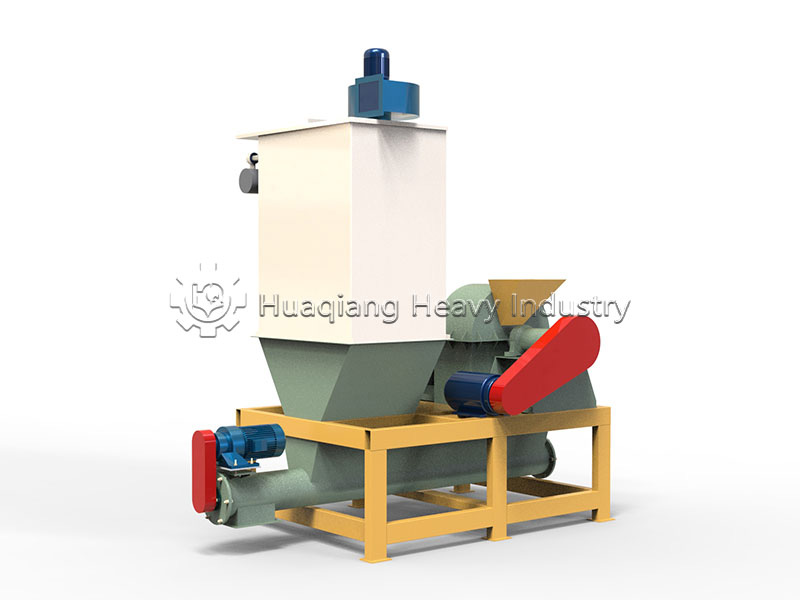
The raw material processing stage includes a half-wet material crusher, an automatic batching system, and a double-shaft paddle mixer. Since decomposed materials often form large clumps, the semi-wet material crusher is designed to break down moist materials without clogging. The automatic batching system precisely proportions the main ingredients, additives, and trace elements according to a specific formula, while the dual-shaft mixer ensures thorough blending, resulting in a uniform nutrient distribution—preparing the mixture for the subsequent granulation stage.
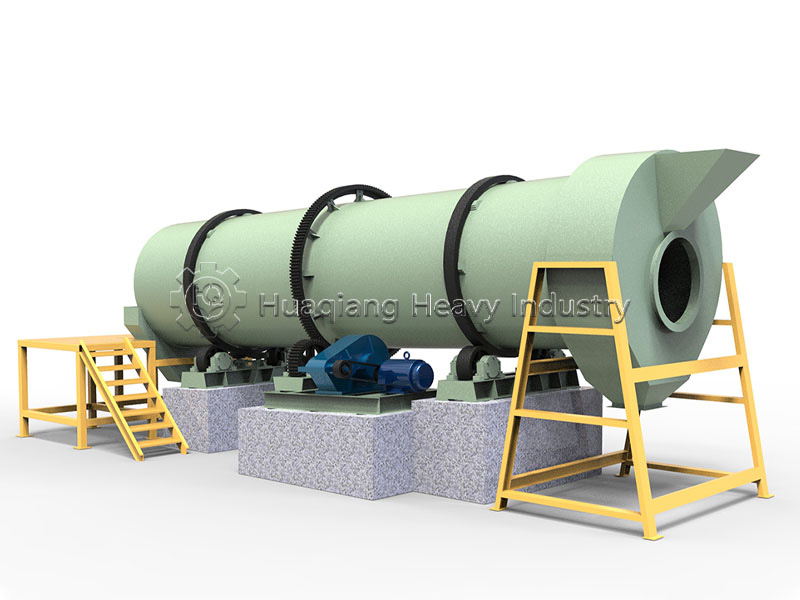
Granulation is the core process in the production of granular organic fertilizer. Common options include new type organic fertilizer granulators or disc granulators. These machines transform the mixed powder into uniform granules, which improves the ease of application, storage, and transport of the fertilizer. Because the granules have a high moisture content after the granulation process, they must be dried at a low temperature in a drum dryer, followed by cooling in a cooling machine to prevent the granules from re-absorbing moisture and clumping.
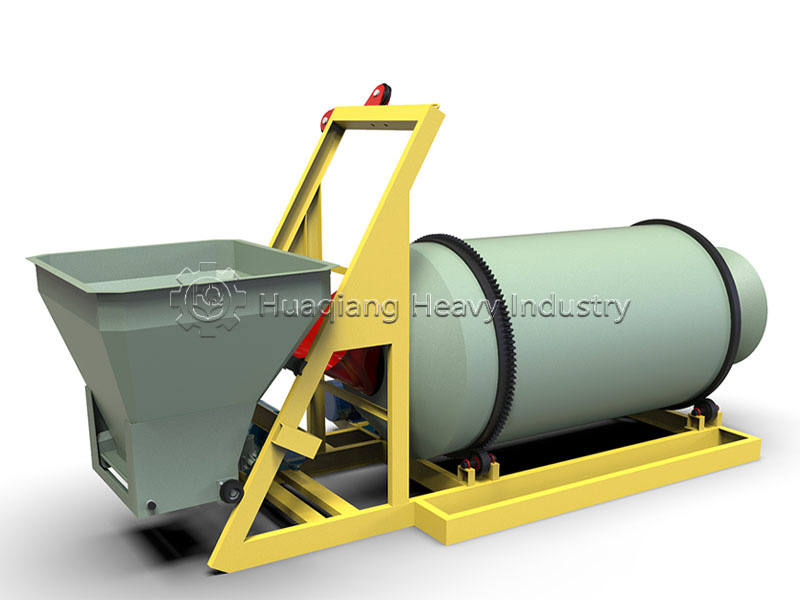
The finished product handling stage consists of a drum screening machine, a coating machine, and an automatic packaging machine. The rotary screening machine classifies the granules, separating those that meet the required specifications; oversized particles and fine powder can be recycled back into the system for further crushing and granulation. A coating machine can apply an anti-caking layer to the surface of granules, extending the shelf life of the fertilizer. An automatic packaging machine handles precise bagging and sealing, producing the final organic fertilizer product. The entire production line is equipped with dust and odor removal systems to meet environmental protection standards.
The organic fertilizer equipment suite offers flexible configuration options: smaller-scale projects can utilize a simplified setup to produce powdered organic fertilizer—omitting granulation, drying, and cooling equipment—while larger-scale operations can be equipped with a full range of granulation machinery for a higher degree of automation. By transforming agricultural waste into a valuable resource, these organic fertilizer production lines help reduce environmental pollution and improve soil quality, serving as essential equipment for the development of green agriculture.



.jpg)