The crawler-type compost turner is the core piece of equipment for the windrow-based aerobic fermentation process. It is widely used in the treatment of organic solid waste—such as livestock and poultry manure, crop straw, fungal residue, and sludge—and serves as a primary machine in the organic fertilizer production lines manufactured by Huaqiang Heavy Industry. By coordinating its crawler-based propulsion system with a rotating turning drum, the machine performs turning, crushing, aeration, and moisture removal, thereby creating an optimal environment for aerobic microorganisms and accelerating the decomposition and maturation of the material.

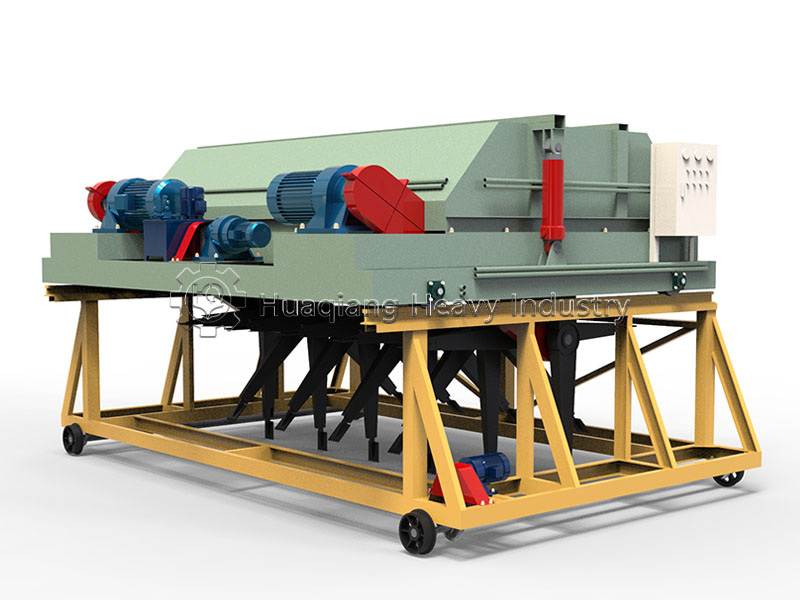
The machine’s power system is split into two paths: one drives the crawler undercarriage for movement, while the other—via a reduction mechanism—powers the rotation of the horizontal turning drum. The large ground-contact area of the crawlers results in low ground pressure, preventing the machine from getting stuck in damp or muddy fermentation sites; it offers flexible maneuverability—capable of turning, moving forward, and reversing—while straddling long windrows of material. The drum is equipped with wear-resistant alloy tines and a counter-helical structure. It features a hydraulic lifting mechanism, allowing the turning depth to be adjusted based on the height of the windrow to accommodate various pile dimensions.
As the machine advances, the high-speed rotating tines cut into the base of the windrow, breaking up compacted, clumped, or tangled material. The helical structure gathers the material toward the center, after which centrifugal force propels it upward and backward. In mid-air, the material is thoroughly dispersed, maximizing its contact with the air to facilitate aeration and oxygenation. Simultaneously, the high heat, moisture, and harmful gases accumulated within the pile are rapidly expelled, preventing the development of anaerobic, foul-smelling conditions or the localized destruction of beneficial microbial populations due to excessive heat. As the material falls back to the ground, a baffle plate helps reshape it into a neat, uniform windrow. This process ensures the thorough mixing of material—from top to bottom and inside to outside—eliminating "dead zones" in the fermentation process and ensuring a more even distribution of temperature, moisture, and microbial cultures.
In terms of fermentation mechanics, the act of turning is essentially a method for regulating the environment for aerobic fermentation. Continuous oxygen supply ensures the proper reproduction of aerobic microorganisms, which in turn decompose organic matter; meanwhile, turning and breaking up the material reduces its bulk density and improves permeability. This process also facilitates heat dissipation and temperature control, preventing the pile temperature from rising too high—which could otherwise kill beneficial bacteria—while simultaneously promoting moisture evaporation. Regular turning in accordance with the fermentation schedule accelerates odor removal, eliminates insect eggs and pathogens, and shortens the maturation cycle.
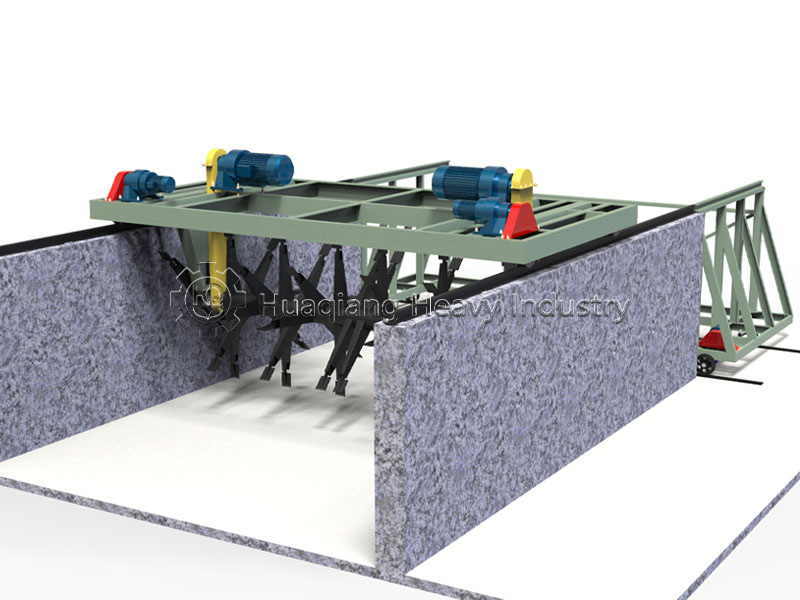
Unlike trough-style turning systems, crawler-type compost turners do not require the construction of fermentation troughs. They offer flexible site layout and easy relocation, making them ideal for on-site resource recovery at small-to-medium-sized organic fertilizer plants and livestock farms. These machines integrate multiple processes—traveling, crushing, mixing, aeration, and shaping—into a single operation. By replacing inefficient manual turning, they ensure consistent fermentation quality and reduce the overall costs of organic fertilizer production, serving as a highly practical piece of fermentation equipment for the resource recovery of organic solid waste.