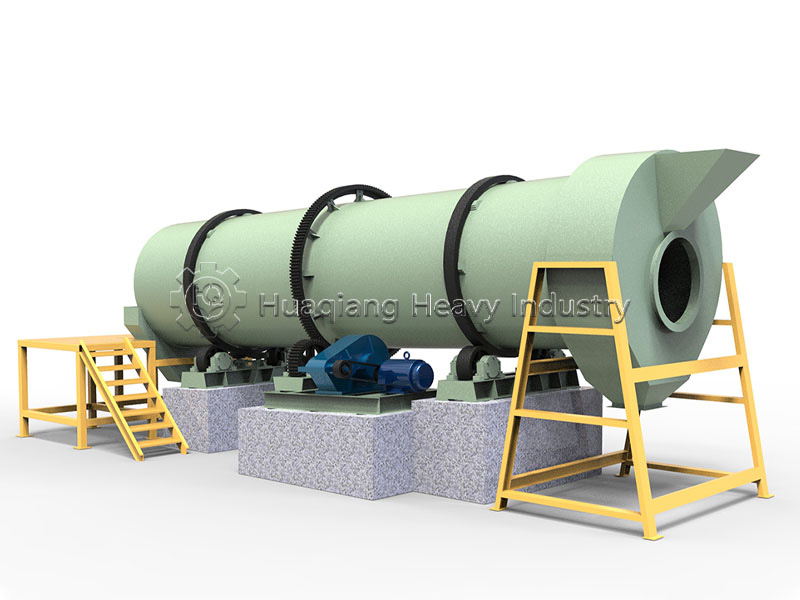
As core equipment for fertilizer production lines and feed pellet forming, the rotary drum granulator has become a mainstream choice for large-scale pellet production due to its simple structure and stable production capacity.
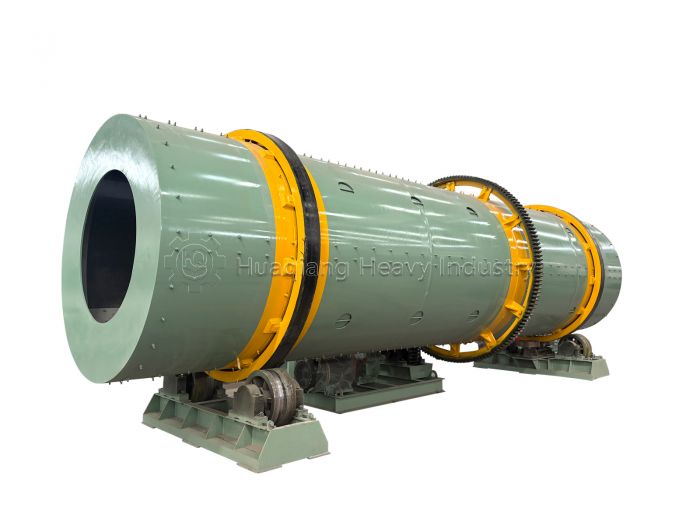
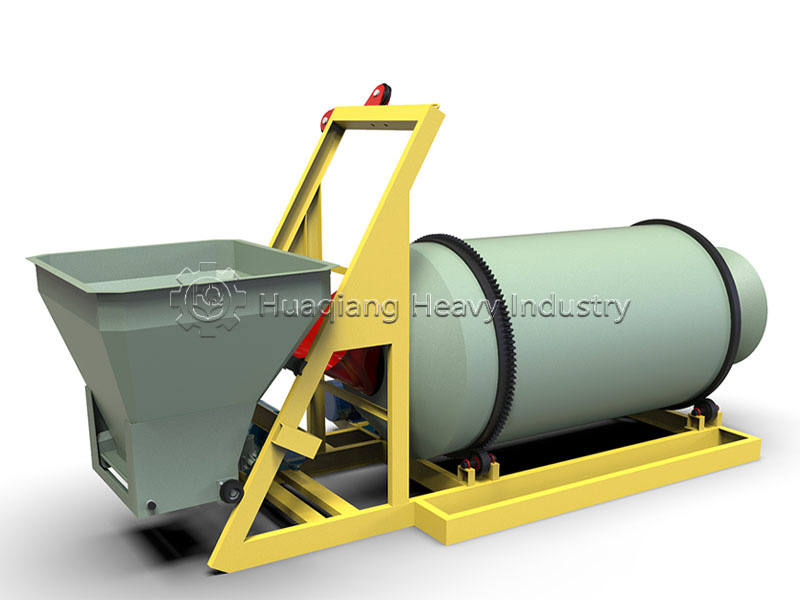
Structurally, the core of the equipment consists of an inclined cylindrical drum, a drive system, a distribution device, and a spray system. The drum rotates at a constant speed of 5-15 rpm, driven by a motor, at an angle of 3-5° to the horizontal. This inclination and speed ensures slow forward movement of the material while providing ample time for pellet growth.
The process can be divided into three key stages. First, the raw material pretreatment stage: powdered raw materials (such as nitrogen, phosphorus, and potassium fertilizer blends, biomass powder) are mixed with a binder (such as water or starch solution) in appropriate proportions to form a wet material with a moisture content of 20%-30%. The mixed material is evenly fed into the drum feed end via a distribution device to prevent accumulation that affects pellet uniformity.
Second, the core pelletizing stage: Once the wet material enters the drum, it continuously tumbles and collides under the force of rotation. In the initial stage, fine particles aggregate due to the adhesive properties of the binder, forming "master granules" with a diameter of 1-3mm. As the drum rotates continuously, the master granules continuously absorb surrounding powders, gradually growing larger like a snowball. Simultaneously, lifters on the inner wall of the drum lift and scatter the material upward, preventing it from sticking to the wall while enhancing mixing and roundness. Ultimately, spherical granules with a diameter of 2-8mm are formed, meeting the needs of various industries.
Finally, the granule stabilization stage occurs: the formed granules are discharged from the discharge end according to the inclination of the drum and enter the subsequent drying and cooling system. During the drying process, the moisture within the granules evaporates, and the binder forms a solid structure, increasing the granule hardness to 2-5N, ensuring resistance to breakage during transportation and storage.
It is worth noting that the granulation performance of the rotary drum granulator is closely related to the moisture content of the material, the drum speed, and the inclination angle. If the moisture content is too high, the granules are likely to stick together; if the speed is too fast, the granules will be small; and if the speed is too slow, the production capacity will decrease. Therefore, in actual production, parameters need to be dynamically adjusted according to the characteristics of the raw materials to achieve efficient and stable particle output.



.jpg)