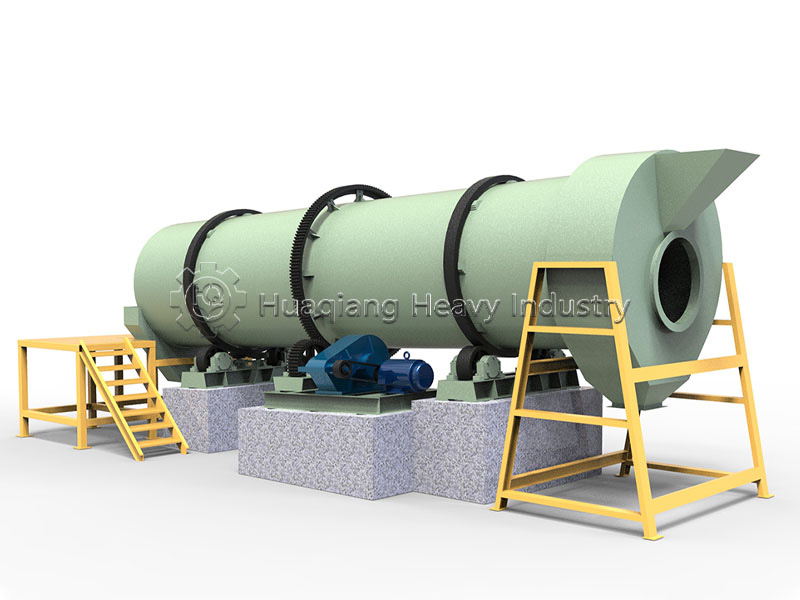
In agricultural production, fertilizer is a key source of nutrients for crop growth. Granulators are essential equipment for unlocking fertilizer value and improving agricultural quality and efficiency. Their impact permeates multiple key aspects of agricultural production.
The primary function of granulators is to improve fertilizer utilization and address the challenges of traditional powdered fertilizers. Traditionally, powdered organic and compound fertilizers are prone to loss and volatilization due to wind and rain, which not only wastes resources but also can cause soil compaction. Granulators use processes such as extrusion and agglomeration to convert powdered fertilizer into granules. Granulated fertilizers are highly stable and slowly release nutrients in the soil, extending their effective lifespan and ensuring more efficient crop absorption. Data shows that granulated fertilizers can increase utilization by 20%-30%, significantly reducing nutrient waste and providing a continuous supply of energy for crop growth.
Additionally, granulators facilitate large-scale and standardized agricultural production. In modern agriculture, large-scale cultivation places even higher demands on fertilizer uniformity and applicability. Granulators can produce customized granular fertilizers based on the fertilizer requirements of different crops (such as wheat, rice, and fruits and vegetables) by adjusting particle size, hardness, and nutrient ratio. For example, to address the short growth cycles and concentrated fertilizer requirements of fruits and vegetables, granulators can produce small, high-nitrogen, high-potassium granules to meet their rapid growth needs. For field crops with long growth periods, large, slow-release granules can be produced to reduce fertilization frequency. This customized production ensures fertilizers are more aligned with the growth patterns of the crops, ensuring a steady increase in agricultural yield and quality.
Granulators also promote green and sustainable agricultural development. Currently, the agricultural sector is actively promoting the use of organic fertilizers instead of chemical fertilizers, and agricultural waste such as livestock and poultry manure and straw is an important raw material for organic fertilizers. Granulators can transform these wastes into granular organic fertilizers, effectively turning waste into treasure. This not only reduces pollution caused by the indiscriminate storage of agricultural waste, but also improves soil structure, increases soil organic matter, and contributes to improved farmland quality, laying the foundation for sustainable agricultural development.
Although the granulator is not directly involved in crop planting, it has become a bridge connecting fertilizer production and agricultural harvest with its unique technological advantages, injecting strong impetus into the high-quality development of agriculture.



.jpg)