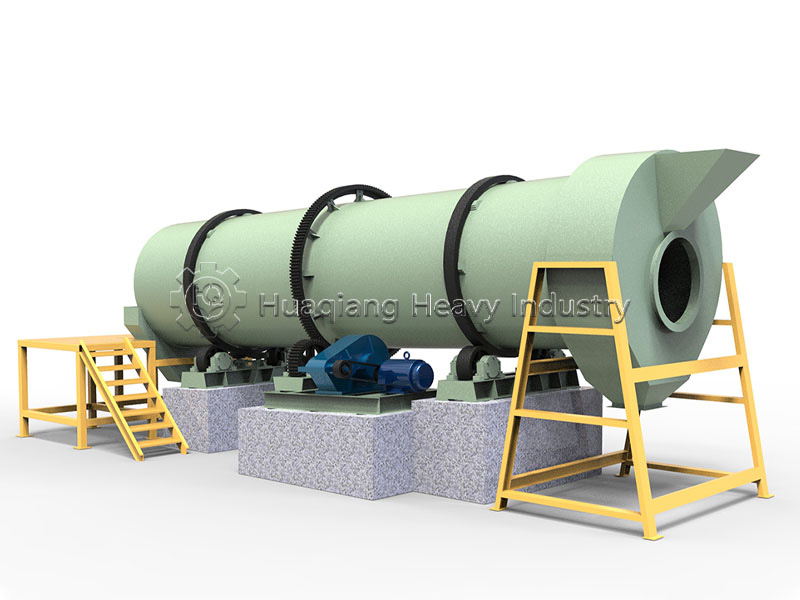
Under the dual guidance of green agricultural development and the promotion of a circular economy, organic fertilizer production lines have long surpassed the simple category of "fertilizer processing equipment," becoming a core support for solving environmental problems, upgrading agricultural production, and connecting resource cycles. Its core value permeates the entire chain of ecological protection, agricultural quality improvement, and resource utilization, injecting strong momentum into sustainable agricultural development.
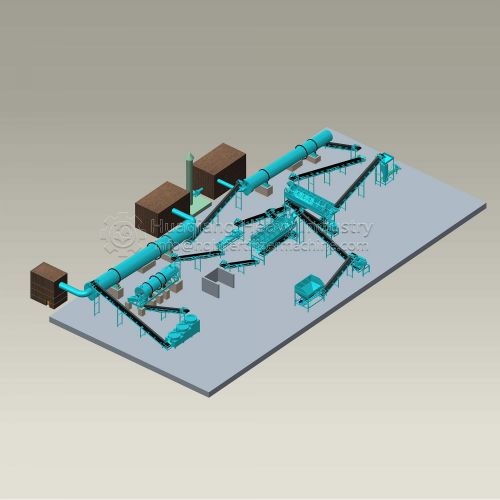
Ecological protection is the primary value of organic fertilizer production lines. Currently, the indiscriminate dumping of agricultural waste such as livestock manure and crop straw not only pollutes soil and water sources but also produces foul-smelling gases that affect air quality. Organic fertilizer production lines, through scientific fermentation and processing technologies, transform these wastes into high-quality organic fertilizers, solving the problem of agricultural non-point source pollution at its source. According to statistics, an organic fertilizer production line with an annual output of 100,000 tons can process nearly 200,000 tons of livestock manure and 80,000 tons of crop straw annually, effectively reducing environmental pressure and contributing to ecological environment management.
Empowering agricultural quality improvement and efficiency is its core mission. Long-term overuse of chemical fertilizers leads to soil compaction and decreased soil fertility, affecting the quality of agricultural products. The organic fertilizer produced by the production line is rich in organic matter, amino acids, and various trace elements, which can improve soil structure and fertility, allowing crops to absorb nutrients better. Practice has shown that crops fertilized with organic fertilizer not only increase yield by 10%-20%, but also significantly improve the taste and nutritional value of agricultural products, meeting the current consumer demand for green and organic agricultural products and helping farmers increase product added value.
Promoting resource recycling is a deeper manifestation of its value. The organic fertilizer production line establishes a circular chain of "agricultural waste—organic fertilizer—crops—agricultural waste," turning what was once "waste" into a "treasure" for agricultural production. For example, the manure produced by livestock farming, after processing by the production line, solves the environmental problems of livestock enterprises and provides high-quality fertilizer for the planting industry, achieving the integration of planting and breeding and efficient resource circulation, contributing to the construction of a circular agricultural system.
In addition, organic fertilizer production lines precisely align with national green agricultural development policies, bringing policy benefits to farmers and related enterprises. Supported by policies such as reducing fertilizer use and increasing efficiency, and subsidies for ecological agriculture, it has become not only an important vehicle for transforming agricultural production methods, but also a key engine for promoting rural revitalization and achieving a win-win situation for both ecology and the economy.



.jpg)