An organic fertilizer compost turner—often referred to simply as a "compost turning machine"—is a core piece of equipment in organic fertilizer production lines, specifically designed for aerobic composting and fermentation. It serves as a critical component in the organic fertilizer production systems manufactured by Huaqiang Heavy Industry. The machine is primarily used to process organic waste—such as livestock and poultry manure, crop straw, distillers' grains, and sludge—by mechanically turning, mixing, and breaking down the materials to create a stable, oxygen-rich environment for composting microorganisms.

Traditional static composting methods often suffer from oxygen deprivation, leading to the development of anaerobic conditions within the compost pile. This not only slows down the fermentation process but also results in the production of foul-smelling gases like hydrogen sulfide, uneven decomposition, and the failure to effectively eliminate insect eggs or pathogens. The organic fertilizer compost turner solves these problems. As the machine operates, its rotating blades or spiral tines cut into the compost pile, lifting material from the bottom to the surface and breaking up compacted clumps. This allows fresh air to penetrate the pile, facilitating oxygen supply, ventilation, heat and moisture dissipation, and thorough material mixing. A sustained aerobic environment accelerates the microbial breakdown of organic matter; the heat generated within the pile kills off insect eggs and harmful pathogens, shortens the decomposition cycle, and reduces the emission of unpleasant odors.
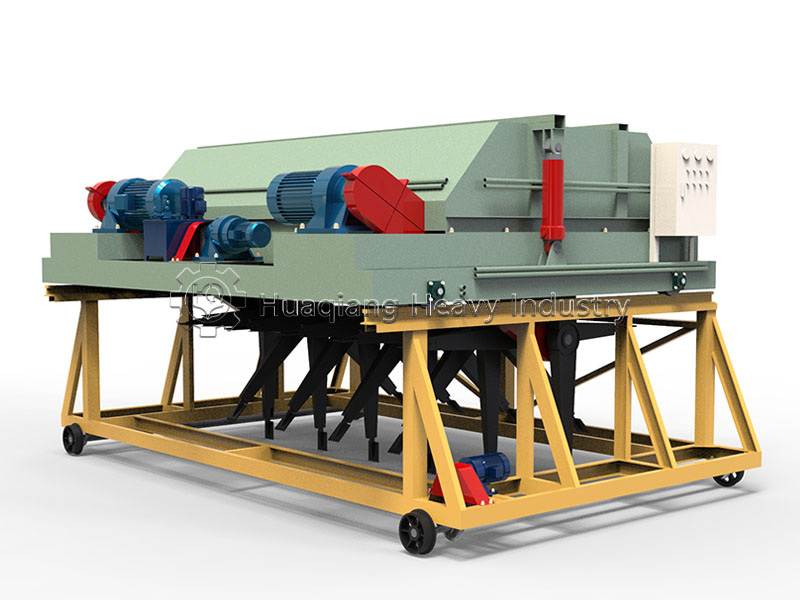
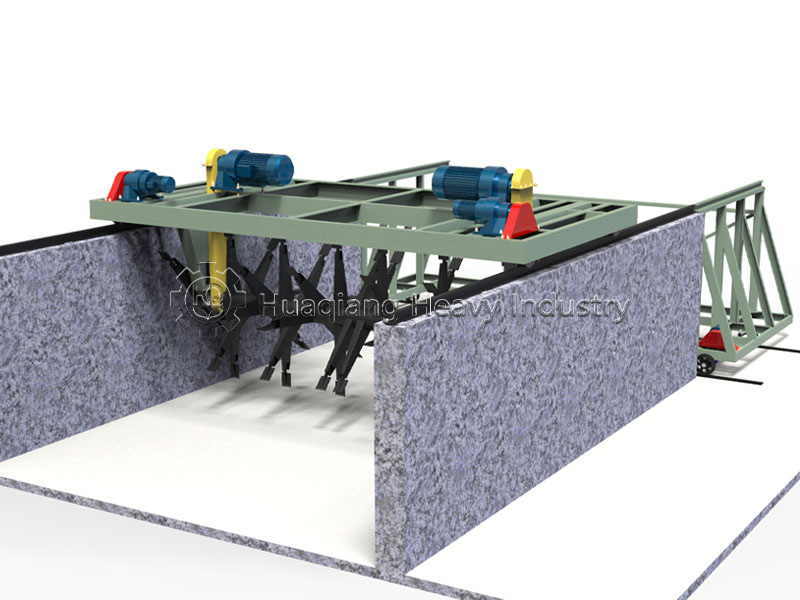
There are two main types of compost turners on the market: trough-type compost turners and crawler-type compost turners. Trough-type compost turners operate along rails installed on fermentation troughs; they offer a high degree of automation and are well-suited for continuous production in large or medium-sized organic fertilizer plants, where a single unit can serve multiple fermentation troughs. Crawler-type compost turners, by contrast, do not require constructed fermentation troughs; they operate directly on windrows (long piles) of material on the ground. They offer greater flexibility in movement and lower initial investment costs, making them ideal for on-site manure management at livestock farms or for small-to-medium-scale organic fertilizer projects.
The function of these machines extends beyond simple turning. Uniform turning helps balance the temperature and moisture content throughout the compost pile, preventing localized overheating that could kill beneficial microorganisms. Furthermore, it ensures that auxiliary materials and primary feedstocks are thoroughly blended, resulting in consistent decomposition across every batch and ensuring a stable, high-quality final product. Through the process of turning and fermentation, the level of harmful substances in the material is significantly reduced, transforming it into a loose, organic-matter-rich feedstock for organic fertilizer. This material then undergoes further processing—such as crushing and granulation—to become the final fertilizer product.
In the context of the shift toward greener agriculture, organic fertilizer compost turners serve as a critical link in the resource recovery of organic waste. By converting waste—such as livestock manure and crop straw—into valuable resources, these machines not only alleviate environmental pressure but also produce organic fertilizer that improves soil quality, thereby facilitating a circular system between crop cultivation and livestock farming. Selecting turning equipment that is well-suited to the required production capacity and site conditions is a vital prerequisite for ensuring the stable operation of an organic fertilizer project and effectively managing production costs.