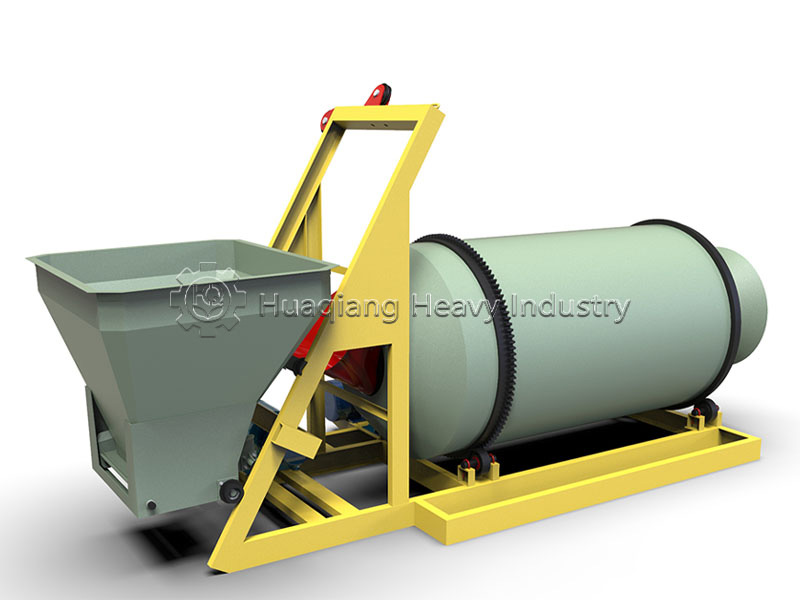
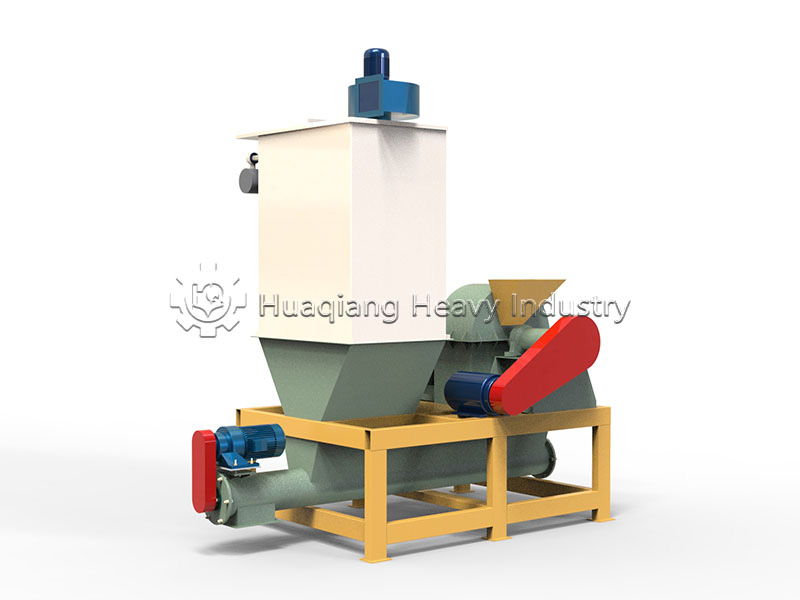
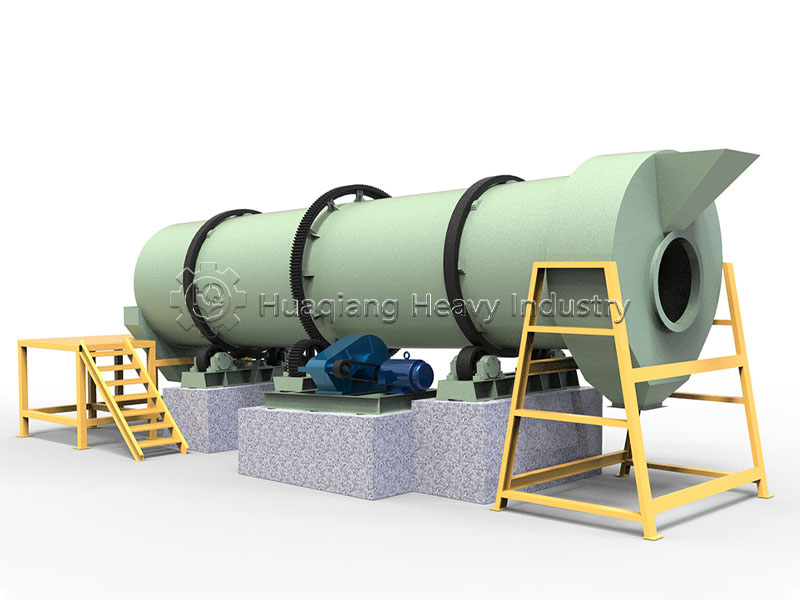
Organic fertilizer compost turners are the core equipment in the composting and fermentation process. By turning, crushing, and aerating the material, they facilitate the aerobic decomposition of organic matter such as livestock manure, crop straw, and sludge. Based on their structure, operating method, and intended environment, the primary types include trough-type, crawler-type, wheel-type, and chain-plate turners. Huaqiang Heavy Industry, a company with extensive experience in manufacturing organic fertilizer equipment, offers customized solutions tailored to specific production scales, making it a reliable partner for selecting equipment for organic fertilizer production lines.
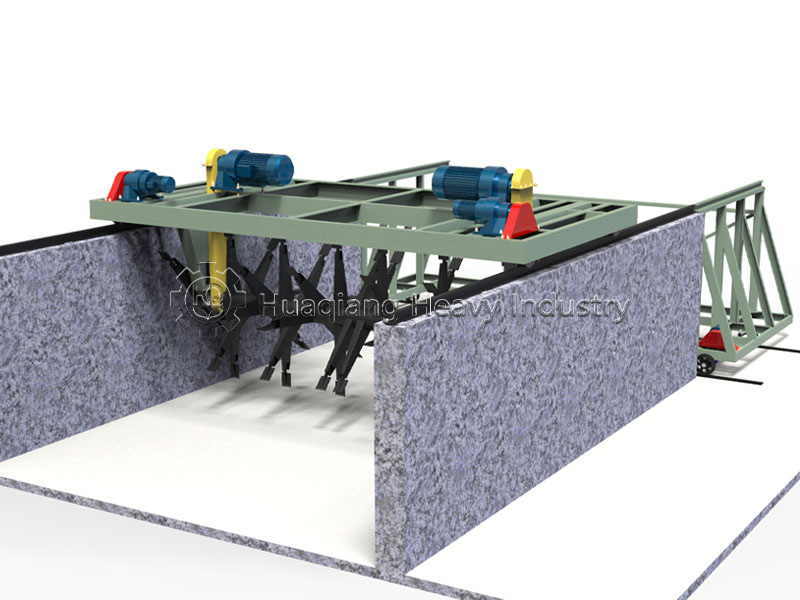
Trough-type compost turners (also known as trough type compost turning machines) are typically used for continuous production in large and medium-sized organic fertilizer plants. The equipment is mounted on rails running along both sides of the fermentation troughs; as it moves back and forth, a spiral turning roller penetrates the material layer, lifting and breaking up the bottom material to ensure uniform oxygen distribution and consistent fermentation results. Huaqiang Heavy Industry’s trough-type models can serve multiple fermentation troughs; when paired with a transfer carriage, the unit can quickly switch between troughs—a feature that facilitates odor control and temperature management within enclosed facilities. A drawback is the requirement for pre-constructed concrete fermentation troughs, which entails higher initial civil engineering costs; this type is best suited for large-scale, fixed-site production.
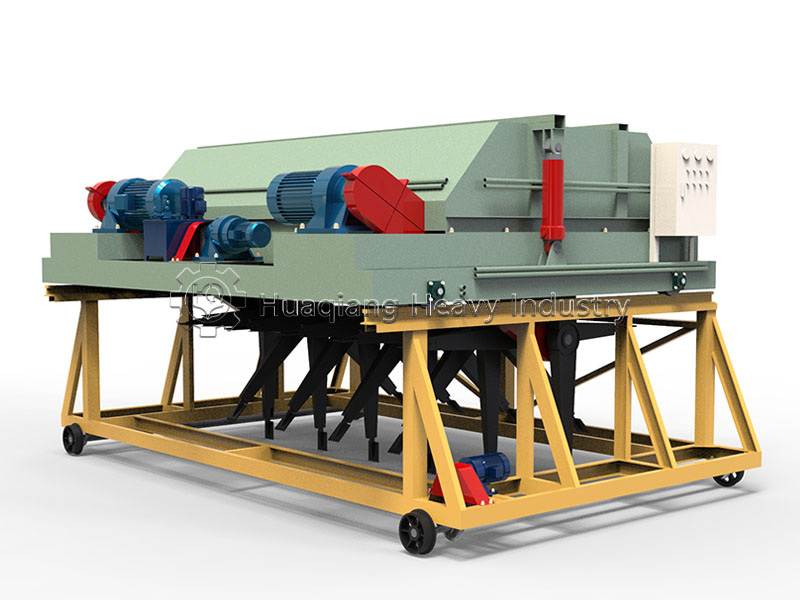
Crawler-type compost turners are self-propelled machines designed for windrow composting. They do not require fermentation troughs, as they operate by straddling long, linear piles (windrows) of material laid directly on the ground. The crawler undercarriage provides a large contact area, preventing slippage on muddy terrain and allowing for flexible movement; the machine can begin operation immediately upon arrival, significantly reducing civil engineering costs. During operation, the turning roller processes the material and automatically reforms it into a new windrow—a task that can be managed by a single operator. Huaqiang Heavy Industry’s crawler-type compost turners are ideal for small to medium-sized organic fertilizer plants and for on-site manure treatment at livestock farms. Their limitations include a restricted turning depth and susceptibility to weather conditions when operated outdoors.

Wheel-type turners (also known as large-wheel compost turners) feature a wide operating span and a significant turning depth, making them well-suited for use in wide fermentation troughs. The large wheel compost turner utilizes its blades to continuously cut, lift, and scatter material. It offers high processing capacity and a high degree of automation, making it well-suited for large-scale organic fertilizer operations. While this equipment requires specific facility infrastructure—such as specialized fermentation bays—and entails a higher initial investment, Huaqiang Heavy Industry provides comprehensive design solutions, typically for high-standard organic fertilizer production facilities.
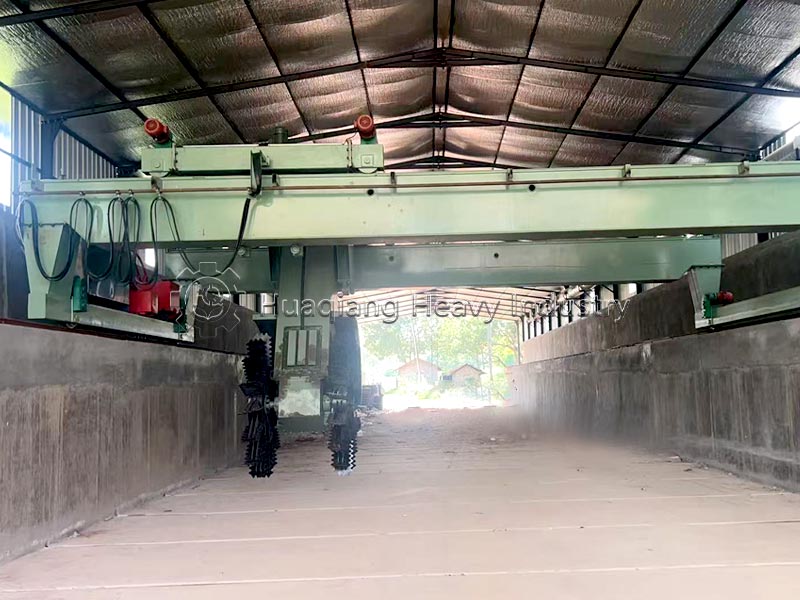
The chain-plate compost turner employs a chain-plate mechanism to turn and aerate materials. It features robust crushing capabilities and excels at handling high-moisture, viscous substances—such as pig manure or wet sludge—that are otherwise difficult to break apart; it ensures uniform turning and is resistant to material adhesion. Designed for use within fermentation bays, this model from Huaqiang Heavy Industry is ideal for processing organic waste with high water content.
In summary, there is no single "best" type of organic fertilizer compost turner; the optimal choice depends on specific needs. Large-scale plants generally favor trough style or large wheel compost turners, while small-to-medium-scale projects or operations with variable site requirements often prefer crawler-type compost turners. For viscous, high-moisture materials, a chain-plate compost turner is an excellent option. When selecting equipment, enterprises can consult with Huaqiang Heavy Industry to evaluate factors such as production capacity, site conditions, and material characteristics. This ensures an informed decision that helps minimize production costs while guaranteeing the quality and maturity of the compost.