In the sectors of livestock manure resource utilization and organic fertilizer processing, the crawler-type compost turner serves as the core equipment for windrow fermentation. Market prices for these machines vary significantly, often leaving potential buyers puzzled as to why similar models carry such different price tags. Huaqiang Heavy Industry has outlined the key factors influencing these costs to help customers make informed purchasing decisions.

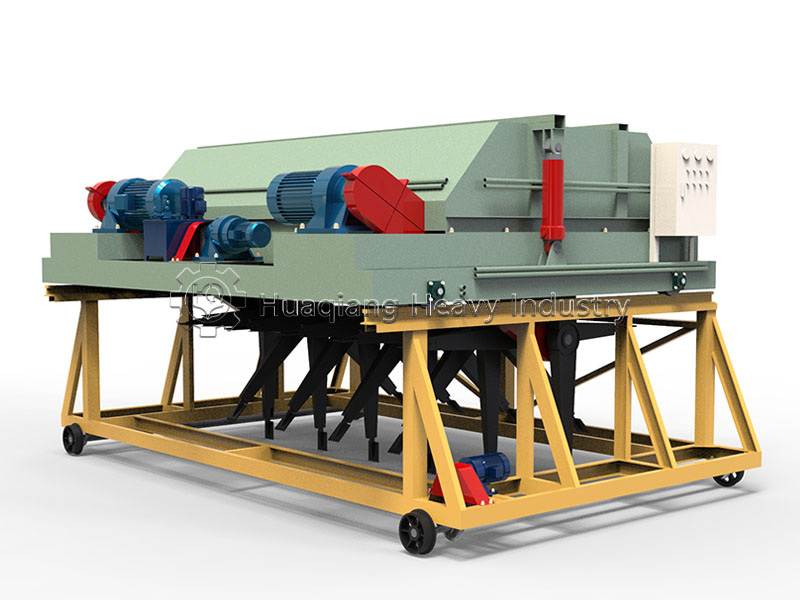
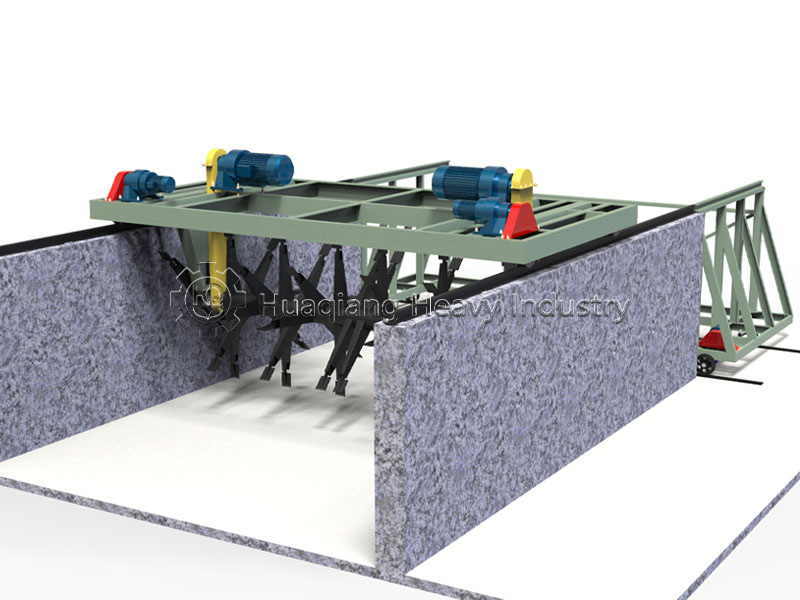
First, equipment specifications and processing capacity are the primary determinants of the base price. Parameters such as turning width, turning height, and the volume of material processed per hour directly dictate the overall dimensions of the machine, the size of the mixing drum, and the quantity of materials—such as steel—required for construction. Smaller models, with a turning width of around 2 meters, are well-suited for family-run farms. Conversely, larger models with a turning width exceeding 3 meters can process thousands of cubic meters per hour; these units are heavier, require more steel, and consequently command a higher base price. Customers should select a model that aligns with their actual volume of manure/waste, rather than blindly opting for the largest machine available.
Second, the core configuration and the grade of components play a major role. The power system is a critical element; models equipped with branded diesel engines or turbochargers offer superior stability and fuel efficiency compared to standard power units, albeit at a higher cost. Regarding propulsion and the turning mechanism, systems range from basic mechanical drives to fully hydraulic setups. Fully hydraulic models allow for drum lifting and zero-turn maneuvering, making them easier to operate and highly adaptable to muddy terrain—though they come at a significantly higher price point. Furthermore, the materials used for the turning blades and track pads vary; components made from wear-resistant alloy steel offer a longer service life, which increases the initial procurement cost. Additionally, some models can be customized with features like remote control or dust-suppression systems, with each upgrade affecting the final price.
Third, manufacturing processes, brand reputation, and quality control are essential considerations. Smaller, less established manufacturers may use simplified welding techniques or thinner steel plates; while these machines might look similar to others, they are prone to deformation and oil leaks over time. In contrast, reputable manufacturers like Huaqiang Heavy Industry utilize reinforced, thickened steel frames, conduct rigorous no-load testing before the equipment leaves the factory, and employ standardized components—all of which result in a lower failure rate. Investing in a branded machine provides more than just the hardware; it includes access to technical documentation, comprehensive warranty coverage, and a reliable supply of wear parts, ensuring better control over long-term total costs. Low-priced equipment often comes with a short warranty and difficult-to-source spare parts, leading to high long-term maintenance costs.
Furthermore, factors such as order structure, transportation, and after-sales support significantly influence the final cost. Pricing varies depending on whether the purchase is for a single unit, a bulk order, or a complete organic fertilizer production line—with bulk purchases typically qualifying for discounts. Costs for long-distance shipping, on-site installation and commissioning, operator training, and dedicated on-site after-sales service are also factored into the quote. Export orders may additionally involve expenses for specialized packaging and commercial inspections, resulting in a pricing structure that differs from that of domestic, off-the-shelf products.
In summary, when selecting a crawler-type compost turner, one should not rely solely on the quoted price. Instead, it is essential to conduct a comprehensive evaluation based on production capacity, equipment configuration, material quality, and after-sales support. By prioritizing compatibility with your specific fermentation site and the types of materials being processed—and by choosing a reliable manufacturer—you can achieve the best balance between cost-effectiveness and long-term, stable production.