In organic fertilizer production lines, a compost turner is the core piece of equipment used for the aerobic decomposition of materials such as livestock manure, crop straw, and sludge. Customers often compare Huaqiang Heavy Industry’s crawler-type compost turner with the more common trough-type compost turners found on the market. While both can effectively turn, aerate, and break up materials, they differ significantly in terms of operational methods, site requirements, initial investment, and suitable applications—factors that directly influence production line planning and long-term operating costs.
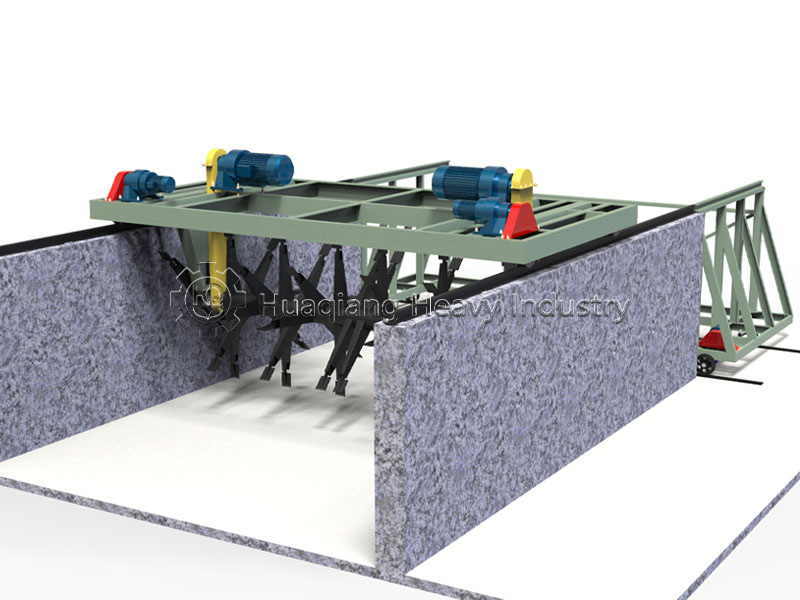
Standard compost turners—typically trough-type models—are fixed on rails above fermentation troughs, moving back and forth along the length of the trough. Their operational area is strictly confined to these troughs, necessitating significant upfront civil engineering work to construct the troughs and install the rails. Because the site is fixed, the equipment cannot be easily relocated. The advantages include a stable working environment (usually indoors, protected from rain and wind), uniform turning, and a high degree of automation. By incorporating a transfer carriage, a single machine can serve multiple troughs. This type is ideal for established, permanent organic fertilizer plants, as it facilitates the centralized collection of exhaust gases and simplifies environmental compliance.
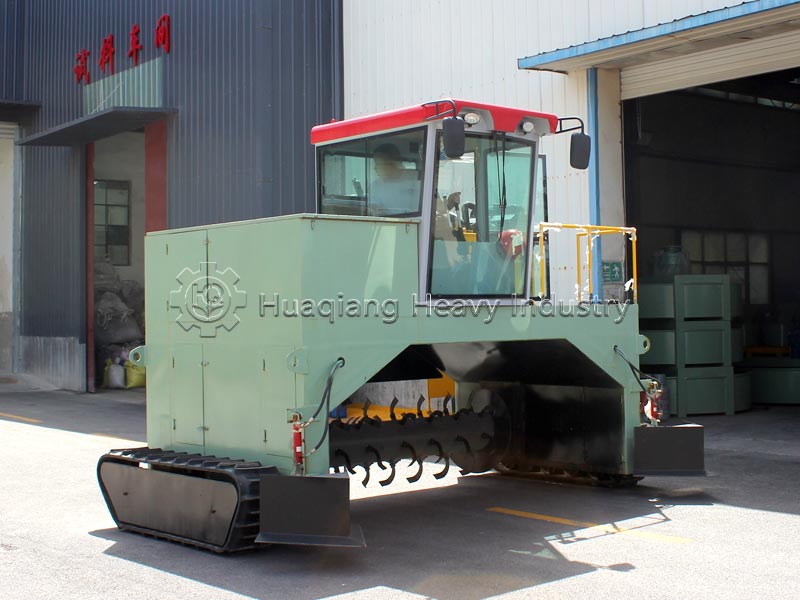
In contrast, a crawler-type compost turner utilizes a rubber-tracked chassis. Designed for windrow (pile-based) composting, it requires no fermentation troughs; materials can simply be arranged into windrows for processing. The large ground-contact area of the tracks results in low ground pressure, allowing the machine to operate stably on unpaved surfaces, muddy ground (even after rain), or gentle slopes without getting stuck or slipping. With a small turning radius and flexible site layout, it can easily move between different composting areas. It can even process manure on-site at livestock farms, orchards, or in open fields, eliminating the need for extensive civil engineering construction.
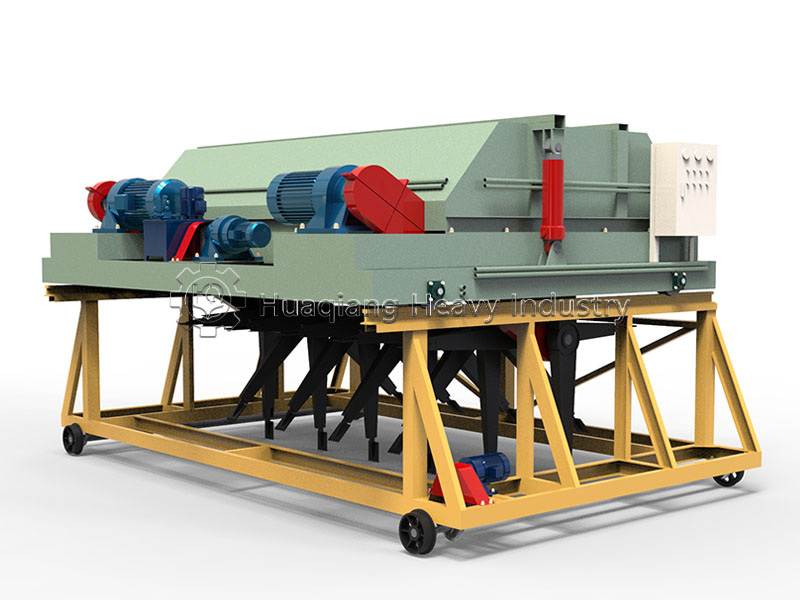
Regarding power and maintenance, most trough-type compost turners are electrically driven, offering stable energy consumption and a mature, reliable design. Spare parts are readily available, and long-term maintenance costs are generally lower, making them well-suited for continuous, stable production. Crawler-type compost turners are typically powered by diesel-hydraulic systems, with some models offering remote-control operation—allowing operators to stay clear of dust and unpleasant odors. However, the crawler tracks are wear-prone components; they degrade relatively quickly in environments containing sand or gravel, leading to higher long-term maintenance costs compared to trough-type (bay-style) turners.
In terms of turning performance, both types effectively meet the requirements for aerobic fermentation. Trough-type compost turners provide consistent turning depth, ensure uniform heating of the material, and allow for better control over fermentation batches. Crawler-type compost turners, by contrast, excel when handling high-moisture, sticky, or heavy materials; they offer superior mobility and allow for flexible adjustments to pile dimensions, making them well-suited for projects with unstable raw material supplies or those lacking a fixed site.
There is no single "best" choice; the ideal equipment depends on your specific circumstances. If you have a dedicated facility, plan for long-term, large-scale production, and need to facilitate exhaust gas collection, a standard trough-type compost turner is the preferred option. Conversely, if you are operating in a basic, open-air composting environment—where frequent relocation is required or there is a need to minimize civil engineering investment—a crawler-type compost turner is more appropriate. The best decision is one that aligns with your specific site conditions, budget, and operational processes to effectively meet your fermentation production needs.