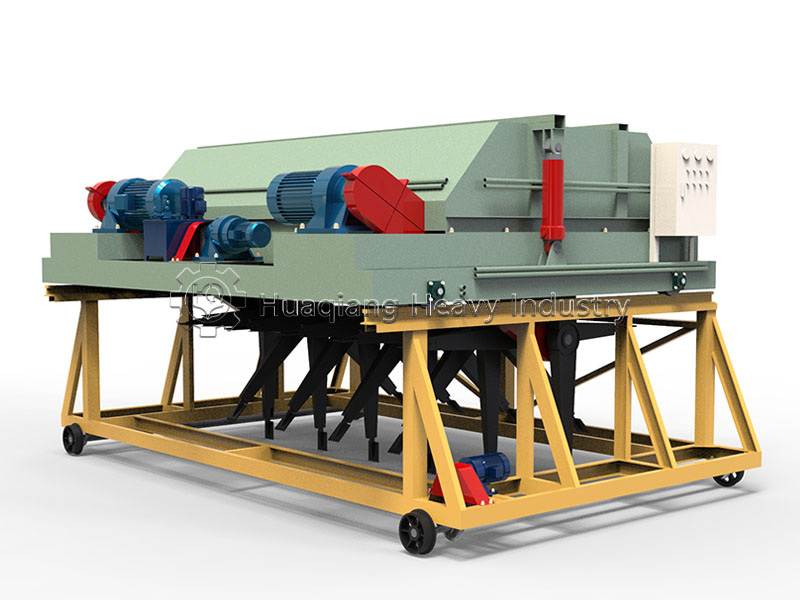
Cow manure has high moisture content and high viscosity; when left in natural piles, it tends to become compacted and oxygen-deprived, leading to slow fermentation, strong odors, uneven decomposition, and the risk of "burning" crops if applied as fertilizer. As a primary piece of equipment for windrow-based aerobic composting, the crawler-type compost turner performs exceptionally well with cow manure. It is the preferred choice for livestock farms and organic fertilizer plants. Specifically, the crawler-type compost turner from Huaqiang Heavy Industry has been extensively field-tested and proven highly reliable for cow manure fermentation.

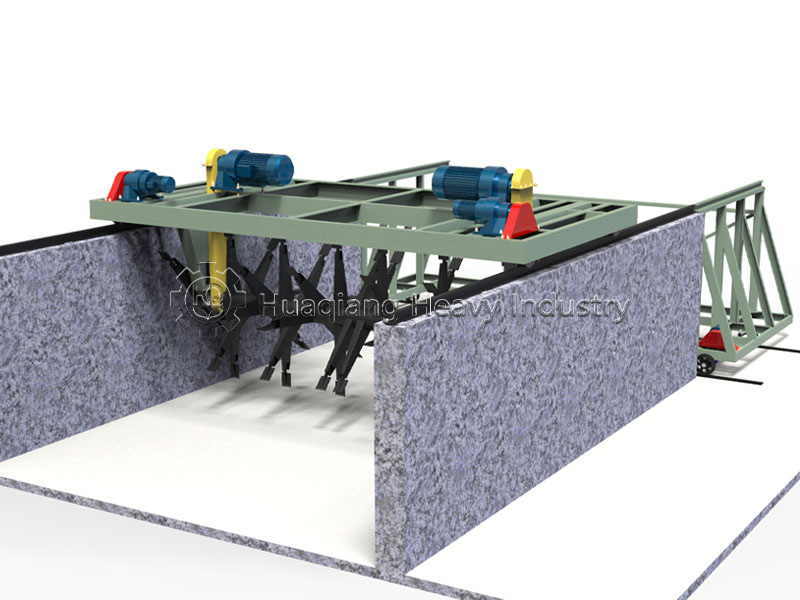
The core advantage of a crawler-type compost turner is its ability to continuously supply oxygen to the manure piles, ensuring an aerobic fermentation process. During operation, the blades on the turning drum lift, break up, and cast the manure—disintegrating clumps and bringing material from the inner, anaerobic zones to the surface. Simultaneously, it incorporates additives like straw or microbial agents. This ensures sufficient oxygen throughout the pile, promoting the rapid proliferation of beneficial microorganisms. The internal temperature of the pile rises steadily to over 55°C, effectively eliminating insect eggs, weed seeds, and harmful pathogens, resulting in more thorough decomposition. Unlike using a front-end loader to turn the material, a compost turner ensures uniform turning depth, preventing issues where the outer layer decomposes while the interior remains raw. The final organic fertilizer is loose, finely textured, and of consistent quality.
In terms of site adaptability, the crawler undercarriage exerts low ground pressure, preventing the machine from slipping or getting stuck, even on damp or muddy ground. There is no need to construct dedicated fermentation trenches; windrows can be formed on open, flat ground, which lowers infrastructure investment. The machine offers flexible steering, allowing for easy adjustment of windrow orientation. It is suitable for both large and small-scale farms and can be operated by a single person, significantly reducing labor costs. With proper addition of auxiliary materials and timely turning, the fermentation cycle for cow manure can be shortened to 7–14 days—a several-fold increase in efficiency compared to natural fermentation. This also accelerates the dissipation of odors, greatly improving the working environment at the facility and reducing pollution from manure waste.
Of course, to achieve optimal fermentation results, it is also essential to properly manage the supporting conditions. Raw cow manure has a high initial moisture content, which must be adjusted to 55%–60% by mixing in materials like straw or sawdust. This mixture is then treated with fermentation microbial agents and turned at regular intervals, guided by the temperature profile of the composting process. If the material mix is unbalanced or the turning frequency is insufficient, even the best equipment will fail to prevent issues such as delayed fermentation and the generation of strong, unpleasant odors.
Overall, crawler-type compost turners deliver excellent results in the fermentation of cow manure. They strike an effective balance between fermentation quality, operational efficiency, and site-related costs. Not only do they resolve the environmental challenges posed by manure at cattle farms, but they also transform the waste into high-quality organic fertilizer, providing a stable source of revenue through resource recovery. Consequently, they represent a highly cost-effective solution for the fermentation process in cow manure-based organic fertilizer production.