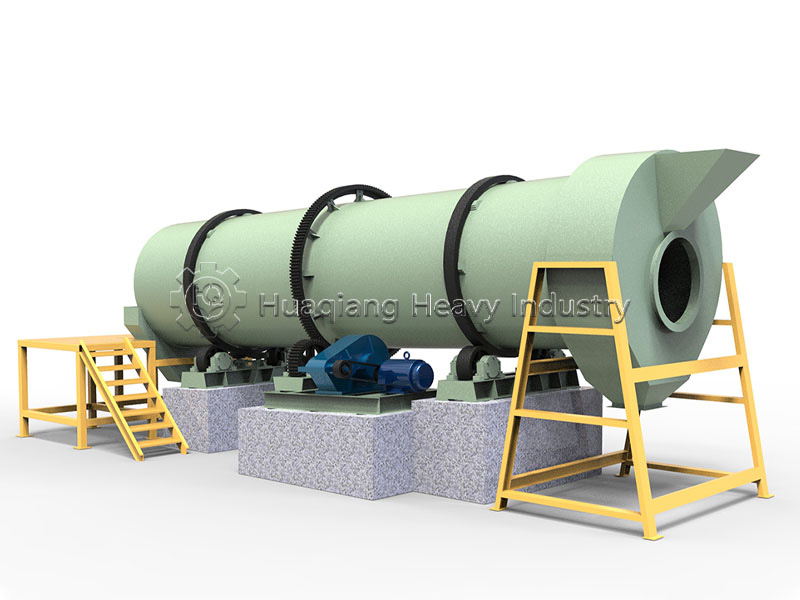
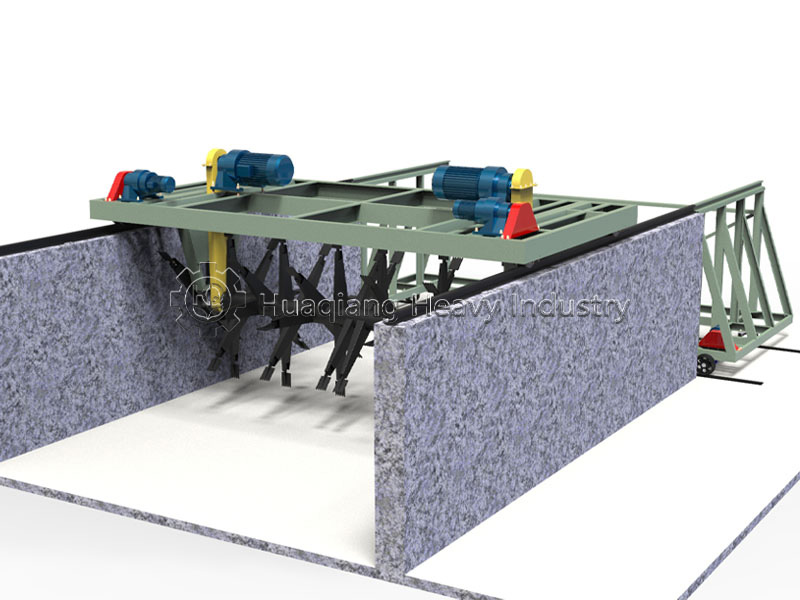
In modern organic fertilizer production, compost turners are core equipment throughout the fermentation process, acting as the "heart" of the production line. They undertake crucial tasks such as oxygen supply, temperature regulation, and mixing, directly determining the production efficiency, quality, safety, and environmental compliance of organic fertilizer. They are a vital support for realizing the resource utilization of organic waste.
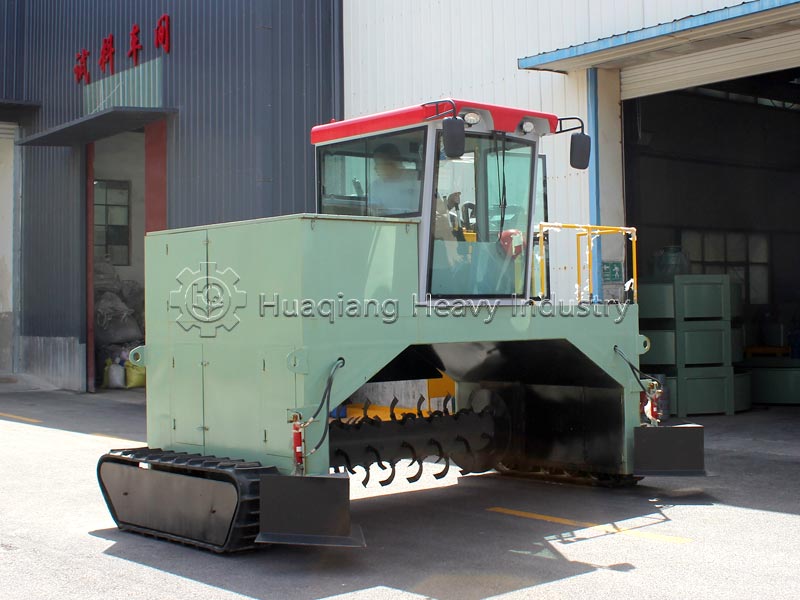
The core function of compost turners is to provide sufficient oxygen for aerobic fermentation. Organic fertilizer fermentation relies on the metabolic activities of aerobic microorganisms. As fermentation progresses, the deeper layers of the compost pile rapidly consume oxygen, creating an anaerobic environment that leads to fermentation stagnation and foul odors. Compost turners mechanically turn over the oxygen-deficient materials at the bottom to the surface, while simultaneously introducing fresh air into the depths of the compost pile. This maintains a stable oxygen content, allowing microorganisms to remain highly active, fundamentally avoiding the drawbacks of anaerobic fermentation and ensuring efficient fermentation.
Precise temperature control and conditioning are key to ensuring the quality of organic fertilizer through compost turners. During fermentation, microbial activity generates high temperatures. A compost turner mixes the overheated material in the center of the compost pile with the cooler material on the surface, controlling the temperature within the optimal range of 55-65℃ for microbial activity. This effectively kills insect eggs and pathogens in the raw materials while preventing the high temperatures from burning beneficial microorganisms. Simultaneously, the material scattering during turning increases the surface area, effectively regulating the compost's moisture content to the ideal range of 50%-60%, preventing mold growth from excessive humidity or unfavorable conditions for fermentation from excessively low humidity.
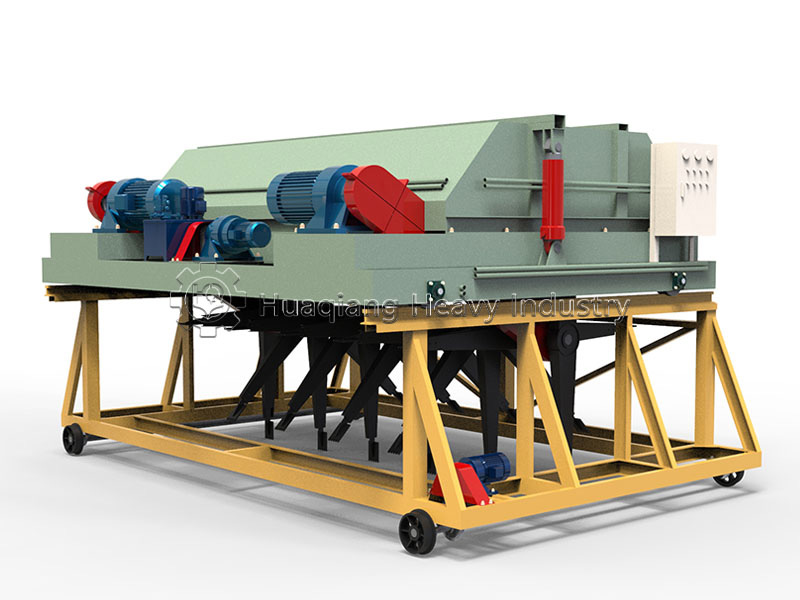
Compost turners also improve production efficiency, reduce costs, and promote large-scale production. Compared to manual or traditional loader turning, compost turners achieve full-depth, thorough turning with no dead angles, achieving a mixing uniformity of over 90%, avoiding the problem of "surface fermentation while the bottom remains unfermented." It can shorten the fermentation cycle from the traditional 25-30 days to 15-20 days, significantly increasing production capacity while reducing labor input. A single machine can replace multiple workers, reducing labor costs by over 80%.
Furthermore, compost turners contribute to environmentally compliant production. During turning and turning, the odorous gases produced during fermentation can be released in a targeted manner, which, combined with deodorization equipment, reduces fugitive emissions. Simultaneously, it controls material moisture to prevent leachate formation, reducing pollution at its source.
As a core enabler of organic fertilizer production lines, the compost turner not only solves the pain points of low efficiency, poor quality, and high pollution associated with traditional fermentation methods, but also promotes the transformation of organic fertilizer production towards large-scale, standardized, and green practices, injecting strong momentum into the development of a circular agricultural economy.



.jpg)