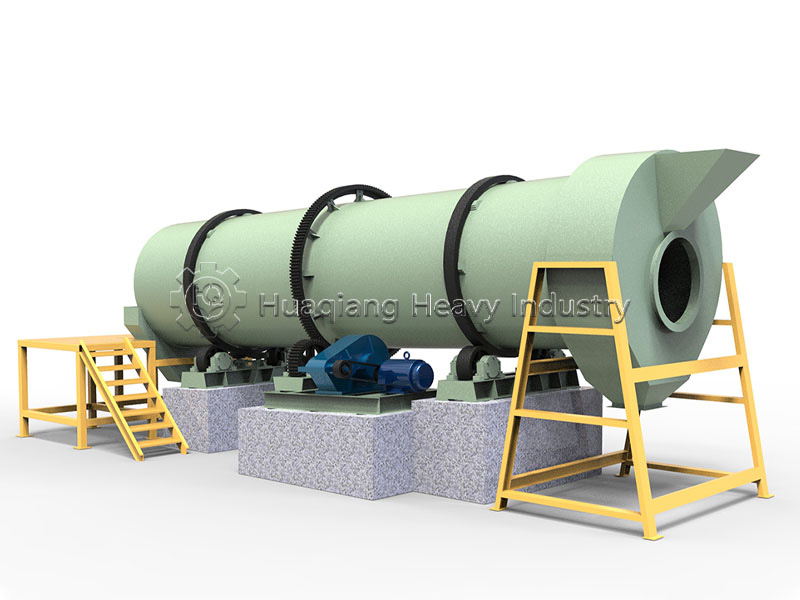
The smooth operation of organic fertilizer granulation machines is crucial for ensuring the efficiency and quality of fertilizer production. As the core equipment of the organic fertilizer production line, its working status is directly affected by various factors such as raw material characteristics, operating procedures, and equipment maintenance. Mastering scientific usage and maintenance methods can effectively reduce downtime due to malfunctions, improve overall production efficiency, and ensure the stable output of the entire organic fertilizer machine system.
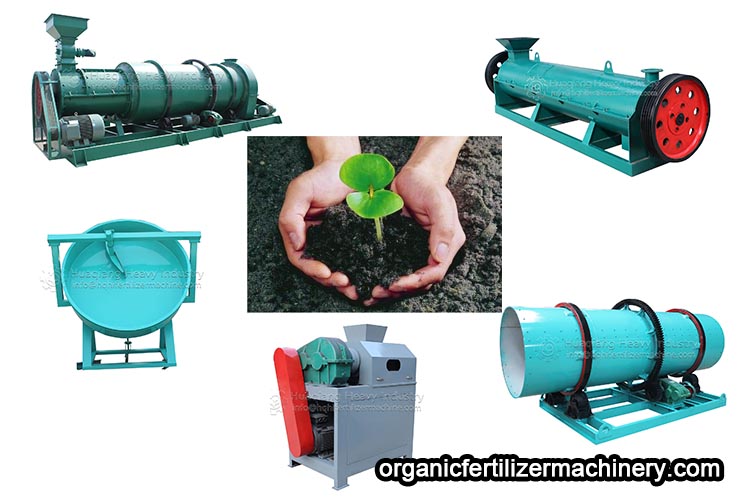
Raw material pretreatment is the foundation for the smooth operation of the machine. Organic fertilizer raw materials have complex compositions and require meticulous pretreatment: crushing raw materials such as straw and livestock manure to 20-40 mesh to prevent large impurities from jamming the granulator mold; strictly controlling the moisture content of the raw materials between 30% and 45%, as excessive moisture can easily lead to particle adhesion and blockage, while insufficient moisture makes molding difficult. The moisture content can be adjusted to the optimal state through drying or spraying water; at the same time, remove stones, metals, and other hard objects from the raw materials to prevent damage to the mold and pressure rollers.
Standardized operating procedures are key to reducing malfunctions. Before starting the machine, a comprehensive inspection of the equipment is required to confirm that the transmission device, lubrication system, motor voltage, etc., are normal and correct. Run the machine without load for 3-5 minutes before feeding; maintain uniform and continuous feeding, avoiding sudden large amounts of material that can overload the equipment. The flow rate can be controlled by adjusting the feeding valve; adjust the granulator speed and mold roller gap reasonably according to the characteristics of the raw materials. Generally, the mold roller gap is controlled between 0.2-0.5 mm to ensure the particle formation rate while reducing equipment wear.
Daily maintenance is crucial for extending the equipment's lifespan. After each day's work, promptly clean the residual raw materials in the machine to prevent caking and hardening from affecting subsequent use; regularly check the wear of the mold and pressure rollers, and replace them promptly when wear is severe to ensure granulation effect; add lubricating oil regularly according to the instructions, focusing on lubricating key components such as transmission bearings and gears to prevent dry friction from causing malfunctions; for long-term shutdowns, the equipment needs to be thoroughly cleaned, rust-proofed, and covered with a dust cover.
In addition, an emergency response mechanism for malfunctions should be established. If problems such as uneven granulation or unusual machine noises occur, the machine should be stopped immediately for inspection to check factors such as raw material moisture content and roller gap. In case of blockage, the power must be switched off before manually clearing the blockage; operating the machine while it is blocked is strictly prohibited. Through scientific pre-treatment, standardized operation, regular maintenance, and rapid troubleshooting, the organic fertilizer granulation machine can be kept in a consistently smooth working condition, providing stable support for organic fertilizer production.



.jpg)