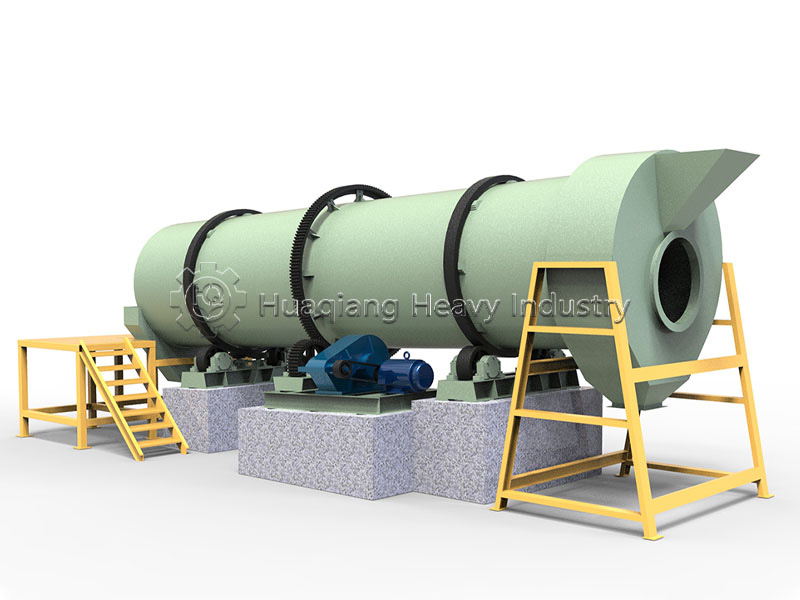
Granulators are core equipment in fertilizer production. They come in various types, adapting to different raw materials, production capacities, and finished product requirements, directly determining the quality and application effect of fertilizer granules. With the development of agricultural modernization and the promotion of fertilizer reduction and efficiency policies, various granulators are constantly being optimized to meet the production needs of enterprises of different sizes. The following introduces several mainstream types.
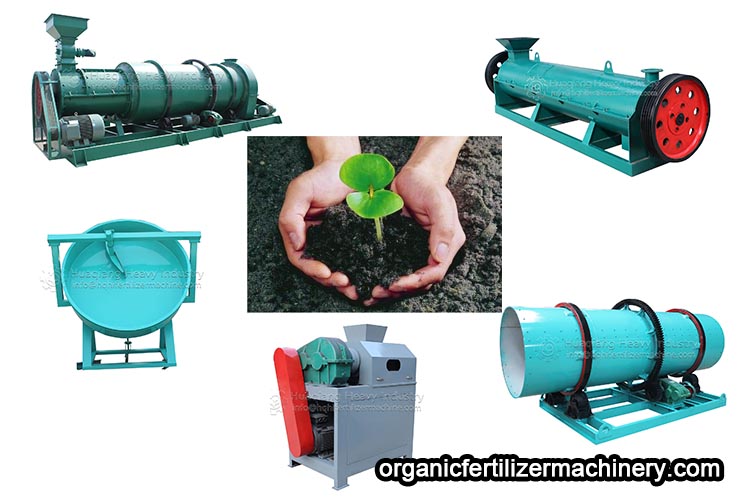
Disc granulators are one of the most widely used models, suitable for the production of organic fertilizers and compound fertilizers, especially for small and medium-sized enterprises. They utilize centrifugal force to roll and agglomerate raw materials within a rotating disc, achieving a granulation rate of over 93%. The granules are round and uniform. The equipment has a simple structure, low investment cost, and convenient operation and maintenance. However, its production capacity is limited, and it requires a supporting drying equipment to treat the moisture content of the finished product.
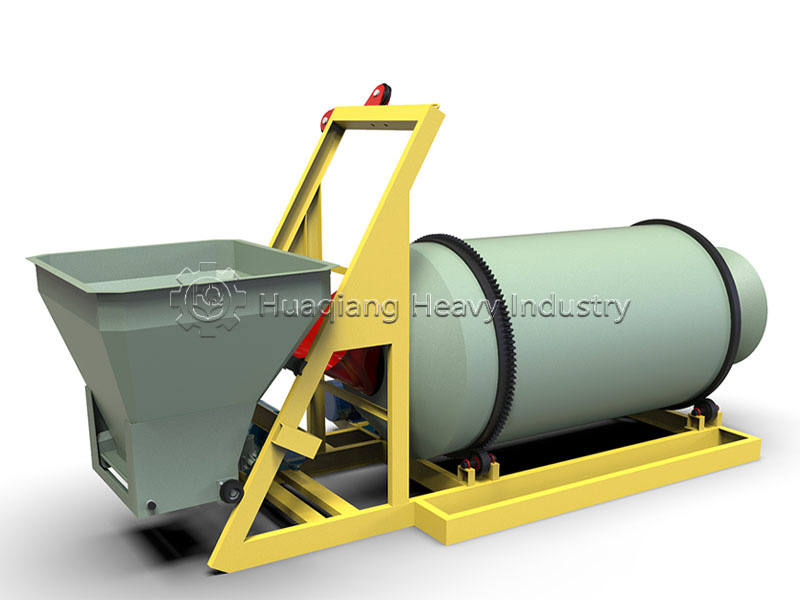
Rotary drum granulators are the preferred choice for large-scale production, mostly used in the processing of compound fertilizers and organic-inorganic compound fertilizers. Raw materials are granulated within a rotating drum using steam or binders. They offer high production capacity flexibility, enabling continuous operation, high granule strength, and good stability, reducing the subsequent drying load. However, the equipment is large in size and requires a higher initial investment.
The double roller press granulator is the core type of extrusion granulator. It employs a non-drying, room-temperature process, requires no binders, and has a wide range of applications. It uses two opposing rotating rollers to extrude raw materials into flakes, which are then crushed and screened to form granules. These granules have high density and strength, making them suitable for the production of high-concentration compound fertilizers, slow-release fertilizers, and some organic fertilizers. They offer advantages such as energy saving, reduced consumption, and zero waste discharge. However, the granule shape regularity is insufficient, and they have strict requirements on the moisture content and fineness of the raw materials.
The flat die pellet machine is the mainstream type of extrusion granulator. It has a compact structure and small footprint, making it suitable for small to medium-scale fertilizer production. It uses the extrusion action of a flat die and pressure rollers to compress raw materials into granules. It is suitable for various raw materials such as organic fertilizers and compound fertilizers. It is simple to operate and easy to maintain. Its disadvantage is lower production capacity, making it suitable for small processing plants.
The ring die granulator, compared to the flat die granulator, has higher production capacity and better granule forming effect. It is mostly used in medium to large-scale organic fertilizer and feed fertilizer co-production. This type of granulator uses the relative motion of a ring die and pressure rollers to extrude raw materials, resulting in uniform particle density and high strength. It is suitable for various organic and inorganic raw materials, but the equipment wears out relatively quickly, leading to slightly higher maintenance costs.
In summary, different types of fertilizer granulators have their own advantages and disadvantages, and their suitable application scenarios vary significantly. When selecting a granulator, companies need to consider their own production capacity, raw material characteristics, and finished product requirements to rationally choose the type of granulator, thus balancing production efficiency, product quality, and production costs, and ultimately helping to improve the quality and efficiency of fertilizer production.



.jpg)