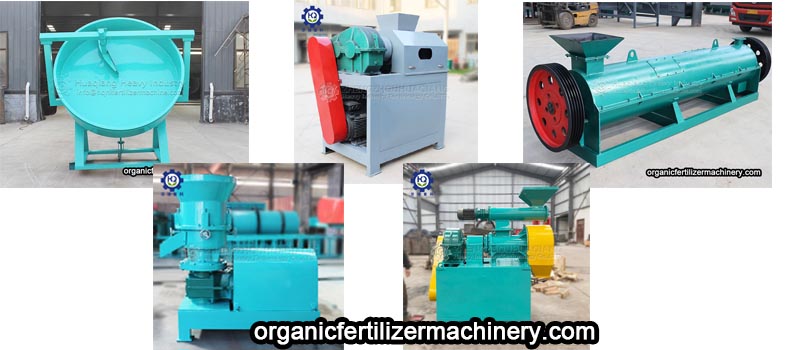
In organic fertilizer production, the efficiency of the granulator directly determines the capacity and production cost of the entire production line. The mainstream organic fertilizer granulators on the market are mainly divided into four categories: disc granulators, flat die granulators, rotary drum granulators, and stirring tooth granulators. Different models differ significantly in their working principles, suitable raw materials, and production efficiency, and each has its own focus for different application scenarios. Choosing the right model according to specific needs is crucial for efficient production.
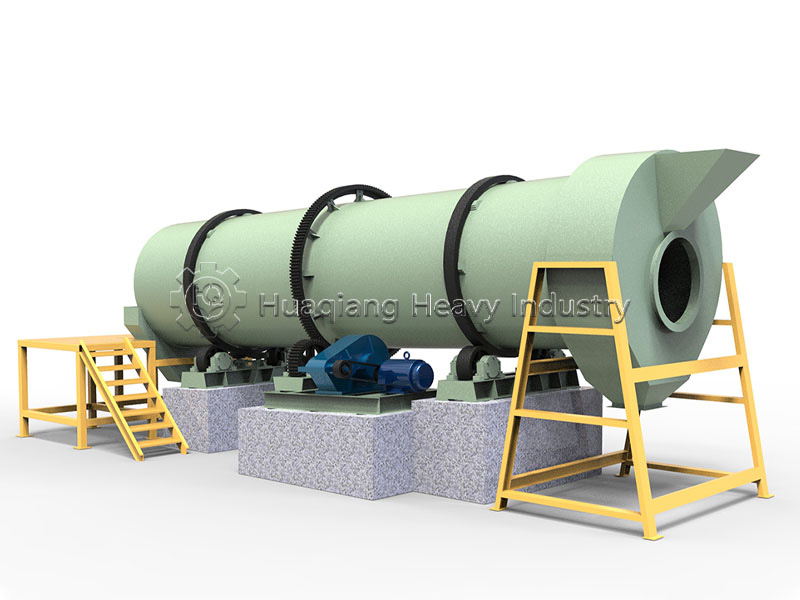
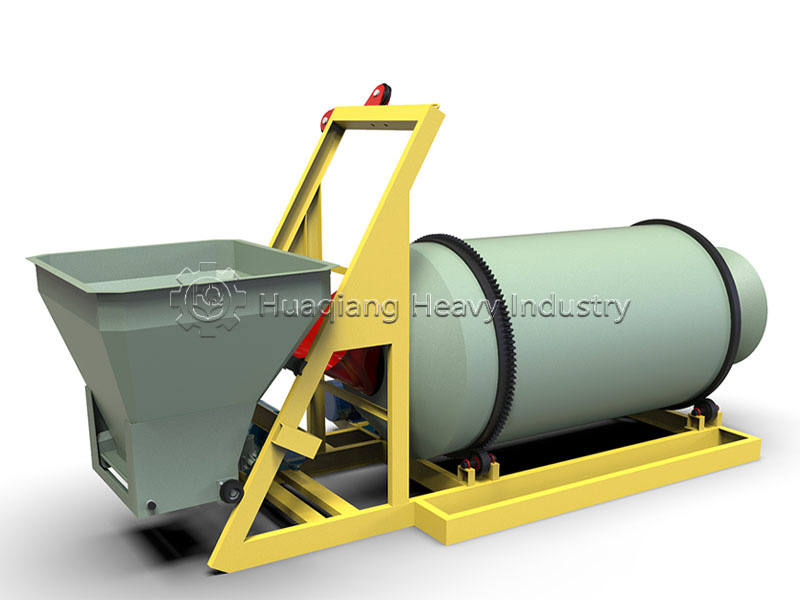
In terms of overall efficiency for large-scale mass production, the rotary drum granulator is the industry's preferred high-efficiency model. It relies on the rotation of the drum to lift and agglomerate the material, has a stable structure, and can operate continuously for extended periods. A single machine can achieve a capacity of 5-50 tons, which is 3-5 times that of a typical disc granulator. This equipment is highly adaptable to high-moisture, high-viscosity fermentation materials, requires no complex pretreatment, has a low raw material loss rate, and boasts excellent operational stability, making it suitable for large-scale, standardized production in large organic fertilizer plants. The only drawback is its large size and high initial investment, making it unsuitable for small workshops.
For small to medium-sized production lines prioritizing high forming efficiency, the stirring tooth granulator is the top choice. This equipment utilizes high-speed stirring and impact molding, specifically designed for high-moisture fermentation materials such as chicken and sheep manure. It allows for direct granulation without drying, eliminating pretreatment steps and significantly improving production efficiency. Its pelleting rate can reach over 90%, producing uniform and rounded particles. A single machine can achieve a stable output of 3-10 tons per hour. With low energy consumption, simple operation and maintenance, and extremely high cost-effectiveness, it is a mainstream high-efficiency model for small to medium-sized production lines.
For multi-functional raw materials and energy-efficient production scenarios, the flat die pellet machine offers outstanding overall performance. This equipment uses a pressure roller extrusion molding principle, making it highly adaptable. It can process dry and wet mixtures such as livestock and poultry manure, straw, and mushroom residue, as well as various powdery and lumpy organic raw materials. No complex pretreatment is required, making its adaptability far exceed that of ordinary models. The equipment operates stably with a low failure rate, can operate continuously for extended periods, and achieves a forming rate of over 88%. The finished particles are compact, have uniform hardness, and are not easily loosened or broken. Meanwhile, it has low energy consumption, a small footprint, simple operation, and low maintenance costs, balancing efficiency and economy, making it very suitable for the routine production of small and medium-sized organic fertilizer plants and cooperatives.
Traditional disc granulators, while having a high pelletizing rate and aesthetically pleasing finished products, have limited capacity and are only suitable for small-batch, high-precision production. Their efficiency in large-scale production is far lower than the former three. In summary, for large-scale mass production, choose a rotary drum granulator; for small and medium-scale production of high-moisture materials, choose a toothed agitator; and for multi-raw material versatility and energy-saving production, choose a flat die pellet machine. Precisely matching production needs is key to maximizing overall production efficiency.



.jpg)