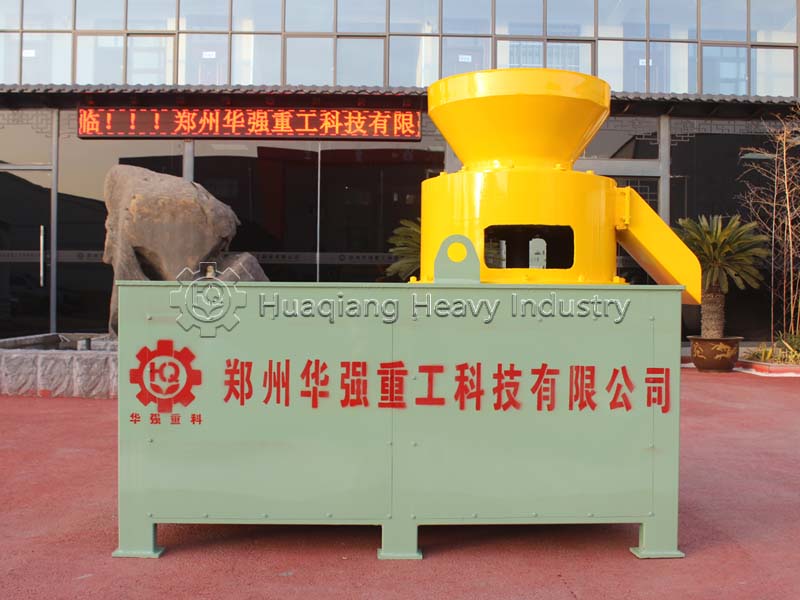
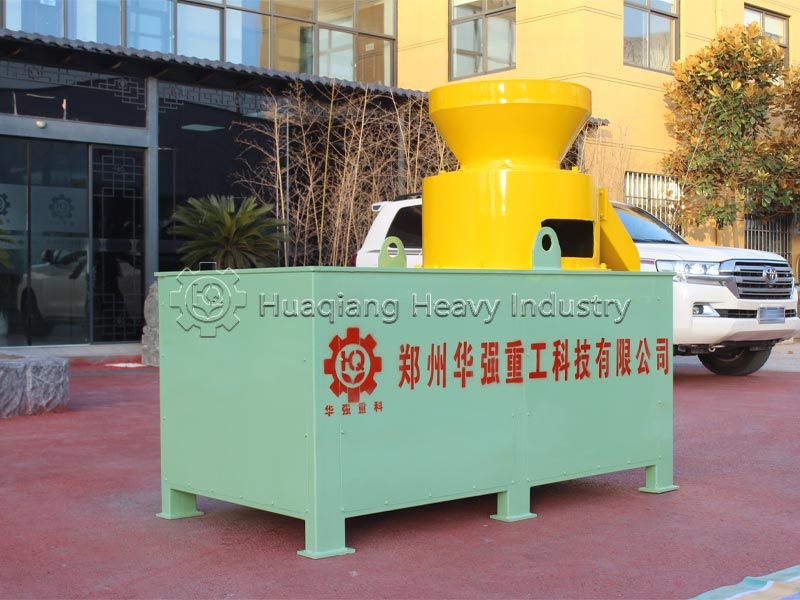
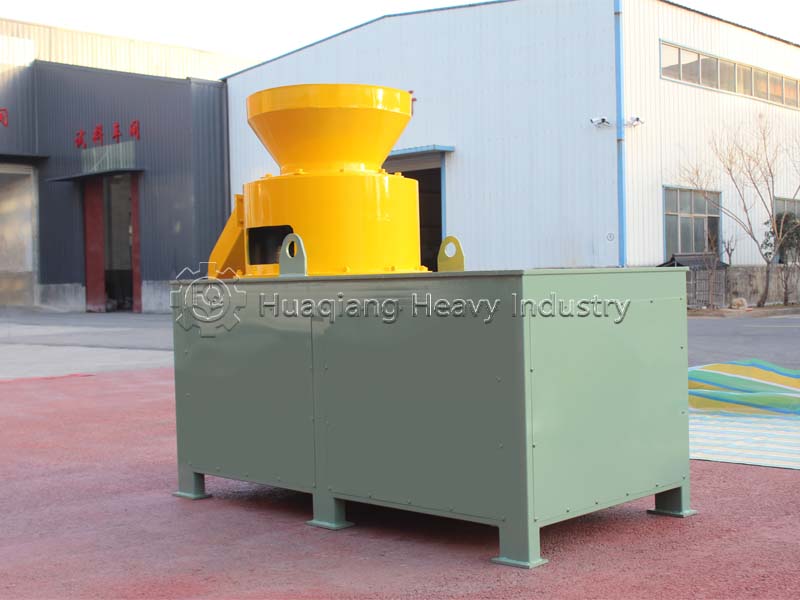
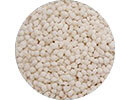
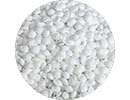
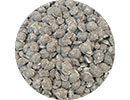
Featuring a ring-die design, the machine is characterized by a compact structure, a small footprint, low noise levels, and high production capacity. Its dry-processing method requires little to no added liquid, allowing the material to retain its original moisture content; the resulting pellets are hard with smooth surfaces, making them easy to store and transport.
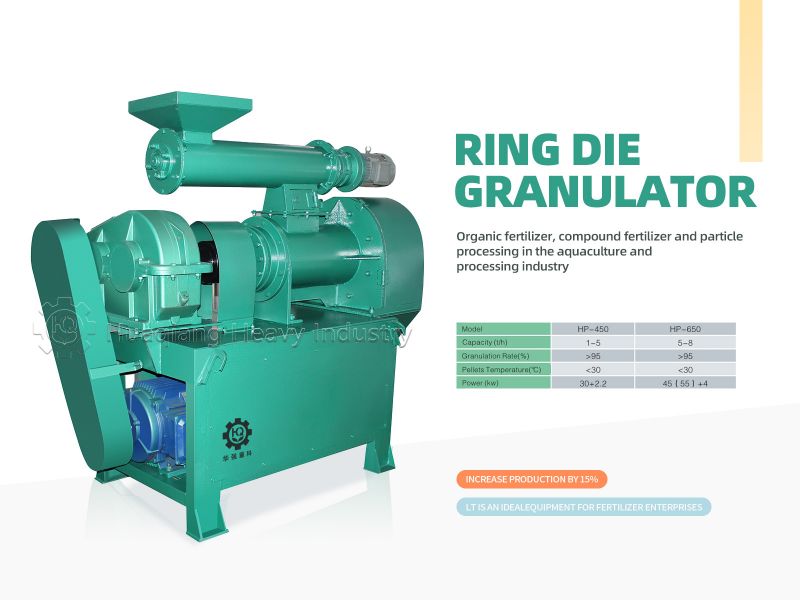
The working principle of the ring die pellet machine is based on the core physical process of extrusion molding. The entire operation can be divided into the following stages:
Material is conveyed by a feeder into the conditioner, where steam is introduced to adjust the material's temperature and moisture content, thereby improving its pelletizing characteristics. The conditioned material then enters the pelletizing chamber, ready for the compression stage.
This is the core stage of pelletization. The material is carried by the rotating ring die into the wedge-shaped space (or "nip") formed between the ring die and the press rollers. As the ring die continues to rotate, the nip narrows, causing the pressure exerted on the material to rise sharply. When the extrusion force exceeds the friction between the material and the die holes, the material is forcibly extruded into the holes, forming dense, cylindrical pellets.
The strands of material extruded from the die holes are cut into pellets of the desired length by a cutter mounted on the door cover. The finished pellets are then discharged from the pelletizing chamber and proceed to the next stage of the process.
Ring die pellet machines utilize a mechanical forced-feeding system and operate at higher speeds, resulting in output far exceeding that of flat die pellet mills. As the standard model for large-scale production, the horizontal ring die pellet mill achieves a pellet formation rate of 93%–97%. By swapping ring dies with different aperture sizes (e.g.1.2-10 mm), the machine adapts to diverse operational needs, ranging from small-batch laboratory use to large-scale industrial production.
The resulting pellets feature high hardness, smooth surfaces, and thorough internal cooking, which enhances nutrient digestion and absorption. High-temperature processing during production denatures anti-trypsin factors found in grains and legumes while simultaneously eliminating pathogenic microorganisms and parasite eggs.
Ring die pellet mills handle a wide variety of materials; they process not only concentrate feeds but also materials that are difficult to bind or shape—such as rice husks, straw, and sawdust. They are widely used across the feed, fertilizer, and biomass fuel industries.
The ring die and press rollers are the primary load-bearing components. The ring die is manufactured from highly wear-resistant, high-strength material, while the press rollers utilize high-alloy wear-resistant materials, effectively extending the machine's overall service life.
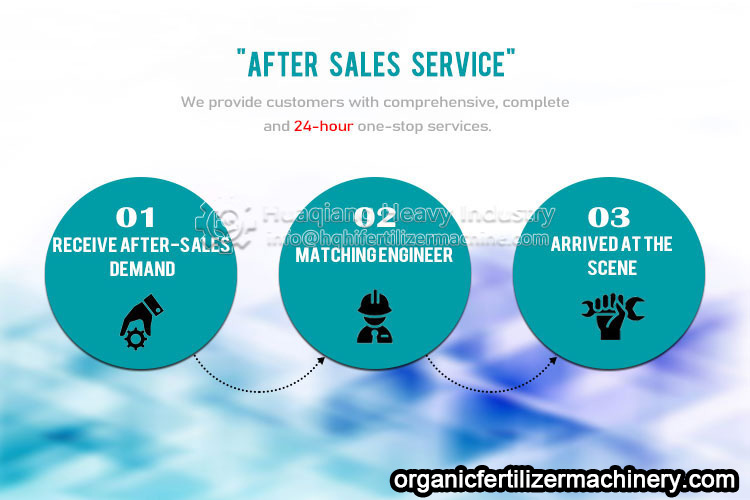
Zhengzhou Huaqiang Heavy Industry Technology Co., Ltd. possesses strong technical capabilities and extensive manufacturing experience in the field of ring-die pellet machines. Customers who purchase a Huaqiang ring-die pellet machine benefit from the following comprehensive services:
We determine the appropriate equipment model and specifications based on the customer's actual needs and offer custom designs to meet specific requirements. We dispatch technical personnel to the customer's site for a survey and create site layouts and production plans tailored to the specific conditions. We provide production line design workflows to ensure the creation of a satisfactory and efficient production line.
We closely monitor the production process to ensure product quality while minimizing the production cycle. Senior technical personnel are sent to the customer's site to assist in designing construction plans, aiming for optimal efficiency and cost-effectiveness.
Installation and Commissioning: We dispatch dedicated after-sales personnel to the site to guide the customer through installation and commissioning until the process is successfully completed.
Operation Training: We provide training for operators and relevant technical staff, ensuring the customer is fully capable of independent operation and has mastered essential technical knowledge and machine maintenance skills.
Warranty and Support: The equipment comes with a one-year warranty and lifetime technical support. We also offer a full range of services, including factory layout design, process improvement, equipment manufacturing, installation, commissioning, and formula development.
Causes:Clogged die holes; improper material moisture content; incorrect gap between the ring die's inner wall and the rollers.
Solutions:Check if the die holes are clear; if blocked, use a handheld electric drill to clear them. Adjust the material's moisture content to the optimal level for pelletizing. Adjust the gap between the ring die's inner wall and the rollers.
Causes:Material moisture content is too low or too high.
Solutions:Adjust the moisture content of the powdered material to the appropriate range (typically 14%-17% for concentrated feed).
Causes:Ring die compression ratio does not match the raw material (excessive compression ratio results in overly hard pellets and low output); rough inner die holes or the ring die has lost its roundness; ring die is clogged or only partially discharging.
Solutions:Check if the ring die compression ratio matches the raw material and adjust if necessary. Replace with a high-quality ring die, ensuring smooth inner holes and proper roundness. Check for foreign objects inside the ring die.
Causes:Uneven feed rate; feeding too fast, causing sudden overload; material particle size/volume is too large.
Solutions:Gradually increase the feed rate from low to high during startup and maintain a steady flow. Ensure materials are thoroughly ground beforehand to meet particle size requirements.
| Model | HP-450 | HP-650 |
| Capacity (t/h) | 2-5 | 4-8 |
| Pelleting Rate (%) | >95% | >95% |
| Motor Power(Kw) | 30+1.5 | 55+3 |
| Dimension(mm) | 2150*1350*2200 | 2500*1350*2535 |
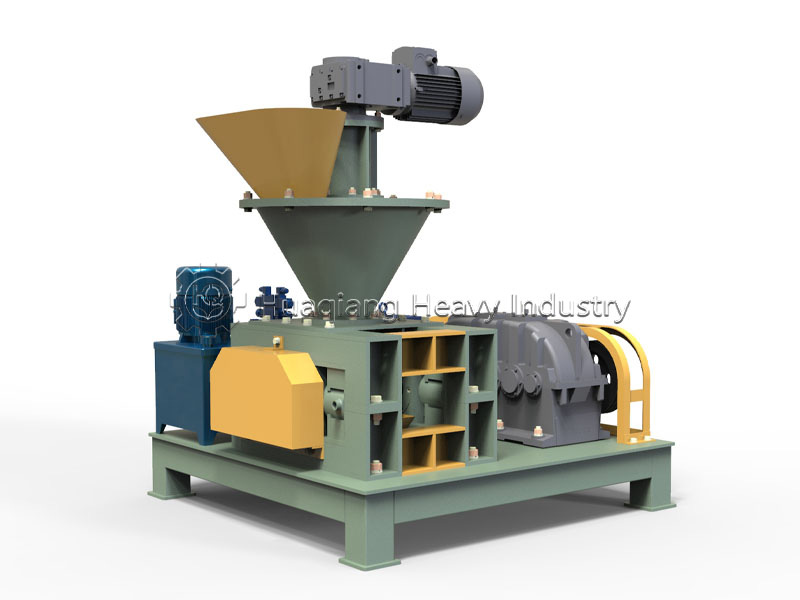
Our company provides clients with complex fertilizer complete sets of equipment technical service, after many years of research and development experience of the compound fertilizer granulator equipment manufacturing , and the meticulous manufacture of hi

This series of granulator is a new patented product developed by our company and the Agricultural Machinery Research Institute. It is designed and manufactured by the new technology of wet continuous push rod granulation.
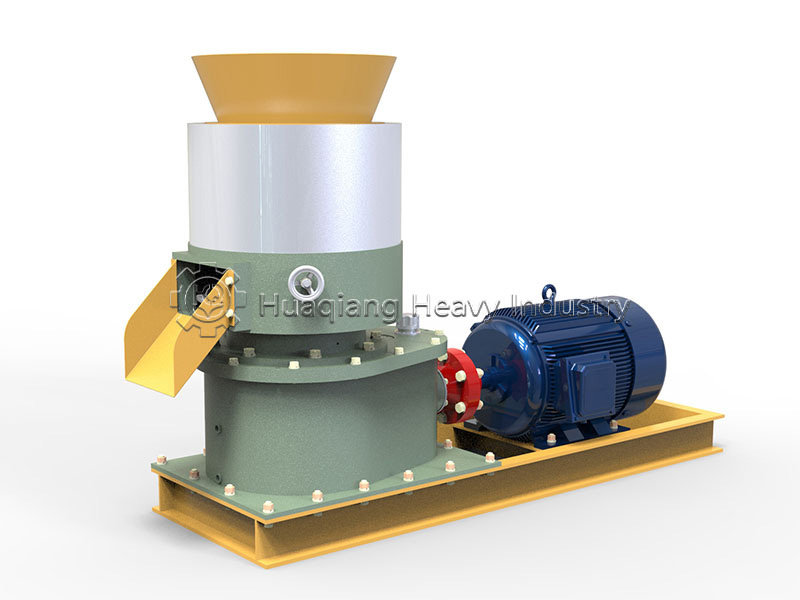
The multifunctional flat die pellet machine is a common used equipment in the production of organic fertilizer. It can produce cylindrical organic fertilizer particles and feed particles. It can also connect polishing equipment, make cylindrical particles t