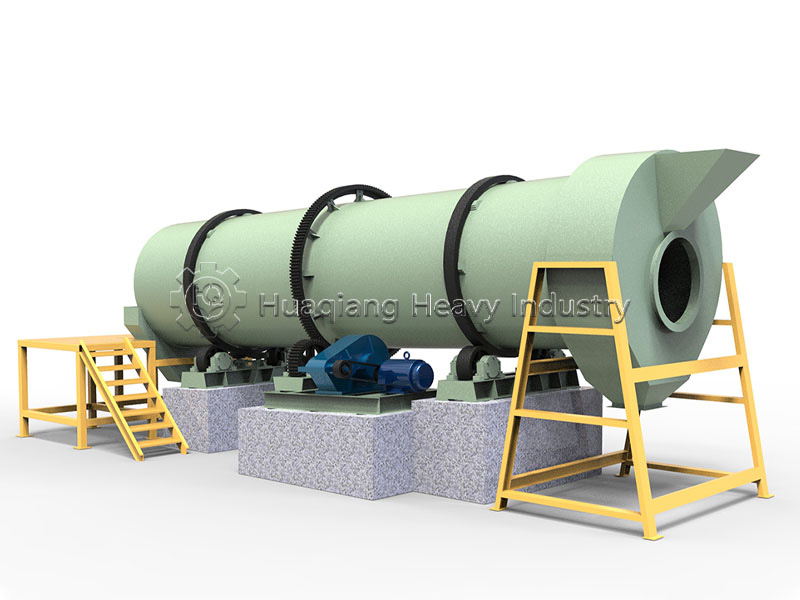
Organic fertilizer granulation is a core step in the organic fertilizer production line, and the granulation effect directly determines the product's appearance, strength, and market value. The granulation process of organic fertilizer granulation machines is constrained by multiple factors; mastering these factors is crucial for achieving efficient and high-quality granulation production.
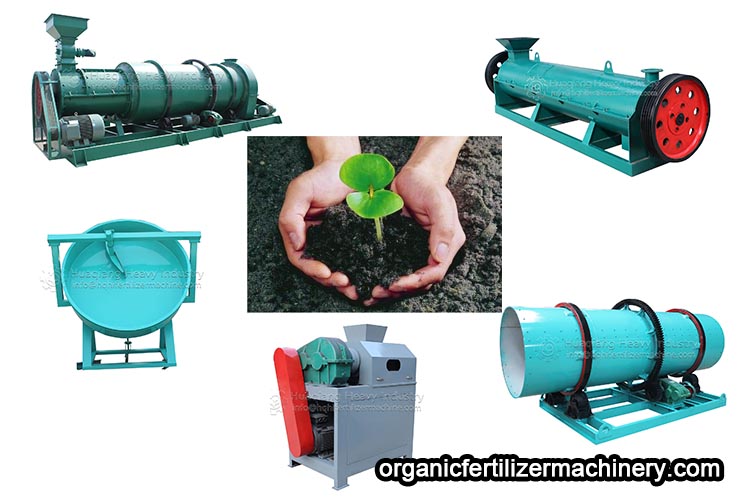
Raw material characteristics are the fundamental prerequisite for granulation. The moisture content of the raw material is the primary influencing factor, typically between 25% and 35%. Too low a moisture content results in insufficient viscosity, making it difficult to form granules; too high a moisture content causes the raw material to adhere to the inner wall of the equipment, reducing granulation efficiency and leading to loose, easily broken granules. Furthermore, the particle size and composition of the raw material are also critical. Overly coarse particles result in a loose internal structure, while overly fine particles can easily cause machine blockage. The proportion of viscous components such as organic matter and humic acid in the raw material directly affects the granule forming rate and strength; insufficient viscous components necessitate the addition of binders such as bentonite.
Equipment parameters determine the core efficiency of granulation. The rotational speed of the granulator is a critical parameter. Different types of equipment have different speed requirements. For example, the disc inclination angle of a disc granulator is generally between 45° and 55°. The rotational speed must match the inclination angle; too high a speed will cause the granules to be thrown out, while too low a speed will not generate sufficient centrifugal force to complete granulation. Simultaneously, the die aperture and roller clearance also affect the granule size and compaction. The die aperture determines the basic granule size; too small a roller clearance can cause excessive compression of the raw material, while too large a clearance results in insufficient granule density.
Process conditions are crucial for ensuring successful granulation. Temperature during granulation affects the viscosity of the raw material. Suitable temperatures can improve the binding properties of the raw material and increase the granule formation rate. The residence time of the material in the equipment also needs to be controlled. Too short a residence time will result in insufficient granule formation, while too long a residence time will increase energy consumption and easily cause over-compaction. Furthermore, the subsequent drying and cooling processes will indirectly affect the quality of the final granules.
In summary, organic fertilizer granulation requires a synergistic approach to raw materials, equipment, and processes to achieve stable and efficient granulation.



.jpg)