In an organic fertilizer production line, the post-processing stage is a critical link that determines the quality, appearance, and practical efficacy of the finished product. It receives the material after it has undergone fermentation and maturation, and—through a series of processing steps—transforms the loose, heterogeneous composted material into qualified organic fertilizer that meets established standards. The equipment in this stage performs specialized functions while operating in coordination; the core machinery primarily includes crushing and screening machines, granulators, dryers, coolers, and packaging machines, which collectively complete the transformation from composted material to finished fertilizer.
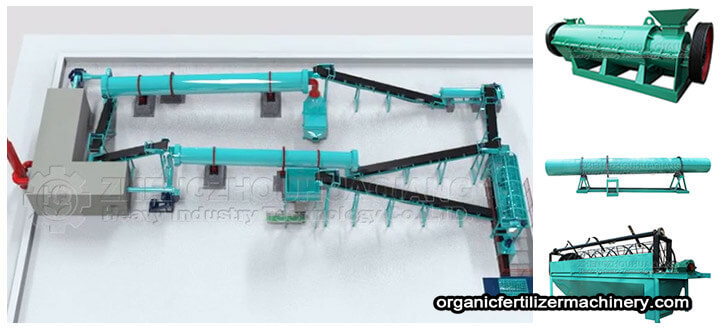
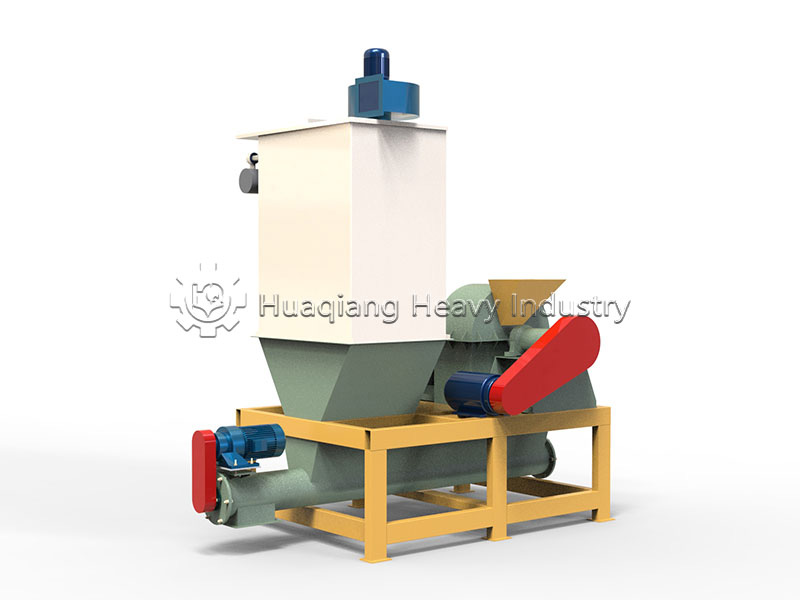
The crushing and screening machine is the primary piece of equipment in the post-processing stage, bearing the crucial responsibility of refining the material and removing impurities. Post-fermentation material often contains clumps and foreign matter; it must first pass through a crusher to be reduced to a uniform powder, while simultaneously passing through a screener to separate out any hard lumps that failed to compost thoroughly, as well as other debris, thereby ensuring the smooth progression of subsequent processing steps. Furthermore, when paired with multi-layer screening screens, the crushing system allows for precise control over the material's particle size, laying a solid foundation for the granulation stage—a key step in achieving the refined processing of raw materials.
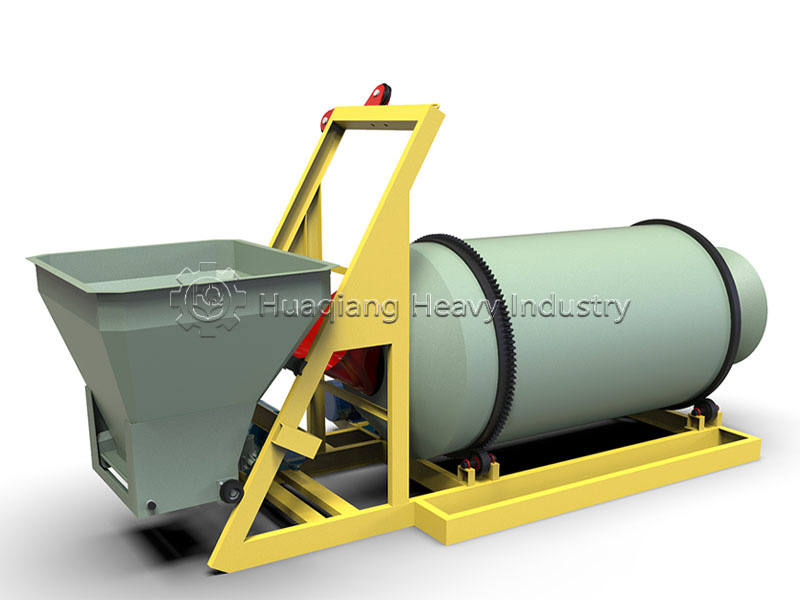
The granulator is the core machinery of the post-processing stage, determining the molding effect and physical form of the organic fertilizer. Currently, the mainstream models are the disc granulator and the rotary drum granulator, each suited to different production requirements: the disc granulator boasts a high granulation rate and produces round, uniform particles, making it ideal for large-scale mass production; the drum granulator, conversely, is better suited for producing larger-sized organic fertilizer granules, thereby meeting the specific fertilization needs of various crops. Some production facilities also incorporate functional microbial cultures into the material prior to granulation to enhance the added value of the organic fertilizer.
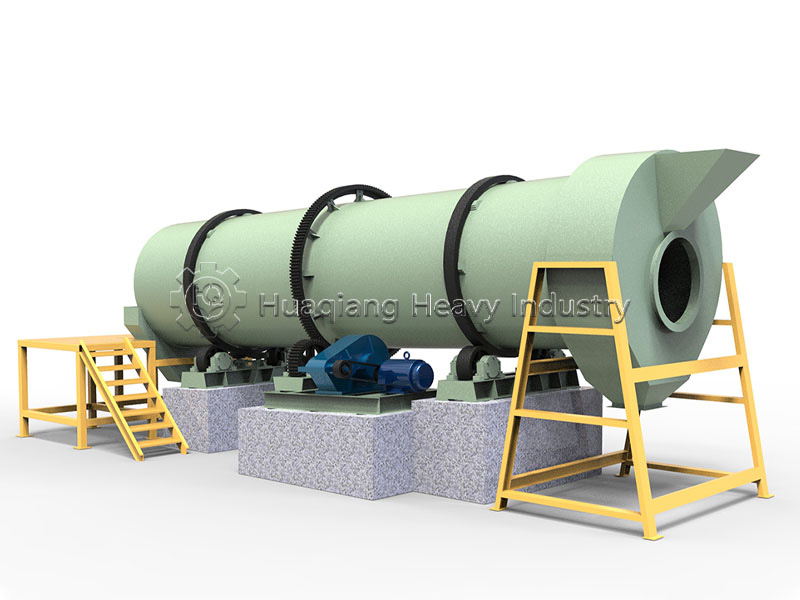
Dryers and coolers are utilized in tandem to ensure the stability of the finished fertilizer. The wet granules produced during granulation typically possess a high moisture content; they must therefore pass through a dryer to reduce their moisture level to below 12% in order to prevent mold growth during storage. Since the granules emerge from the dryer at an elevated temperature, a cooler is employed to rapidly lower their temperature to ambient levels, preventing the granules from clumping together or deforming, while simultaneously increasing their hardness to facilitate easier storage and transportation.
Finally, the packaging machine serves as the concluding piece of equipment in the post-processing stage, enabling the standardized packaging of the finished product. For small-scale production lines, semi-automatic packaging machines—requiring manual assistance for feeding and sealing—are a suitable choice. Large-scale facilities, conversely, utilize fully automated packaging lines that integrate material weighing, bagging, sealing, and labeling into a seamless operation; this not only boosts packaging efficiency but also ensures precise measurement, thereby meeting the demands of mass production.
Furthermore, certain high-end production lines are equipped with coating machines that apply a protective film to the surface of the granules, thereby minimizing nutrient loss and extending the fertilizer's efficacy. Operating in synergy, these various devices constitute a comprehensive post-processing workflow for organic fertilizers. This system not only enhances product quality but also drives the large-scale and standardized development of organic fertilizer production, providing robust support for the resource utilization of agricultural waste.



.jpg)