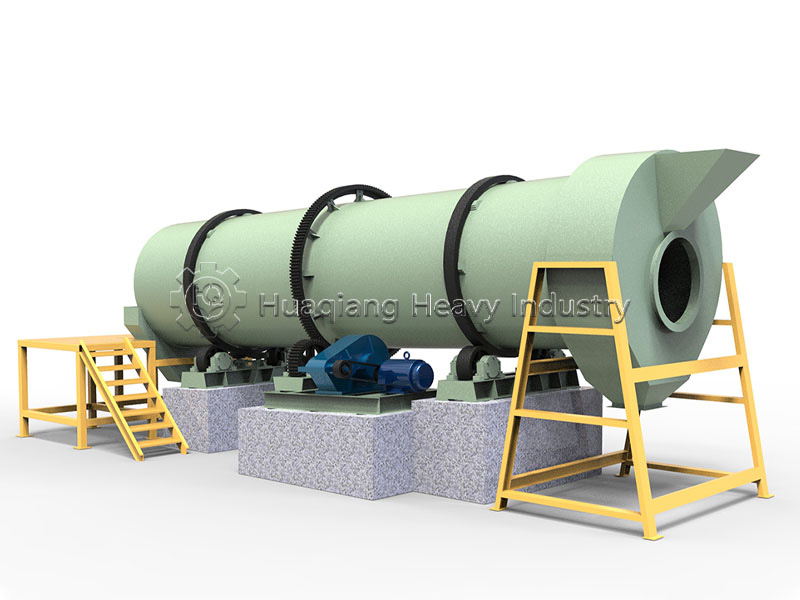
Organic fertilizer granulation machines are the core equipment of organic fertilizer production lines and a key component in the resource utilization of agricultural waste. Their safe operation directly affects the personal safety of operators, the lifespan of the equipment, and production efficiency. To avoid safety hazards and standardize operating procedures, and considering the common characteristics of various granulation machine types (flat die, disc, rotary drum, etc.), the following safe operating procedures are formulated, applicable to all organic fertilizer production scenarios, for operators to strictly follow.
.jpg)
Pre-start inspection is the first step in safe operation, requiring a comprehensive check for potential hazards. Operators must wear appropriate protective equipment, including safety helmets, protective gloves, non-slip shoes, and dust masks to avoid material splashes and injuries caused by machine operation. Simultaneously, check the equipment item by item: ensure the motor, reducer, and transmission parts are adequately lubricated and free from jamming or abnormal noise; check that the die holes, feed inlet, and discharge outlet are free from blockages and that bolts are tight; verify the power supply and wiring connections are correct, and that the grounding protection device is intact to avoid potential electrical leakage.
During operation, the operating procedures must be strictly followed, and any violations must be avoided. When starting the equipment, run it unloaded for 3-5 minutes to observe whether the equipment operates normally and whether parameters such as speed, pressure, and temperature are within reasonable ranges. Only after confirming there are no abnormalities should material be fed. Feeding should be done at a uniform speed and evenly to avoid raw material clumping or excessive feeding, which could clog the equipment and burn out the motor. Hands and tools must not be inserted into the feed inlet, discharge outlet, or transmission parts. If cleaning is necessary, the machine must be stopped and the power disconnected first. During operation, closely monitor the equipment status. If any abnormalities are found, such as unusual noises, overheating, or material leakage, immediately stop the machine and disconnect the power. Troubleshoot the problem before restarting.
Post-shutdown procedures must be followed, and proper finishing work must be done. When stopping the machine, first stop feeding. Wait until all remaining raw material is discharged and pellets are formed before turning off the power. After shutdown, promptly clean any residual material inside and outside the equipment, paying particular attention to cleaning easily clogged areas such as die holes and scrapers to prevent material clumping from affecting future use. Check the wear of equipment parts and replace vulnerable parts promptly, and perform proper lubrication and maintenance. Simultaneously, the production site should be tidied up, scattered materials cleaned up, main power disconnected, water and gas sources shut off, and equipment cleaning records maintained.
Furthermore, routine safety management must be maintained. Operators must undergo professional training and be qualified before starting work, familiar with equipment structure, operating procedures, and emergency response methods. Unlicensed operation and violations are strictly prohibited. Equipment must be regularly inspected and calibrated, and maintenance records must be established. Operating equipment with defects is strictly prohibited. Fire extinguishers and first-aid supplies must be provided at the production site. Smoking and the storage of flammable and explosive materials are strictly prohibited to prevent fires, electric shocks, and other accidents.
In summary, safe operation of organic fertilizer granulation machines must be implemented throughout the entire process—before startup, during operation, and after shutdown. Strict adherence to operating procedures, strengthened safety awareness, and proper daily maintenance are essential to effectively avoid safety hazards and ensure the personal safety of operators and the orderly conduct of production.



.jpg)