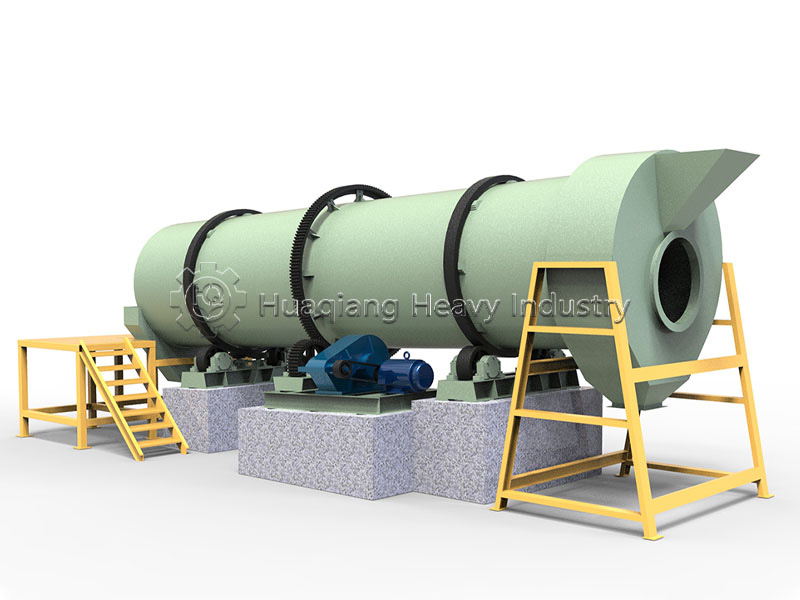
In an organic fertilizer production line, granulation is a crucial step that determines the product's appearance, strength, storage and transportability, and market value. Different raw material characteristics, production capacity, and finished product requirements correspond to different types of granulation equipment. Currently, the mainstream granulation equipment in the industry is mainly divided into four categories: disc granulators, rotary drum granulators, toothed granulators, and flat/ring die granulators, which can meet the needs of all scenarios from small and medium-sized pilot lines to large-scale industrial plants.
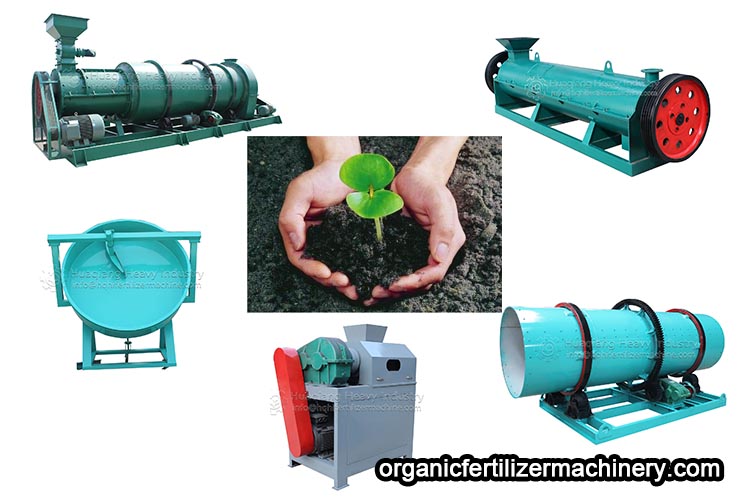
Disc granulators are the most widely used classic model in the organic fertilizer industry. They adopt an inclined disc rotating structure, relying on centrifugal force, friction, and gravity to roll and agglomerate materials into spheres. This machine has a simple structure, low investment, and convenient operation. The granules are round and uniform, with a sphericity rate of over 90%. It is suitable for medium-moisture raw materials such as livestock and poultry manure and fermented straw, and is mostly used in small and medium-sized production lines and primary organic fertilizer production. The equipment operates stably and has low maintenance costs, making it the preferred granulation equipment for entry-level production lines.
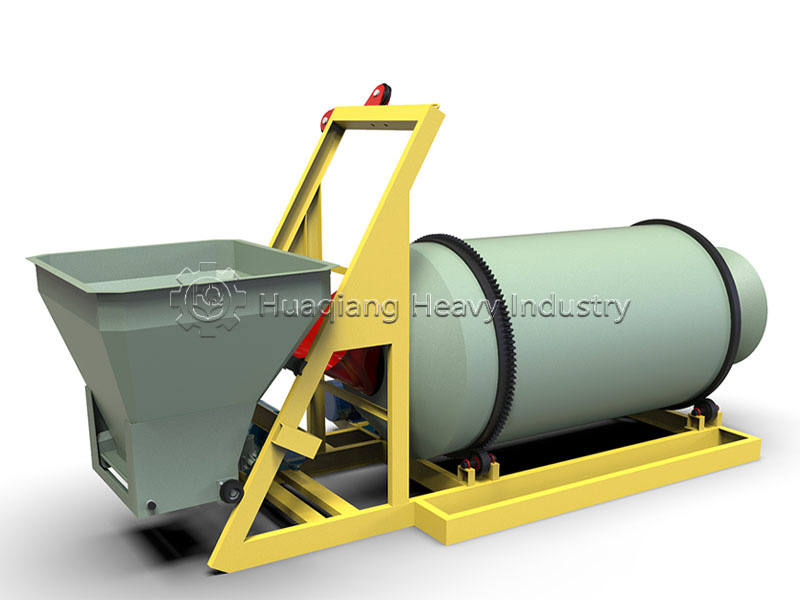
Rotary drum granulators, also known as roller granulators, are the mainstay of large-scale production lines. They utilize a horizontal, long rotating drum to continuously tumble materials, combined with the application of binders or water mist to achieve granulation. Their biggest advantages are high capacity and stable continuous operation, with hourly output reaching 5-20 tons. They are suitable for large-scale livestock manure treatment and municipal sludge resource utilization projects. This machine is highly adaptable to high-moisture, high-viscosity raw materials, producing porous and loose granules that facilitate nutrient release, making it a core granulation equipment for large-scale organic fertilizer plants.
New type organic fertilizer granulators are high-efficiency wet granulation equipment. They rely on high-speed agitators to generate mechanical and aerodynamic forces, rapidly mixing, granulating, and balling materials within the machine. This machine boasts a high granulation rate, good sphericity, and low pulverization rate, making it particularly suitable for fully fermented, lightweight, powdery organic fertilizers. It can also process coarse fibrous materials that are difficult to granulate with traditional equipment. The granules have moderate strength and a regular appearance, allowing them to directly enter the drying and screening stages, improving the overall efficiency of the production line.
Flat die/ring die pellet machines form cylindrical granules through extrusion between pressure rollers and a die. They require no binder, produce high-strength granules, and are suitable for high-fiber, low-moisture raw materials such as distiller's grains, mushroom residue, and medicinal herb residue. They are widely used in the production of bio-organic fertilizers and high-end commercial fertilizers.
Furthermore, ball shaping machines are often used as auxiliary equipment to perform secondary rounding and shaping of cylindrical or irregular granules, improving their roundness and aesthetics to meet the demands of the high-end market.
In summary, there is no absolute superiority or inferiority among organic fertilizer granulation machines; only suitability. Disc granulators are preferred for small and medium-sized production lines; rotary drum granulators are preferred for large-scale continuous production; stirring tooth granulators are preferred for high-moisture, easily sticky raw materials; and flat die/ring die granulators are preferred for high-fiber, dry raw materials. Appropriate selection can significantly improve yield, reduce energy consumption, and make organic fertilizer production lines more efficient and stable.



.jpg)