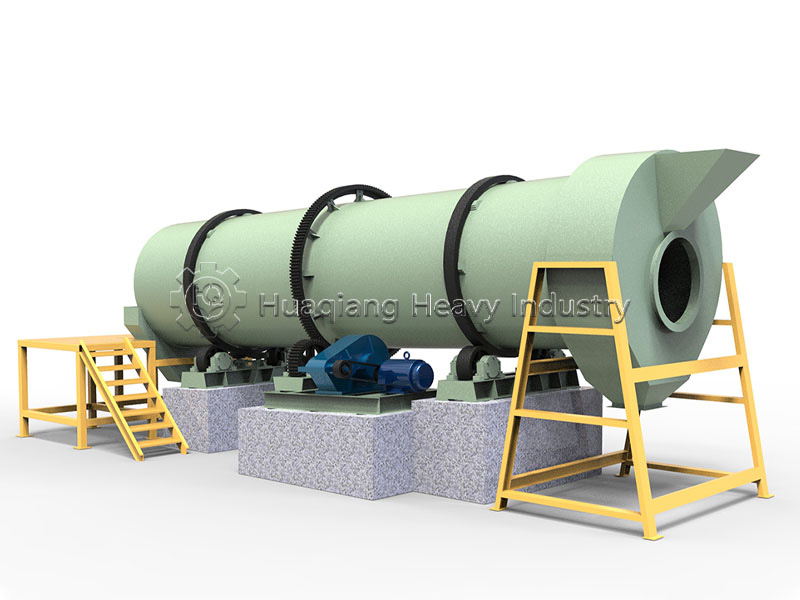
Organic fertilizer granulation machines are the core equipment in organic fertilizer production, and the choice of machine type directly affects product quality, production efficiency, and raw material suitability. Currently, the mainstream models on the market mainly include disc granulators, rotary drum granulators, and new-type organic fertilizer granulators. These three types of equipment differ significantly in granulation principles and applicable scenarios, and are suitable for different production needs.
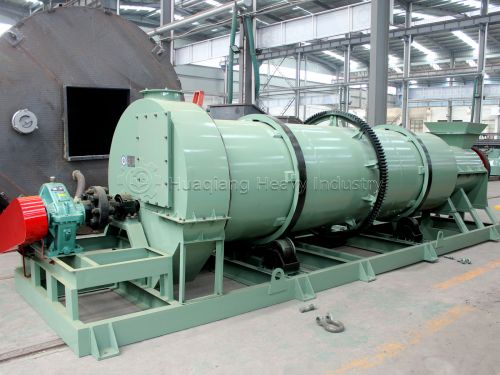
Disc granulators operate on the principle of "rolling into balls," using the rotation of an inclined disc to tumble the raw materials, forming granules through moisture binding. Their advantages include simple structure and low energy consumption, making them suitable for processing raw materials such as livestock and poultry manure and compost with a moisture content of 18%-25%. The finished granules have good roundness and moderate strength, and are often used in small and medium-sized organic fertilizer plants. However, their disadvantages include limited output and poor uniformity of particle size, requiring secondary processing with screening equipment.
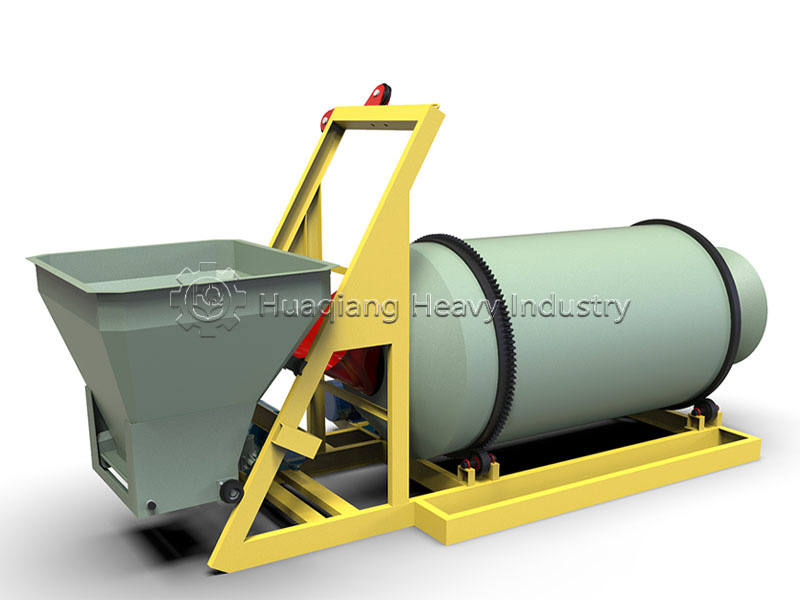
Rotary drum granulators are similar in principle to disc granulators, but use a cylindrical drum instead of a disc, resulting in higher production efficiency. A single unit can produce tens of tons per day, making them suitable for large-scale production. They have a wider range of applicable raw materials; in addition to conventional organic fertilizer raw materials, they can also process humic acid and straw powder. The finished granules have high density and strong stability. However, drum granulators require a larger footprint and higher investment costs, and require stricter control of raw material moisture content, which needs to be precisely controlled at 20%-30%.
New-type organic fertilizer granulators operate on the principle of "stirring and kneading into balls," using high-speed rotating paddles inside the machine to vigorously stir and knead the raw materials, while adding an appropriate amount of water to achieve granulation. The core advantage of this type of machine is its extremely strong adaptability to raw materials, especially suitable for processing raw materials with high viscosity and high fiber content, such as straw fermentation materials and kitchen waste fermentation materials. Furthermore, no additional binders are needed during the granulation process, and the finished granules have high uniformity and good strength. In terms of capacity, it falls between disc granulators and drum granulators, with a single unit producing several tons to more than ten tons per day, meeting the needs of both small and medium-scale production.
In summary, the selection of an organic fertilizer granulation machine should be based on production scale, raw material characteristics, and product requirements: for small and medium-sized plants with conventional raw materials, a disc granulator is a suitable option; for large-scale production, a rotary drum granulator is preferred; and for processing raw materials with high viscosity and fiber content, a paddle granulator is recommended.



.jpg)