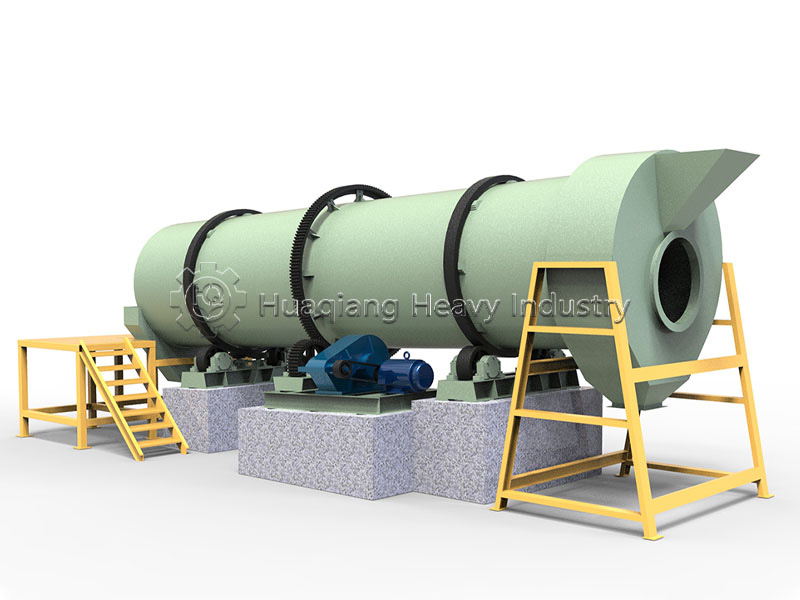
Many newcomers to organic fertilizer production face a dilemma when configuring their production lines: given the significant investment required for drying and cooling equipment, can they simply skip it and rely on natural air-drying and cooling to save money? In reality, for scaled and standardized organic fertilizer production lines, this equipment is not merely an optional accessory; it is core machinery essential for ensuring product quality, stabilizing output, and meeting sales compliance standards—offering excellent long-term value.
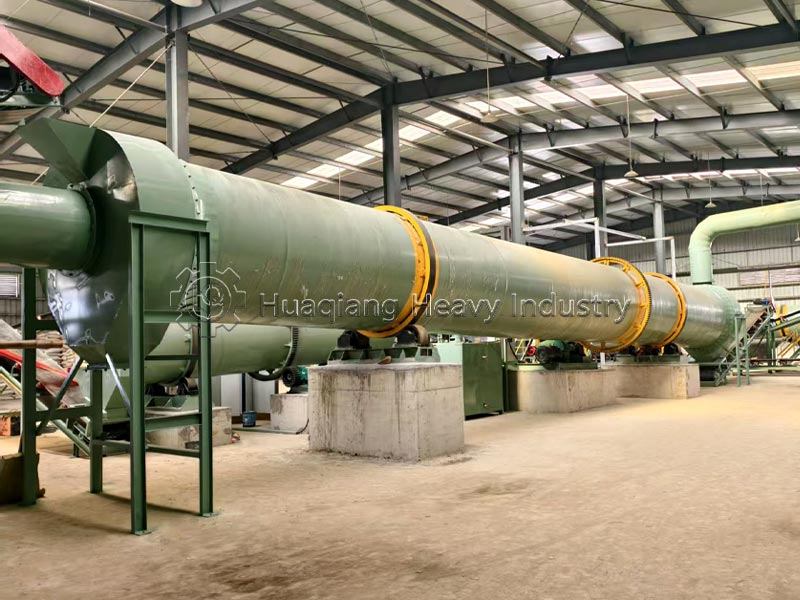
Skipping drying and cooling equipment is the root cause of many operational issues in small-scale workshops. After granulation, the material has a very high moisture content; natural air-drying not only requires a large footprint and offers low efficiency but is also highly susceptible to weather conditions. Rainy weather can cause the material to become damp, moldy, and develop unpleasant odors, while high temperatures can lead to nutrient loss. Fertilizer that has not been dried retains excessive moisture, making it prone to caking and hardening after stacking or bagging; this results in a poor-quality appearance and a significantly shortened shelf life, rendering long-term storage and long-distance transport impossible.
The drying and cooling processes each play a vital, irreplaceable role. Drying equipment precisely reduces the moisture content of high-moisture granules to a safe storage level of around 13%, effectively eliminating certain harmful bacteria and odors while ensuring uniform granule hardness and a well-formed shape. Conversely, freshly dried fertilizer granules are extremely hot; bagging them directly leads to moisture re-absorption and secondary caking. Cooling equipment rapidly lowers the temperature to set the granules and stabilize their structure, fundamentally solving the problems of fertilizer deterioration and caking.
From the perspectives of production efficiency and regulatory compliance, this equipment is an absolute necessity. Manual air-drying relies heavily on labor, is inefficient, and prevents continuous assembly-line production, severely limiting output capacity. In contrast, fully automated drying and cooling equipment operates in a closed loop, ensuring uniform heating and cooling with controllable energy consumption; this significantly reduces labor costs and boosts production efficiency. Moreover, commercial organic fertilizers are subject to strict national standards regarding moisture content, appearance, and shelf life; fertilizers that have not undergone drying and cooling processes fail to meet these requirements, making it difficult to pass quality inspections or enter formal sales channels.
While small-scale, sporadic production for personal use might temporarily bypass these steps, drying and cooling equipment is indispensable for any commercial or large-scale organic fertilizer operation. Although such equipment appears to increase upfront investment, it actually mitigates hidden costs—such as quality defects, insufficient production capacity, and after-sales disputes—serving as a critical component for enhancing quality, boosting efficiency, and ensuring compliant, profitable production.



.jpg)