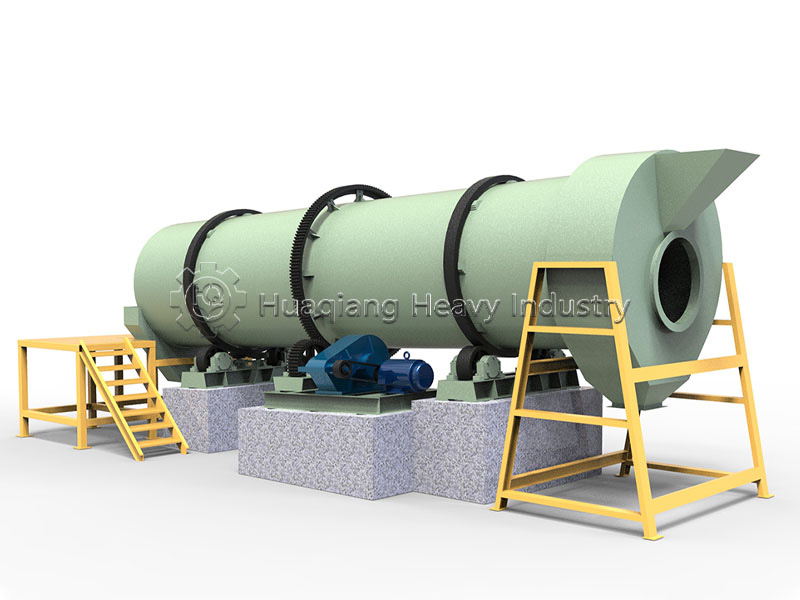
In an organic fertilizer production line, the granulator is the core equipment that determines the quality of the finished product, production efficiency, and economic benefits. A high-quality granulator produces round, uniform organic fertilizer granules with moderate hardness, enhancing its commercial value. However, improper selection can lead to substandard granules, excessive energy consumption, and cumbersome maintenance. Therefore, mastering scientific selection methods and accurately matching them to one's own production needs is an essential skill for organic fertilizer producers.
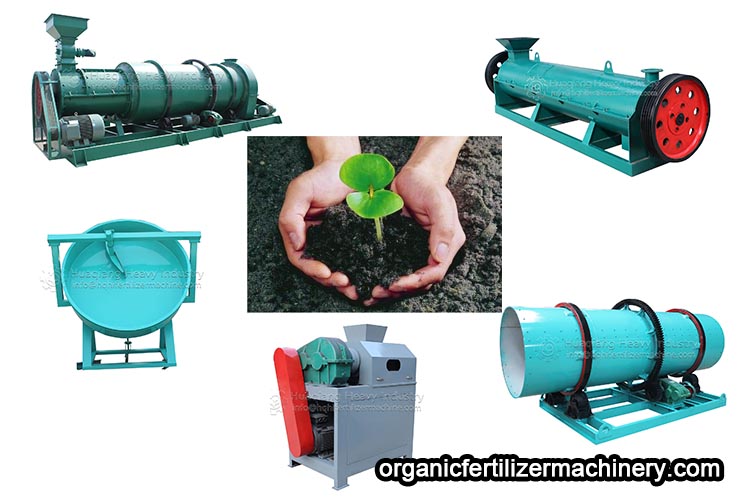
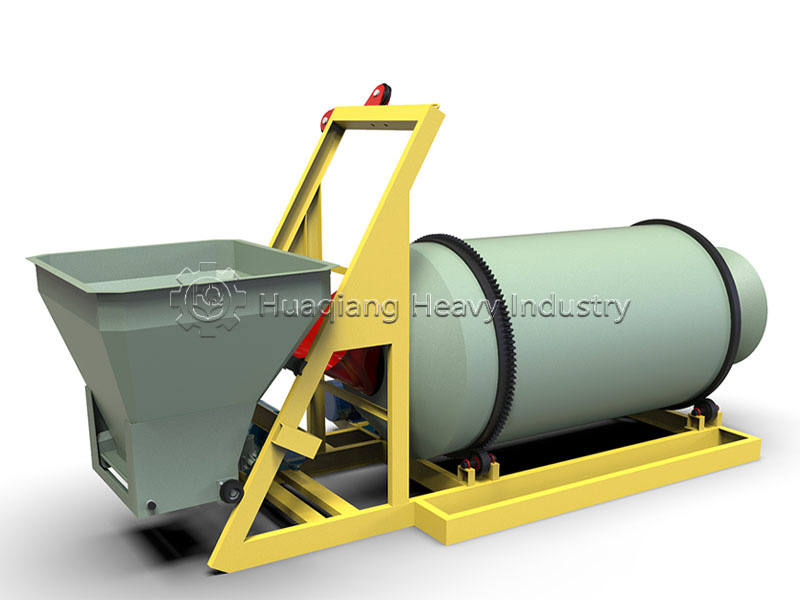
The primary prerequisite for selection is matching the production scale, which is key to controlling costs and improving efficiency. For small-scale production (a few tons per day), a disc granulator is suitable. It has a small footprint, low investment cost, and is easy to operate, making it suitable for family farms or small cooperatives. Although it requires supporting drying equipment, its cost-effectiveness is outstanding. For medium-scale production (tens of tons per day), a new type organic fertilizer granulator can be used. It has high granulation efficiency, produces good-looking granules, and can meet the needs of medium-scale continuous production. For large-scale production (hundreds of tons per day), a rotary drum granulator is preferred. It has huge capacity, stable operation, and can achieve 24-hour continuous operation, making it suitable for large-scale batch production. Raw material characteristics are the core basis for selection, directly determining the granulation effect. Materials with high moisture content (25%-35%) are suitable for disc or agitator granulators; the granulation rate can be ensured by adjusting process parameters. For pure organic raw materials with poor binding properties, a disc granulator can be used in conjunction with a binder to avoid problems such as difficulty in granulation and loose particles.
Particle requirements and cost control also need to be carefully considered. If spherical, high-appeal-quality granules are required, disc or agitator granulators are preferred, as they produce smooth, rounded granules that can increase product premium. In terms of cost, purchase, maintenance, and energy consumption must be considered. Disc granulators have the lowest initial investment, while rotary drum granulators, although requiring a higher initial investment, are suitable for large-scale production and long-term profitability.
Furthermore, equipment stability and manufacturer service should be considered. Prioritize models with mature structures and easily replaceable wear parts, as well as fertilizer machine manufacturers that can provide installation, commissioning, technical training, and after-sales maintenance. In summary, the selection of an organic fertilizer granulator requires a comprehensive consideration of production scale, raw material characteristics, granule requirements, and cost budget. Avoiding blindly pursuing high or low prices is crucial to maximizing production efficiency and laying the foundation for the development of the organic fertilizer industry.



.jpg)