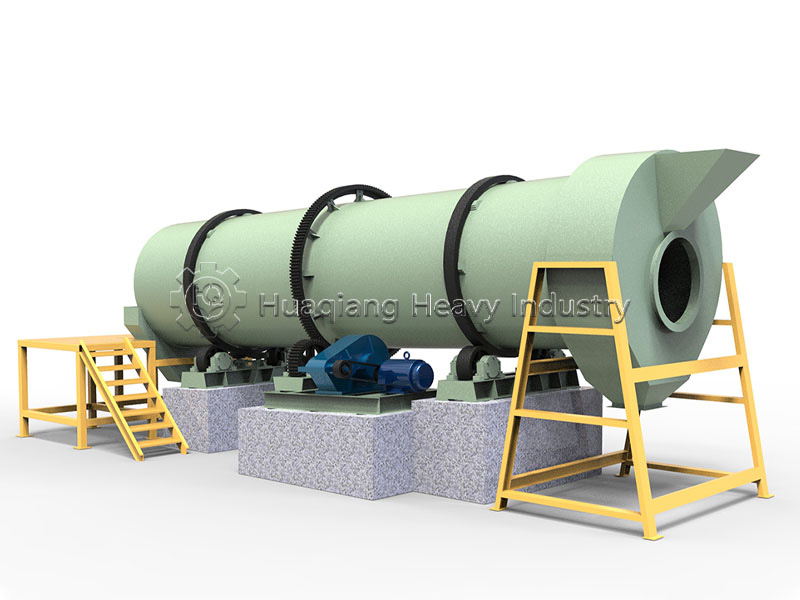
In the organic fertilizer production process, dust pollution is a pervasive challenge, primarily generated during critical stages such as batching, crushing, screening, granulation, air cooling, and packaging. This dust not only endangers the physical health of operators—potentially leading to respiratory diseases—but also contaminates the production environment, compromises product quality, and even poses safety hazards. Therefore, scientific and effective dust control is a vital guarantee for the green and efficient operation of an organic fertilizer production line.
Dust control strategies must adhere to the principles of "source prevention and control, process interception, and end-of-pipe treatment," employing targeted measures tailored to the specific characteristics of each production stage. During the batching and crushing stages—where dust generation is significant—capture hoods can be installed above the equipment and paired with baghouse dust collectors. These hoods can achieve a dust capture efficiency of up to 90%, while the baghouse collectors boast a removal efficiency as high as 99%. After treatment, the dust is discharged in a controlled manner through a 15-meter-high exhaust stack; simultaneously, the collected dust can be recycled back into the granulation section for reuse, thereby facilitating resource circulation.
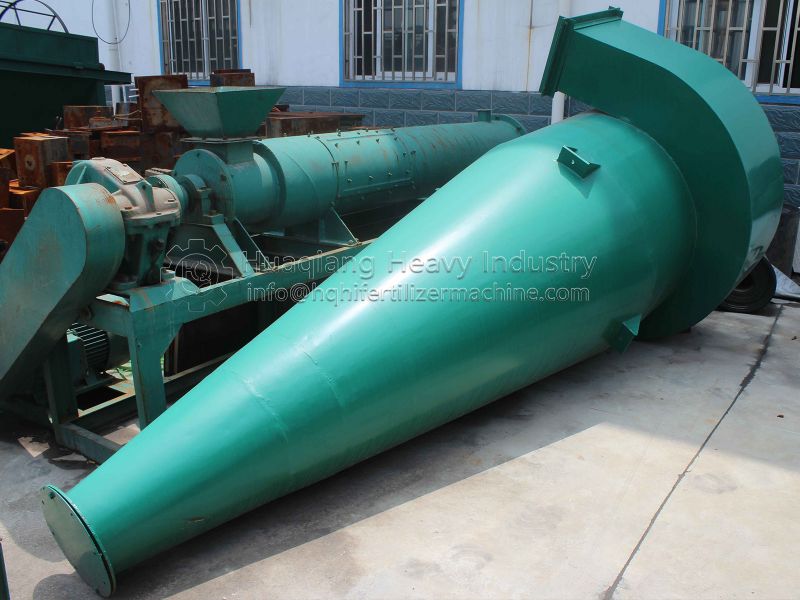
For the screening and granulation/rounding stages—where dust particles are finer—it is advisable to employ a combined treatment system utilizing both cyclone dust collectors and baghouse dust collectors, achieving a comprehensive dust removal efficiency exceeding 99.75%. Furthermore, the selection of sealed screening and granulation equipment—featuring sealing structures such as rubber gaskets—helps minimize dust leakage. This approach is further bolstered by the installation of negative-pressure dust extraction devices around the equipment to intercept dust diffusion during the process.
Regarding dust generated during the drying and air-cooling stages, exhaust gases from the equipment must be channeled directly into a dedicated dust removal system. Dust from the drying process can be treated using baghouse collectors, while dust from the air-cooling process benefits from a combined cyclone-and-baghouse system, ensuring that the dust concentration in the tail gas meets regulatory standards. Additionally, optimizing the production process itself can help reduce dust at the source; for instance, adopting dry granulation via roller extrusion—a fully enclosed operation—allows dust emission concentrations to be controlled within 10 mg/m³, thereby significantly reducing the overall pollution load.
Beyond equipment-based and process-specific preventive measures, comprehensive management across the entire production workflow is also indispensable. We have constructed fully enclosed production workshops and store raw materials in sealed warehouses; furthermore, the transportation roadways within the facility have been paved and are regularly watered and swept. The facility is equipped with an intelligent control system that integrates feeding and dust removal equipment, dynamically adjusting dust extraction airflow based on production load. Concurrently, we strictly implement a comprehensive monitoring plan, conducting periodic testing of dust emission levels to ensure full compliance with environmental protection standards.
A scientific approach to dust management not only safeguards the health of personnel but also enhances product quality and ensures adherence to environmental mandates. Organic fertilizer enterprises must tailor their dust removal equipment configurations and refine their management and control systems in accordance with their specific production scales. By achieving the reduction, resource utilization, and harmless treatment of dust, these enterprises can drive the industry toward high-quality development characterized by green and sustainable practices.



.jpg)