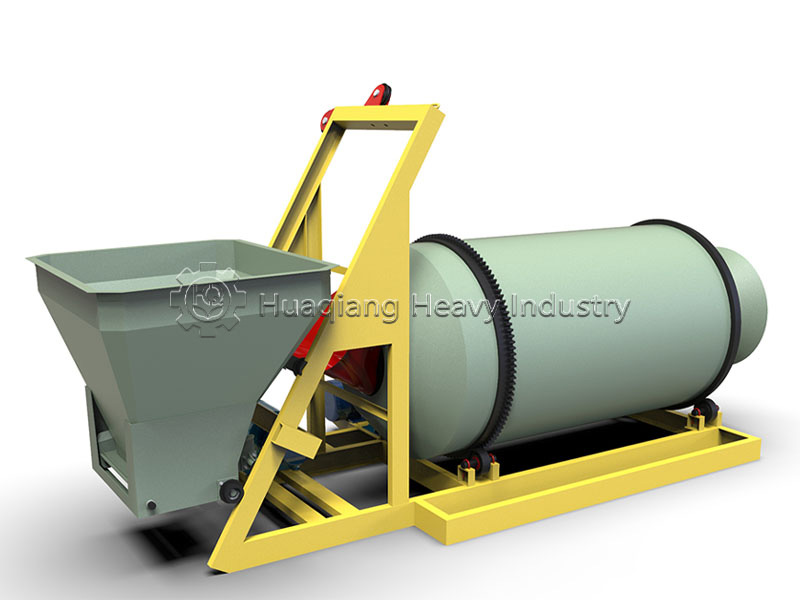
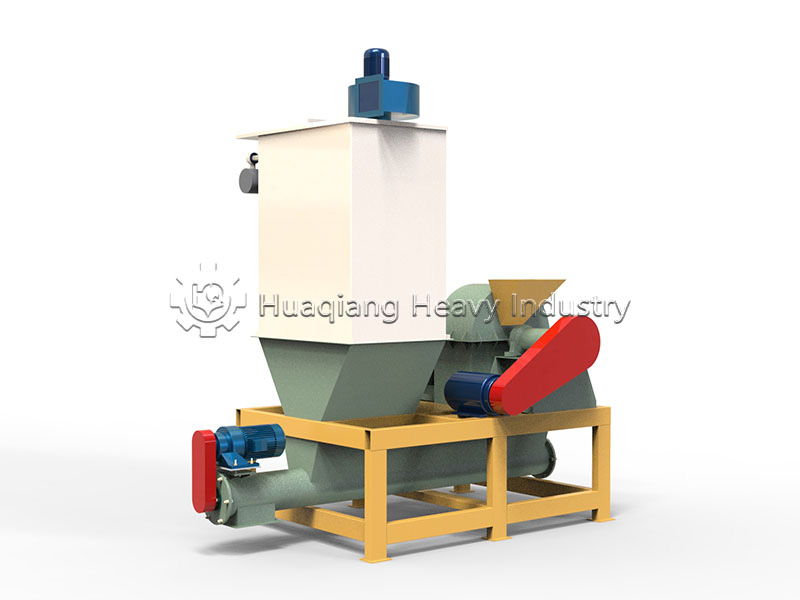
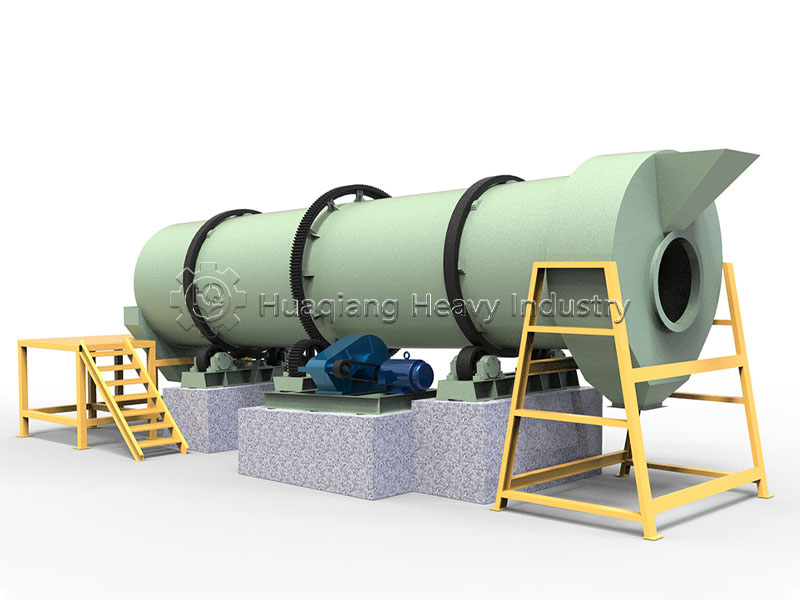
When planning a production line, many new organic fertilizer plants face a common dilemma: should they include drying and cooling stages? While these stages are not strictly mandatory in every case, they are essential for ensuring product stability in the production of commercial granular organic fertilizer. Drawing on years of project experience, Huaqiang Heavy Industry explains the logic behind these decisions.
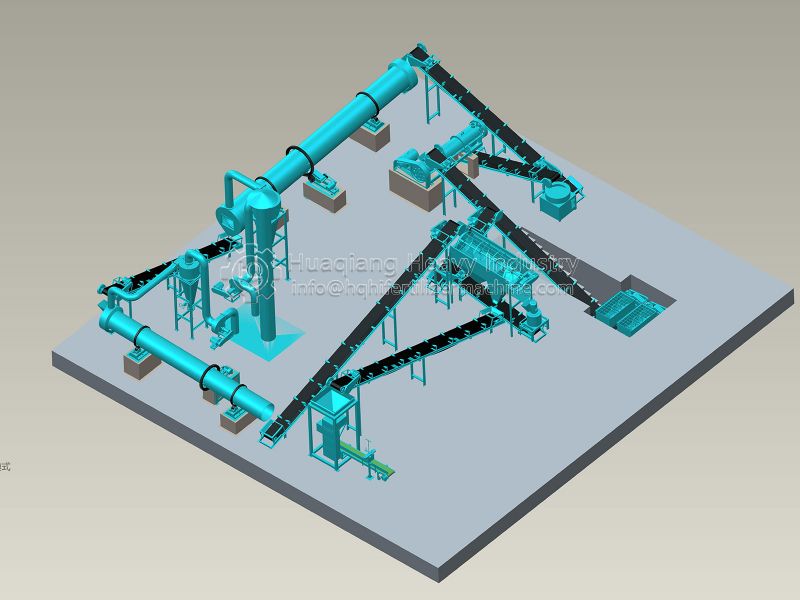
For powdered organic fertilizer or products made via "no-dry" extrusion granulation, drying and cooling can be omitted—provided that the raw materials are fully fermented and moisture content is precisely controlled. Such products are typically sold locally and used shortly after production; as long as they meet moisture standards, they are ready for dispatch. In contrast, granular organic fertilizer produced via disc or rotary drum wet granulation typically has a moisture content of 20%–25% and a soft texture. Attempting to screen and package these granules directly poses significant risks, making drying and cooling indispensable.
The primary purpose of drying is precise moisture control. Through low-temperature hot-air drying, the moisture content of the granules is reduced to a level suitable for storage, which increases granule hardness and minimizes breakage during transport. Drying temperatures must be strictly regulated; for bio-organic fertilizers, low-temperature drying is critical to prevent high heat from killing beneficial live microorganisms, thereby preserving the fertilizer's biological activity. Skipping the drying process leaves high-moisture granules prone to secondary fermentation, heating, mold growth, clumping, and foul odors during storage. This drastically shortens shelf life and creates substantial risks for long-distance transport and distributor inventory management.
Cooling follows drying—a step that is often overlooked but should never be skipped. Granules exiting the drum dryer are at a high temperature; if bagged immediately, the trapped heat prevents dissipation, causing moisture to condense and re-dampen the product. This leads to the granules—previously in good condition—sticking together and forming clumps. A cooling machine uses ventilation and heat exchange to bring the granules down to near-ambient temperature. This stabilizes their structure, locks in the results of the drying process, improves the flowability of the final product, and ensures compatibility with automated packaging equipment.
Ultimately, the decision to include these stages depends on your product positioning. For small-scale, local, direct-to-consumer operations producing powdered organic fertilizer, drying and cooling equipment may be omitted. However, for large-scale production, wholesale distribution, long-distance logistics, or the manufacturing of granular bio-organic fertilizer, drying and cooling systems are standard requirements. Skipping this equipment might reduce initial investment, but it will inevitably lead to an increase in product returns, material loss, and quality-related complaints over time.
In summary, whether an organic fertilizer production line requires drying and cooling equipment depends on the granulation process, the physical form of the product, and the sales model. To produce high-quality, commercially viable granular organic fertilizer—characterized by consistent appearance, a long shelf life, and strong market acceptance—the drying and cooling stage is indispensable. Furthermore, the inclusion of these processes serves as a key indicator that a production line has reached a level of standardization and scale.