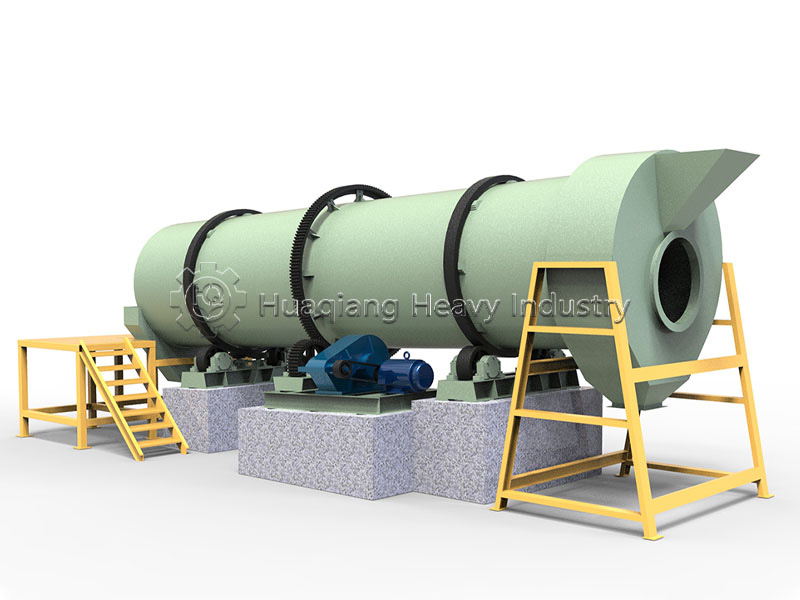
In the operation of organic fertilizer production lines, material characteristics are closely related to equipment lifespan, and material corrosion is a particularly prominent issue, directly affecting production efficiency and operating costs. Understanding the material corrosion mechanism and taking effective control measures are crucial for ensuring the stable operation of organic fertilizer production.

The core materials for organic fertilizer production are mostly livestock and poultry manure, crop straw, and kitchen waste, which are generally highly corrosive. On the one hand, materials such as livestock and poultry manure have a low pH value before fermentation, exhibiting acidity. The organic acids and sulfides contained in them will chemically react with the metal surface of the equipment, destroying the metal oxide film and leading to pitting and ulceration corrosion; on the other hand, the fermentation process of the materials produces gases such as ammonia and carbon dioxide. These gases combine with moisture in the air to form alkaline or acidic media, further exacerbating the corrosion of organic fertilizer machine. In addition, electrolytes such as chloride ions contained in some materials will accelerate the electrochemical corrosion process, especially causing more damage to commonly used equipment materials such as stainless steel.
Material corrosion brings many hazards to organic fertilizer production equipment. Long-term corrosion can lead to thinning of the equipment shell, reduced sealing performance, and problems such as material leakage and gas leakage, affecting production continuity; in severe cases, it can cause failure of key equipment components, leading to production safety hazards, and significantly increasing equipment repair and replacement costs. For example, equipment that directly contacts materials, such as fermentation tanks and screw conveyors, may have their service life shortened by more than 30% if anti-corrosion treatment is not properly implemented.
Multiple countermeasures can be taken to address material corrosion. In terms of equipment selection, priority should be given to materials with strong corrosion resistance, such as 316L stainless steel and fiberglass, instead of ordinary carbon steel; the equipment surface should be treated with anti-corrosion measures, such as spraying anti-corrosion coatings and electroplating, to form a protective barrier. In terms of production process, the pH value of the materials should be reasonably controlled by adding regulators to keep it within a neutral range, reducing acidic or alkaline corrosion; residual materials in the equipment should be cleaned promptly to prevent long-term adhesion of materials and the breeding of corrosive media. Furthermore, establishing a regular equipment inspection system to promptly identify and address early corrosion problems can also effectively reduce corrosion damage.
In summary, the corrosion of organic fertilizer production equipment caused by raw materials cannot be ignored. By scientifically understanding the causes of corrosion and combining measures such as rational material selection, process optimization, and regular maintenance, material corrosion can be effectively resisted, extending the service life of the equipment and ensuring the efficient and stable operation of organic fertilizer production.



.jpg)