Fertilizer granulation is a critical step in enhancing the physical properties of fertilizers, thereby facilitating their application and storage. Different types of fertilizer granulators are suited to varying raw materials and production capacity requirements. Currently, there are four main types commonly found on the market; each possesses distinct advantages and disadvantages and is widely utilized in the production of organic fertilizers, compound fertilizers, and similar products.
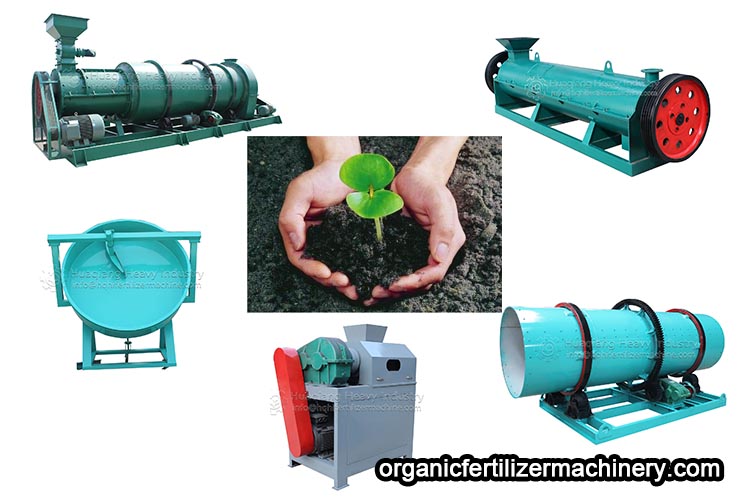
The disc granulator (or Pan Granulator) is a cost-effective choice for small-to-medium-scale production. It features a simple structure, low initial investment costs, and a low operational threshold. By utilizing a tilted, rotating disc, the machine employs centrifugal force and friction to cause powdered raw materials—mixed with a binder—to roll and agglomerate, gradually forming spherical granules. Its granulation rate can exceed 90%. This type is well-suited for raw materials with moderate viscosity—such as livestock and poultry manure or humus-rich soil—making it ideal for use by individual farmers and small cooperatives. However, it has limited production capacity, produces granules with relatively low physical strength, and requires the use of auxiliary drying equipment.
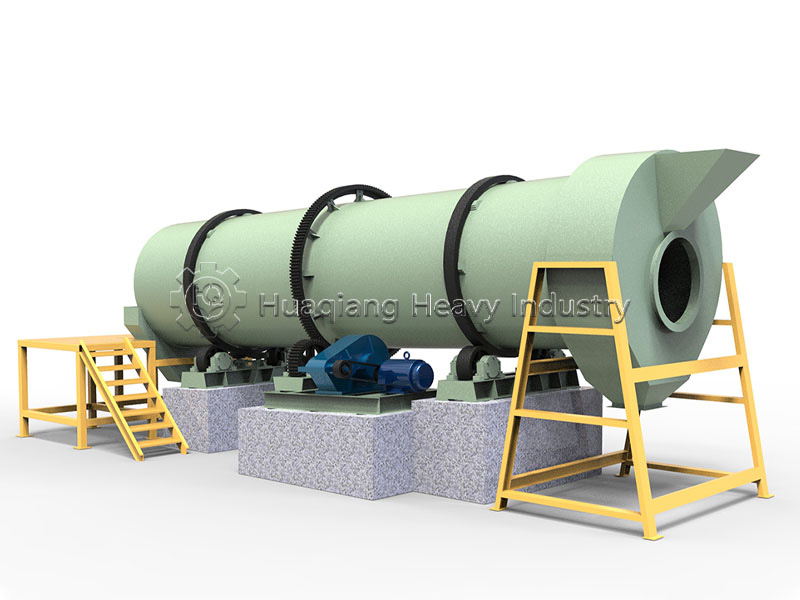
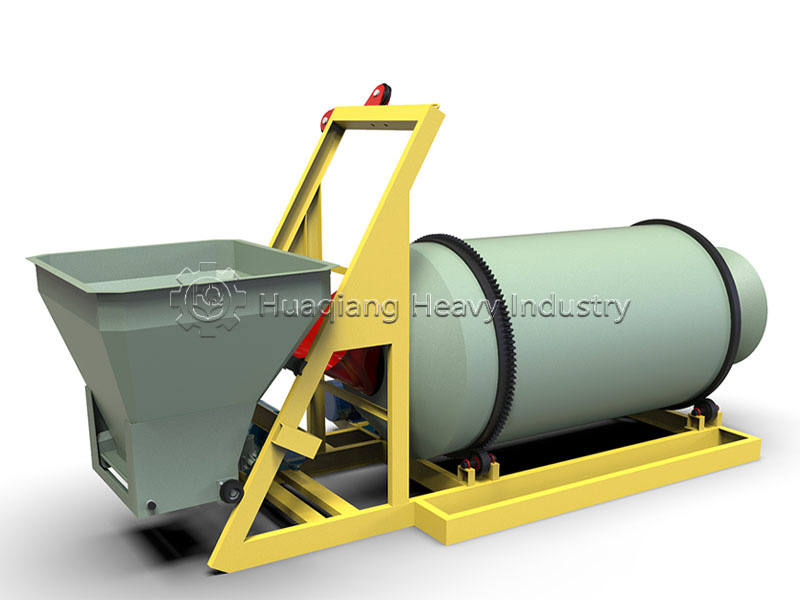
The rotary drum granulator is the efficiency powerhouse for large-scale production. It employs a tilted, rotating drum to facilitate granulation through a combination of sprayed binders, friction, and compression generated by the drum's rotation. It produces granules with high physical strength and uniform size, offering stable production capacity. It is suitable for large-scale organic fertilizer plants with an output exceeding 2 tons per hour and can process bulk raw materials such as straw-mixed manure and sewage sludge. However, the equipment is structurally complex, requires a higher initial investment, and consumes a relatively large amount of energy.
The extrusion granulator is characterized by low energy consumption and high adaptability. It is categorized into two types: roller extrusion and wet extrusion. The core principle involves using mechanical pressure to forcibly shape the raw materials. Among these, the roller extrusion method requires no drying and can directly process dry powdered raw materials; it features a short process flow and produces no dust, making it suitable for relatively dry materials such as spent grain (distillery residue) and herbal medicine dregs. The wet extrusion method produces granules with excellent roundness but requires a mild drying process. Both methods are widely used in the production of organic and bio-fertilizers; however, a common drawback is that the resulting granules may lack perfect uniformity in shape.
The stirring-tooth granulator is an ideal tool for processing high-moisture raw materials. It relies on the mechanical force generated by high-speed rotating stirring teeth to break down, mix, and agglomerate high-moisture fermented raw materials into granules, requiring no additional binders. It features rapid granulation and high granule strength, allowing for the elimination of the drying stage—thereby conserving energy. It is well-suited for processing undried livestock and poultry manure following fermentation, and is ideal for small-to-medium-scale production, though it does impose specific requirements regarding the fineness of the raw material.
Selecting the appropriate granulator requires careful consideration of raw material characteristics, production capacity requirements, and budgetary constraints. These four commonly used machine types address a wide spectrum of needs—ranging from small-scale personal use to large-scale industrial production—offering diverse solutions for fertilizer processing that help enhance both fertilizer utilization efficiency and overall production productivity.



.jpg)