In fertilizer, mining, and building material production facilities, operational scenarios often involve limited space and the need to lift materials to significant heights over short distances. Large angle belt conveyors are specifically designed to handle continuous material feeding across steep slopes and significant elevation changes; they are also frequently integrated into Huaqiang Heavy Industry’s complete fertilizer production lines.
The primary difference between this and a standard belt conveyor lies in the structure of the conveyor belt itself. Corrugated rubber sidewalls are vulcanized onto both sides of the belt, with transverse cleats fixed at intervals between them, collectively forming a series of pocket-like compartments. Material is deposited into these pockets, where the sidewalls and cleats contain it—preventing granular or powdery material from sliding down the inclined belt surface—thereby enabling stable conveyance at angles ranging from 0° to 90°; (with optimal operational stability achieved at angles of 70°or less).
The complete system comprises a drive motor, drive pulley, bend pulley, idler assemblies, corrugated sidewall conveyor belt, frame, tensioning mechanism, cleaning device, and backstop/braking components. Its operational logic is straightforward: the drive pulley propels the belt in a continuous loop; material enters the pockets at the bottom inlet and is conveyed upward along the inclined structure; discharge occurs via gravity at the top; and the empty belt returns to the feed end, completing the continuous cycle.
For the fertilizer industry, which deals with moist and sticky granular materials, wear-resistant cleaners can be installed to minimize material buildup on the belt. Additionally, for heavy-load applications, a backstop is incorporated to prevent the belt from reversing and material from sliding back during shutdowns, thereby mitigating safety risks at the production site.
They serve as key auxiliary conveying equipment in complete production lines for organic, compound, and bio-organic fertilizers. They are used for raw material transfer, lifting granules after the granulation process, and transporting materials before and after screening. They are suitable for handling everything from fermented/decomposed materials and pulverized powders to finished granular fertilizers. Many clients position them after the pulverization stage to transport powdered material to the mixer or the main granulation unit.
Mining (sand and gravel transport), construction materials (lifting sand, gravel, and aggregates), chemical industry (transfer of granular materials), grain handling (loading and unloading bulk grain), and solid waste treatment.
They eliminate the need for multi-stage transfer platforms; a single unit can handle combined horizontal-inclined-horizontal conveying. Many organic and compound fertilizer production facilities have limited ceiling height; compared to bucket elevators or multi-stage standard belt conveyor combinations, high-inclination belt conveyors can reduce equipment footprint by 30–50% and lower facility modification costs. In fertilizer production lines, they are often connected to the discharge end of horizontal mixers to feed mixed raw materials directly into the inlet of double-roll extrusion granulators, thereby eliminating the need for intermediate storage hoppers.
They can convey granular compound fertilizers, organic fertilizer raw materials, mineral powders, sand and gravel, coal, and grain. Thanks to a hopper structure featuring corrugated sidewalls and transverse cleats, material spillage loss under normal operating conditions can be kept below 1%. Belt materials can be customized—options include standard rubber, oil-resistant PVC, and acid/alkali-resistant rubber—to suit various material conditions, such as moist organic fertilizer or mildly corrosive chemical raw materials.
The overall structure is based on the proven framework of standard belt conveyors, ensuring high component interchangeability; parts such as idlers, pulleys, and motors are easily sourced on the market. Unlike bucket elevators, they do not suffer from issues like hopper chain wear or breakage; daily maintenance is minimal, requiring only checks for sidewall cracking and proper belt tension. They support variable frequency speed control, allowing for capacity synchronization with upstream and downstream equipment—such as rotary screens and rotary dryers—to facilitate continuous production across the entire line.
While standard belt conveyors struggle to convey materials stably at angles exceeding 18°, large angle belt conveyors ensure stable transport at angles between 30° and 70°. Specially customized models can even achieve 90° vertical lifting, allowing customers to freely plan the equipment layout based on site elevation differences.
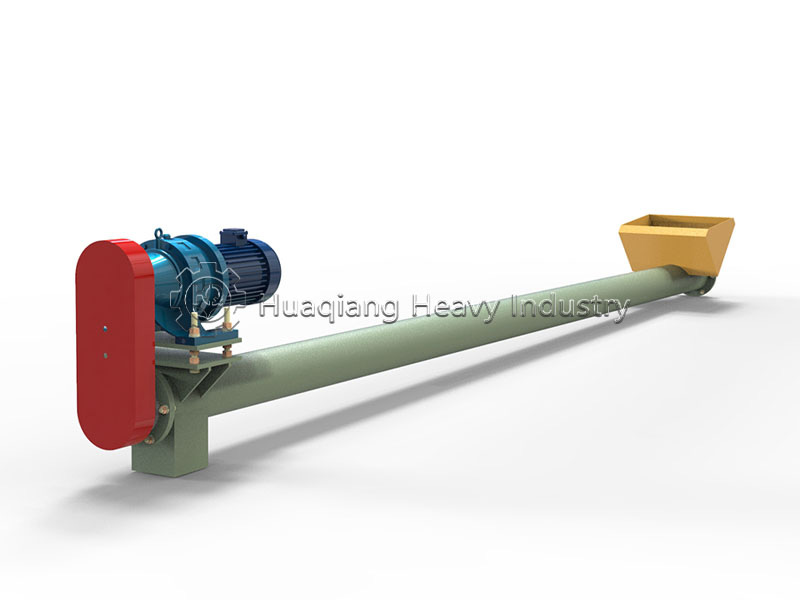
The screw conveyor is a product designed by our company, which combines the experience of all kinds of screw conveyor at home and abroad. The product can meet the transportation of various materials and be matched with all kinds of mixing machines.
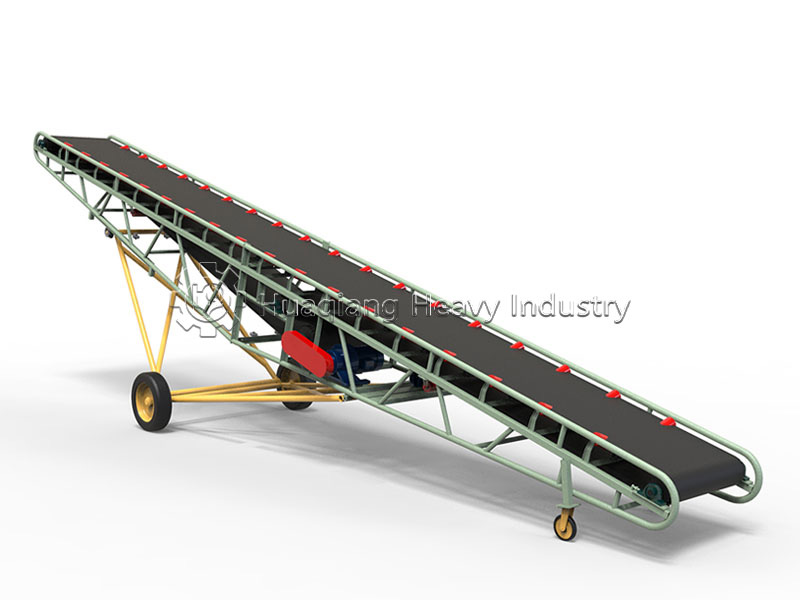
Mobile belt conveyors offer flexible mobility and stable material transport; they are widely used for transferring bulk fertilizer and allow for convenient operational adjustments.
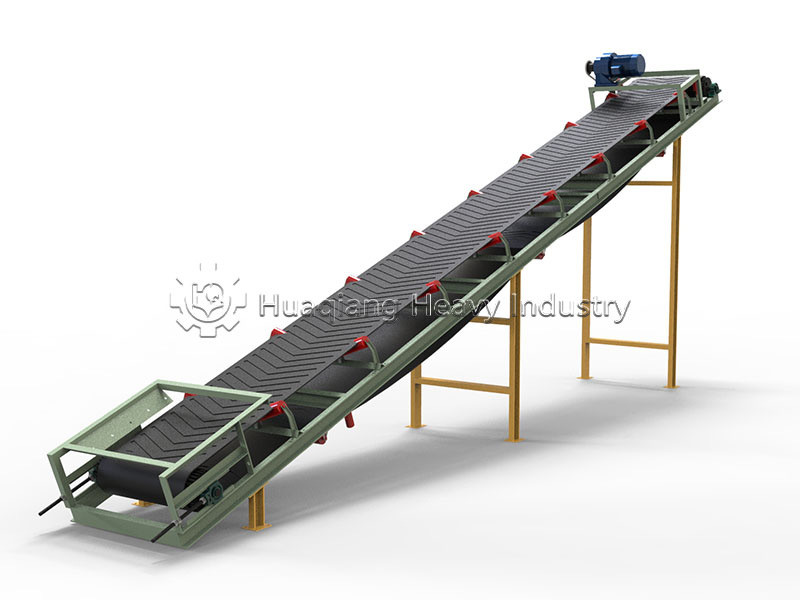
Belt conveyors are among the most widely used continuous conveying equipment in the industrial sector. They are used at the connection points between various pieces of equipment in fertilizer production lines.