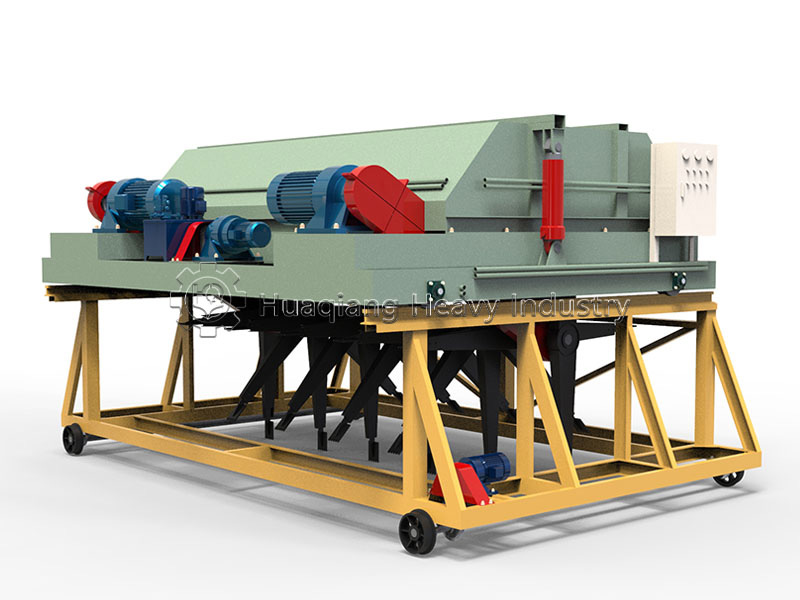
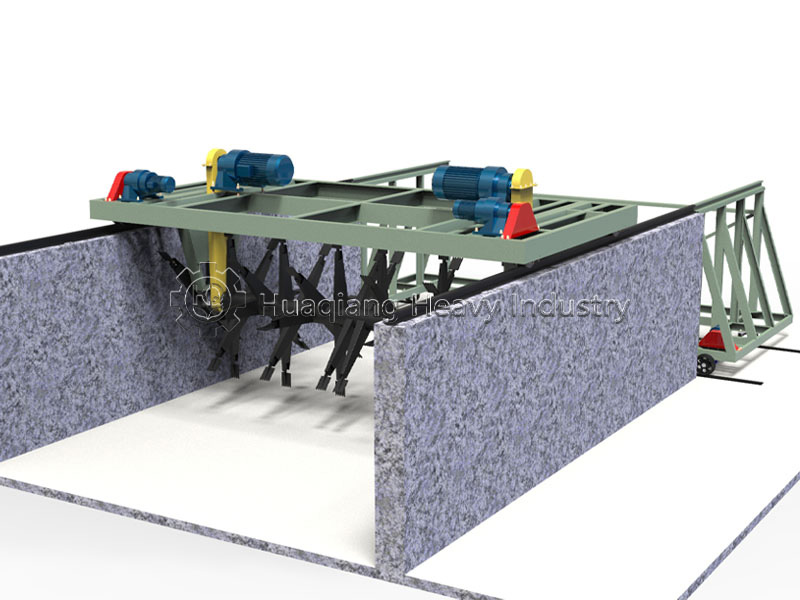
Answer: The compost turner is a core piece of equipment for the decomposition and fermentation of organic materials such as manure, crop stalks, and food waste. Its primary role is to facilitate rapid and thorough decomposition, thereby overcoming issues associated with traditional composting methods—namely slow fermentation, strong odors, and "burning" (overheating) of the pile. First, through turning and mixing, the machine breaks up clumps and increases material porosity; this ensures sufficient oxygen intake to meet the requirements of aerobic fermentation, significantly accelerating the process and shortening the composting cycle.

Second, the equipment uniformly mixes the materials with fermentation inoculants, ensuring full contact between the microbes and the raw materials. This prevents uneven fermentation or incomplete decomposition, resulting in higher-quality organic fertilizer. At the same time, repeated turning allows for the rapid dissipation of moisture and harmful gases—such as ammonia and hydrogen sulfide—generated during fermentation, effectively reducing odors and ensuring compliance with environmental standards.
Furthermore, the compost turner helps balance the temperature of the compost pile, preventing problems like material scorching due to excessive heat or fermentation stalling due to low temperatures, thus keeping the process stable and controllable. Compared to manual turning, it offers higher operational efficiency and lower labor costs; it is well-suited for large-scale production at livestock farms and organic fertilizer plants, serving as a key piece of equipment for the resource utilization of manure.



.jpg)