Fertilizer granulation is a critical process for converting powdery or liquid raw materials into granular products. Its primary objectives are to enhance fertilizer flowability, minimize nutrient loss, facilitate storage and application, and meet the diverse requirements of various agricultural production scenarios. Currently, the three most widely adopted granulation methods in the industry are pan granulation, drum granulation, and extrusion granulation. By leveraging their respective process characteristics, these methods collectively cover a broad spectrum of production scenarios—ranging from small-to-medium scale operations to large-scale industrial production, and from organic fertilizers to compound fertilizers.
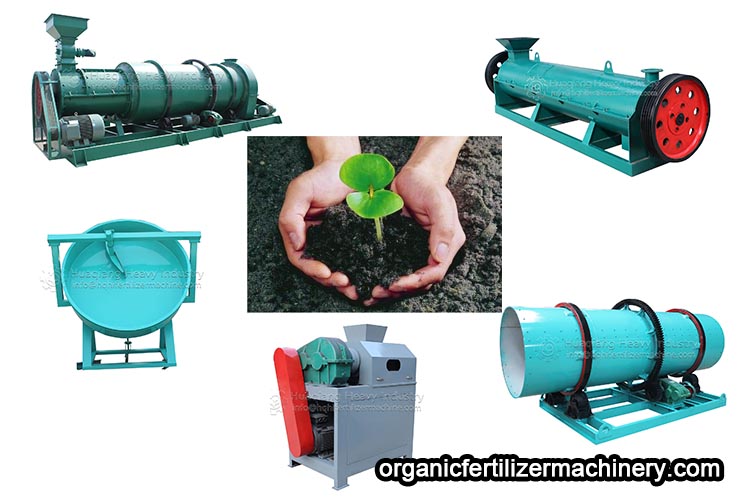
Disc granulation is the most economical of the traditional methods, making it well-suited for small-to-medium scale production. Its underlying principle resembles that of rolling a snowball: powdery raw materials are mixed with an appropriate amount of water or binder to form a slurry, which is then sprayed onto a rotating pan. Driven by a combination of centrifugal force and gravity, the material continuously rolls and agglomerates to form granules; these are subsequently dried and screened to yield the final product. This method features a simple equipment structure and low initial investment costs; it boasts a granulation rate exceeding 90% and offers broad applicability, making it suitable for the production of urea, compound fertilizers, and organic fertilizers. However, the resulting granules tend to have lower physical strength and uneven particle sizes, and the process requires a certain amount of energy for drying; consequently, it is best suited for small-scale processing plants with limited capital.
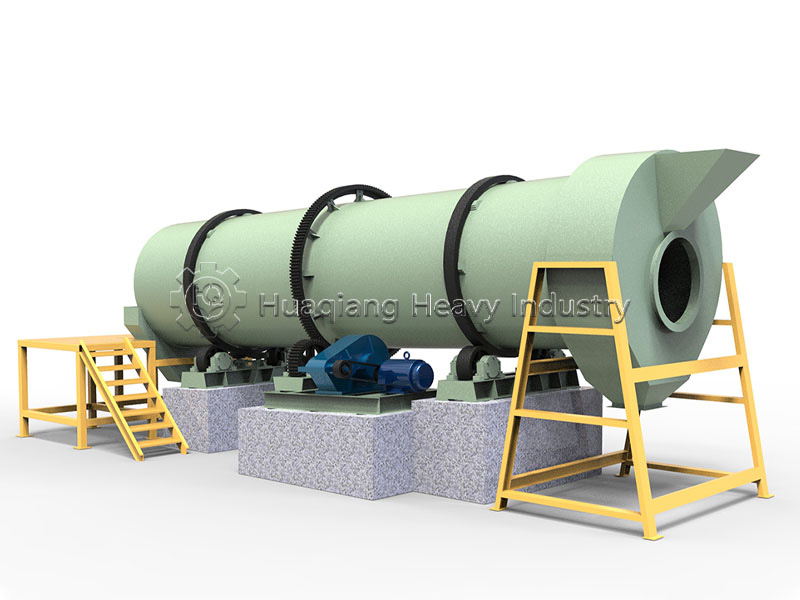
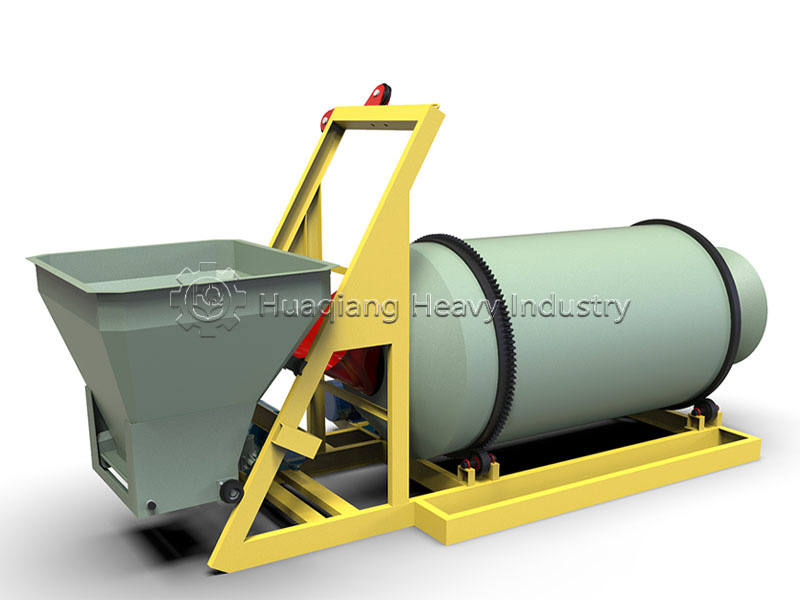
Drum granulation—also known as rotary drum granulation—is the preferred method for large-scale production of compound fertilizers. Within an inclined, rotating drum, raw materials are transformed into granules through the combined effects of sprayed binders, friction generated by the drum's rotation, and compressive forces. Its key advantages include the capability for continuous operation, high production throughput, superior granule strength, and a wide range of particle size control, making it ideal for producing high-concentration compound fertilizers and blended fertilizers. However, this method involves complex equipment and necessitates the integration of auxiliary drying systems; it also entails higher energy consumption. Furthermore, the production process is prone to generating oversized lumps or fine dust, thereby requiring the use of complementary screening equipment to optimize product quality.
Extrusion granulation, which is categorized into dry and wet methods, represents a modern approach that effectively balances environmental sustainability with operational efficiency. Dry extrusion eliminates the need for a drying stage; dry powdery raw materials are subjected to high-pressure extrusion to form continuous strands, which are then crushed into granules. This process features a short workflow, low energy consumption, and dust-free operation. Conversely, wet extrusion involves adding water to the raw materials to form a paste-like consistency; this paste is then extruded into strands and cut into granules. While this method requires a mild drying step, it yields granules with superior roundness and physical strength. This method demonstrates strong adaptability to various raw materials and is particularly well-suited for the production of organic and bio-fertilizers; it effectively preserves the activity of beneficial microorganisms. Furthermore, the resulting granules possess high density and exhibit slow nutrient release; however, their shape is predominantly flattened-spherical, resulting in relatively poor flowability, making them most suitable for manual application scenarios.
Each of the three granulation methods possesses distinct advantages and disadvantages; therefore, in actual production, the appropriate method must be judiciously selected based on the specific type of fertilizer, production scale, and intended application scenario. Disc granulation prioritizes economy and convenience; drum granulation focuses on large-scale efficiency; and extrusion granulation strikes a balance between environmental sustainability and nutrient retention. Through their synergistic development, these three methods provide agricultural production with a diverse array of granular fertilizer options, thereby contributing to enhanced fertilizer utilization efficiency and the advancement of green agriculture.



.jpg)