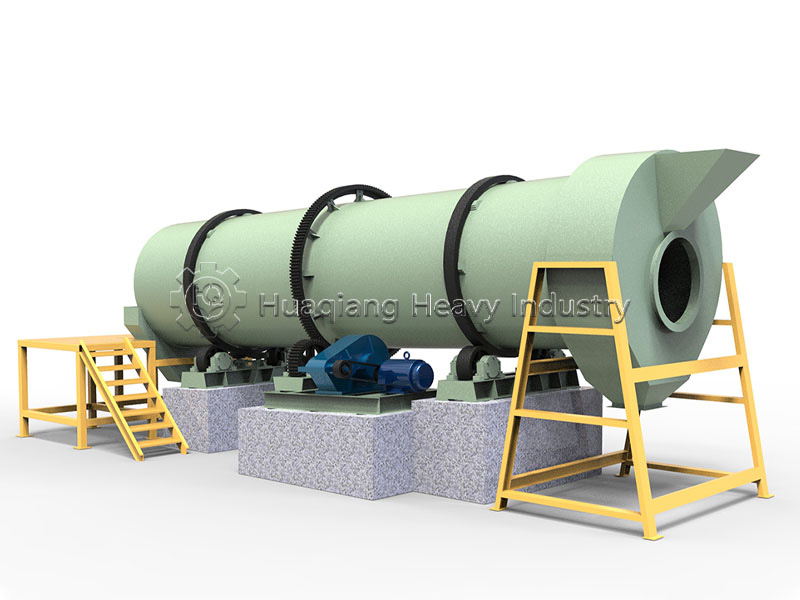
The granulation effect of organic fertilizer directly determines the quality, storage stability, and ease of application of the fertilizer product. The quality of granulation produced by organic fertilizer granulation machines is influenced by a combination of factors. A thorough understanding of these key factors is crucial for optimizing production processes and improving product quality.
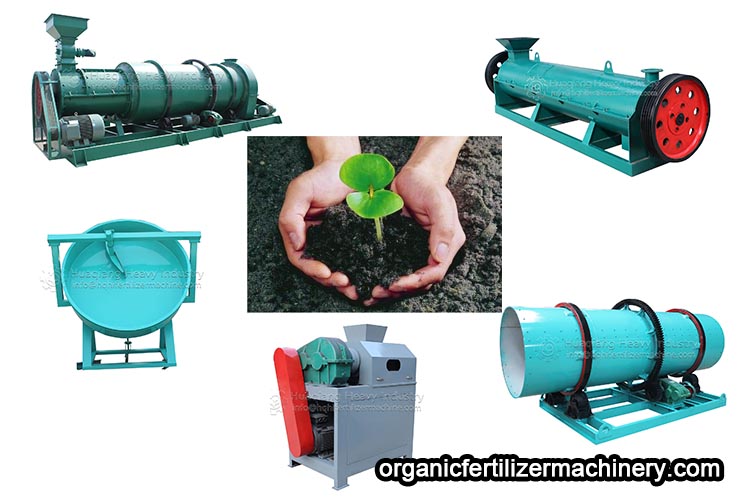
Raw material characteristics are fundamental influencing factors. Firstly, the moisture content of the raw materials is critical; most granulation processes are suitable for a moisture content of 25%-35%. Too high a moisture content can lead to particle agglomeration and clumping, while too low a moisture content makes it difficult to form continuous granules. Secondly, the particle size distribution of the raw materials needs to be reasonable; a high proportion of fine powder increases the difficulty of binding, while too many coarse particles can lead to loose granules and insufficient strength. In addition, the organic matter content and binding properties of the raw materials also affect the granulation effect; raw materials with moderate binding properties are more likely to form regular granules.
Equipment parameter settings are a core guarantee and are key to the stable operation of organic fertilizer machines. The rotational speed of the granulator directly affects the centrifugal force and mixing intensity of the material. Too fast a speed can easily cause the particles to be too fine or broken, while too slow a speed results in uneven material mixing and low granulation efficiency. The mold aperture or granulation disc angle needs to match the target particle size; too large an aperture results in coarser particles, while too small an aperture can easily cause blockages and increase energy consumption. At the same time, the degree of wear of the mixing blades inside the equipment also affects the uniformity of material mixing, thereby reducing the granulation effect.
Operating processes and auxiliary conditions are also crucial. The feeding speed needs to match the equipment's processing capacity; too fast a speed can lead to material accumulation and insufficient mixing, while too slow a speed reduces production efficiency. The type and amount of binders or modifiers added in some processes directly affect the strength and molding rate of the granules. In addition, the temperature and humidity of the production environment can indirectly affect the material characteristics, thus impacting the granulation effect.
In summary, the granulation effect of organic fertilizer is the result of the combined action of multiple factors, including raw materials, equipment, processes, and environment. In production, it is necessary to accurately control the parameters of each link and dynamically adjust the process according to the characteristics of the raw materials to ensure the stable production of high-quality organic fertilizer granules on the organic fertilizer production line.



.jpg)