The ton bag fertilizer packaging machine is an automated system designed specifically for the quantitative weighing and filling of large-format flexible intermediate bulk containers (FIBCs)—commonly known as PP woven bulk bags—with capacities ranging from 500 kg to 2,000 kg. Its primary function is to precisely fill bulk bags with finished fertilizer to a preset weight while simultaneously controlling dust emissions and material loss.
In terms of production line positioning, the ton bag fertilizer packaging machine operates at the final stage of fertilizer production. Finished product—whether organic or compound fertilizer—is transferred from storage silos (following granulation, drying, cooling, and screening processes) via bucket elevators or belt conveyors into the machine's buffer hopper. After the weighing and filling process is complete, the filled bags are transported to the palletizing or truck-loading stage. Far from being an isolated unit, the machine serves as a critical node within the integrated packaging and logistics line.
The ton bag fertilizer packaging machine utilizes a process involving "two-stage feeding, staged weighing, negative-pressure sealed filling, and synchronous vibration compaction“ The core process steps are as follows:
Feeding and Buffering:Finished fertilizer is conveyed to a buffer hopper via a lift; for powdered material, a vibration-based arch-breaking and stirring system is used, while granular material employs independently controlled double-layer gates.
Bag Hanging and Clamping:A ton bag is hung onto load-bearing hooks (manually or via robotic arm); a pneumatic cylinder clamps the bag opening, and a dust-extraction skirt seals against the discharge outlet.
Coarse Feeding:High-flow rapid filling proceeds until 85% of the target weight is reached; gravity gates are used for granules, while variable-frequency screw feeders are used for powders.
Fine Feeding:The system switches to low-flow feeding; sensors provide real-time weight feedback, and the PLC compensates for the "in-flight material" error caused by the momentum of falling material.
Vibration Compaction and Dust Removal:A bottom vibration platform provides intermittent compaction to prevent caking, while a pulse dust collector simultaneously extracts dust and recovers fine powder to the hopper.
Bag Release and Conveying:Feeding stops once the target weight is reached; after a brief dust-extraction delay, the bag clamp releases, and the ton bag drops onto a belt conveyor to proceed to the next cycle.
Semi-automatic models take 3 to 5 minutes per bag, processing 15 to 20 tons per hour; fully automatic models, equipped with robotic arms and conveyor lines, offer higher efficiency.
While these machines handle a wide range of materials, they are not suitable for everything; understanding these limitations is crucial to avoid errors in equipment selection.
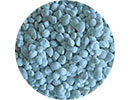
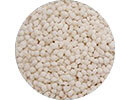
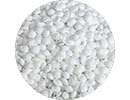
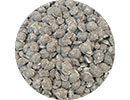
Suitable granular fertilizers: Organic fertilizer granules, compound fertilizers, BB fertilizers, urea, slow-release coated granules, extruded granules, etc. These materials flow well, allowing for gravity feeding and high filling speeds.
Suitable powdered fertilizers: Humic acid powder, powdered chicken manure organic fertilizer, monoammonium phosphate (MAP), potassium sulfate, microbial inoculants, soil conditioners, etc. Powders require a configuration featuring screw feeding, arch-breaking mechanisms, and robust dust extraction.
Suitable small-sized organic raw materials: Fermented/decomposed compost, crushed oil cake fertilizer, microbial fermentation residues, etc.; materials with a particle size of ≤15mm can be processed.

The powdered fertilizer packaging machine is suitable for the automatic packaging of various types of powdered fertilizers.
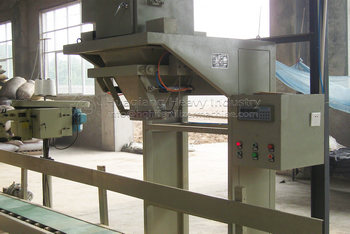
The granular fertilizer packaging machine automatically performs weighing, bagging, sealing, and conveying; it offers precise measurement and high packaging efficiency, making it widely suitable for the quantitative bagging of various types of granular fertilizers.