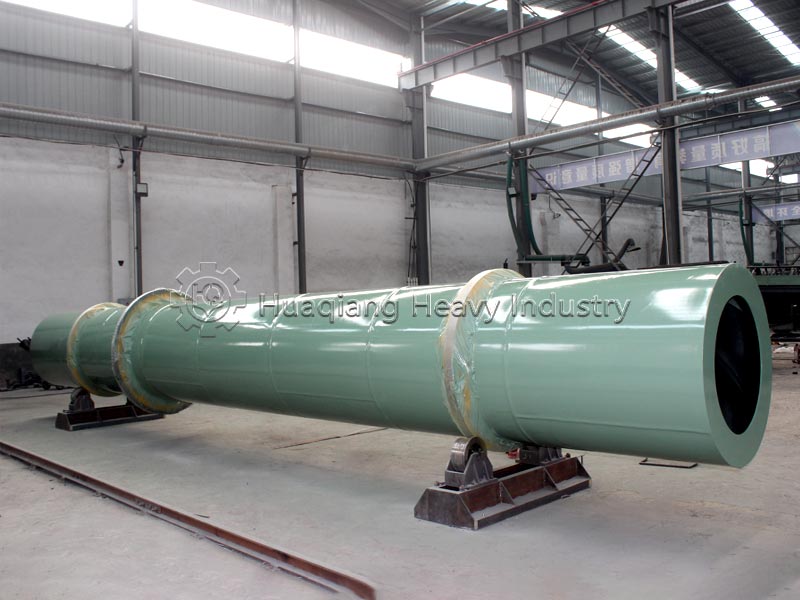
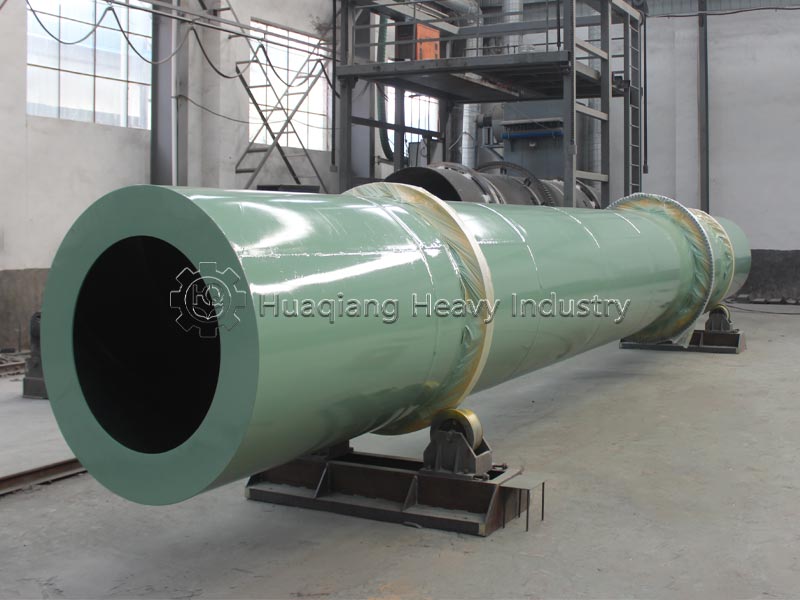
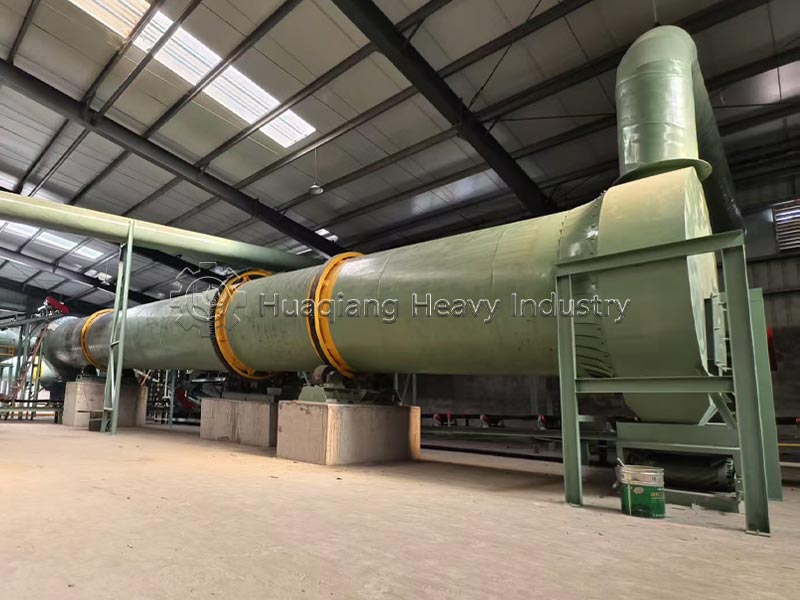
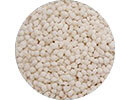
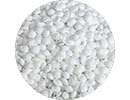
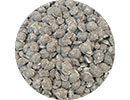
The drum fertilizer dryer is a continuous drying unit primarily used to dry various fertilizer granules, such as organic, compound, blended, and composted fertilizers. In a fertilizer production line, it is typically installed downstream of the granulator to reduce the moisture content of the wet granules—which are initially high in moisture—to levels meeting storage and packaging standards.
The equipment utilizes a rotating drum as the drying chamber; the rotation of the drum and the action of internal lifting flights disperse the material, ensuring thorough contact between the wet product and hot air to facilitate rapid moisture evaporation. With advantages such as high processing capacity, stable operation, and ease of maintenance, the rotary dryer is an ideal choice for large-scale fertilizer production.
The working principle of the drum fertilizer dryer can be summarized as “rotating, scattering, and hot-air drying.”
Wet material is first transported to a hopper by a belt conveyor or bucket elevator, then fed into the dryer's inlet via a feeding chute. The chute is typically designed with a slope steeper than the material's natural angle of repose to ensure smooth flow into the drum.
The dryer consists of a rotating cylindrical drum inclined at a specific angle (usually 2°-5°) relative to the horizontal. Material enters at the higher end (inlet) and gradually moves toward the lower end (discharge end) under the influence of gravity as the drum rotates. Simultaneously, a heat-carrying medium (typically hot air or flue gas) flows through the drum, contacting the material in either a counter-current or co-current flow pattern. Lifting flights (also known as lifters) mounted on the inner wall of the drum continuously lift and scatter the material, creating a uniform curtain of material; this greatly increases the contact area between the material and the hot gas stream, significantly enhancing drying efficiency.
As the wet material moves forward, moisture evaporates through direct or indirect heat exchange with the heat-carrying medium. Upon reaching the discharge end, the material meets the required moisture content specifications and is discharged through the discharge housing. After exiting the dryer, the heat-carrying medium typically passes through a cyclone dust collector to capture entrained material particles; if necessary, it undergoes further treatment in a baghouse or wet scrubber before final emission.
The dominant position of drum fertilizer dryers in the fertilizer production industry is inseparable from their multifaceted performance advantages.
High production capacity and continuous operation. Drum fertilizer dryers enable 24-hour uninterrupted operation with processing capacities ranging from one ton to several tens of tons per hour, meeting the needs of fertilizer production lines of various scales.
Simple structure and stable operation. The equipment features a streamlined design, resulting in a low failure rate, ease of operation, and relatively low maintenance costs.
Wide range of applications and operational flexibility. The equipment can dry materials in various forms, such as powders, granules, strips, and lumps. Production output can fluctuate significantly without compromising the quality of the finished product, offering enterprises greater flexibility in production scheduling.
High thermal efficiency and low energy consumption. The distribution and angle of the lifting flights are scientifically designed to ensure uniform material dispersion within the drum and thorough contact with hot air, resulting in high thermal energy utilization. The unit has low power consumption, keeping operating costs manageable.
Excellent sealing performance and compliance with environmental standards.
In the fertilizer industry, drum fertilizer dryers are primarily used for drying various types of fertilizers, such as organic fertilizer, compound fertilizer, blended fertilizer, and compost.
In the broader chemical industry, this equipment is also used to dry chemical products such as ammonium sulfate, sodium sulfide, ammonium nitrate, urea, oxalic acid, nitrophosphate, and calcium-magnesium-phosphate fertilizer. Additionally, it finds extensive application in the processing of mineral products (e.g., fluorite powder, quartz sand, graphite, bentonite, and clay) and agricultural products (e.g., corn husks, soybean residue, cassava residue, distillers' grains, and animal feed).
| Model | Shell | Prod capacity | Inlet temp ofhot air | Outlet temp ofhot air | Motor | Decelevators model | |||||
| Inner diam | length | inclination | Rotation speed | Model | Power | Rotation Speed | |||||
| mm | mm | 0 | r/min | t/h | °C | °C | |||||
| ZG12120 | 1200 | 12000 | 2-5 | 4.7 | 2-2.5 | 150-250 | 60-80 | Y160M-4 | 7.5 | 1460 | ZQ350 |
| ZG15120 | 1500 | 12000 | 2-5 | 5.0 | 4-6 | 150-250 | 60-80 | Y160L-4 | 15 | 1440 | ZQ400 |
| ZG15150 | 1500 | 15000 | 2-5 | 5.0 | 5-7 | 150-250 | 60-80 | Y160L-4 | 15 | 1440 | ZQ500 |
| ZG18150 | 1800 | 15000 | 2-5 | 3.9 | 7-10 | 150-250 | 60-80 | Y200L1-6 | 18.5 | 970 | ZQ500 |
| ZG20200 | 2000 | 20000 | 2-5 | 3.9 | 8-14 | 150-250 | 60-80 | Y200L2-6 | 22 | 970 | ZQ650 |
| ZG22220 | 2200 | 22000 | 2-5 | 3.2 | 12-16 | 150-250 | 60-80 | Y250M-6 | 37 | 980 | ZQ750 |
| ZG24240 | 2200 | 24000 | 2-5 | 3.0 | 14-19 | 150-250 | 60-80 | Y280S-6 | 45 | 970 | ZQ850 |

A fertilizer coating machine is specialized equipment designed to coat the surface of fertilizer granules.

Drum cooler is a new generation of high efficiency cooling machine developed by our staff for many years of compound fertilizer production experience. It is paired with the rotary drum dryer for cooling the fertilizer particles in a certain temperature