A double screws compost turner is a core piece of equipment in trough-based aerobic fermentation processes. It is specialized machinery used in organic fertilizer production lines to facilitate the decomposition of organic waste. By utilizing two counter-rotating, synchronized auger shafts, the machine performs turning, aeration, mixing, and breaking up of materials. It is widely used for the resource-recovery fermentation of various feedstocks, including livestock and poultry manure, crop straw, sludge, and organic residues.
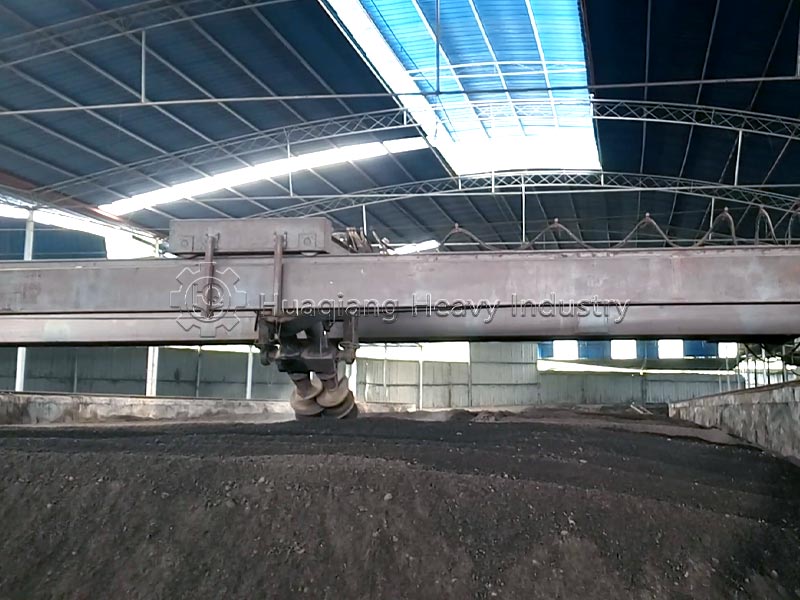
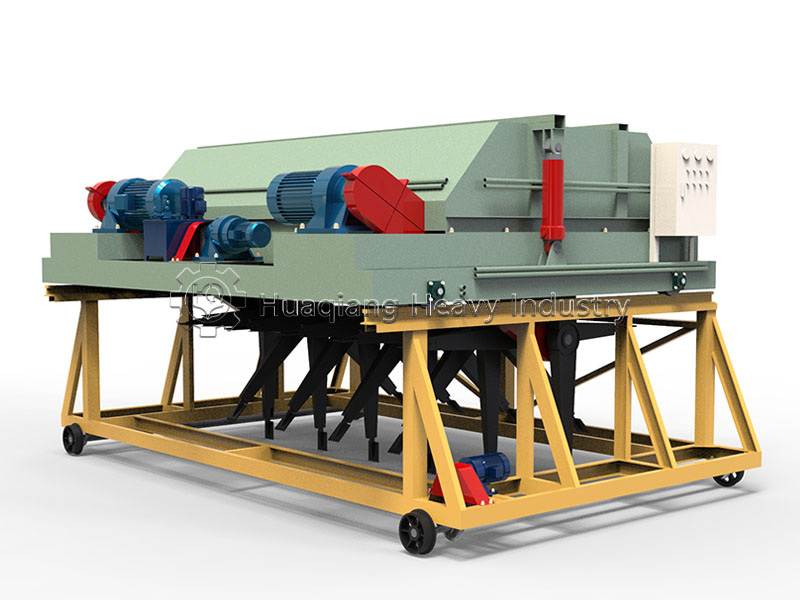
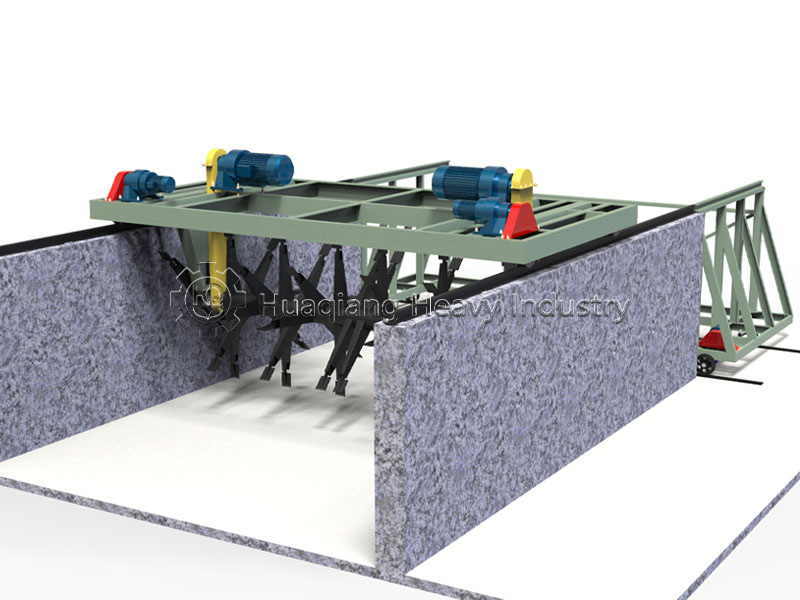
In terms of structure, it primarily consists of a main frame, a rail-mounted travel mechanism, dual auger shafts, wear-resistant auger blades, and drive and hydraulic systems. The equipment is mounted on rails running along both sides of the fermentation trough, allowing it to move back and forth. The auger blades are typically made from wear-resistant alloys, ensuring durability even when in prolonged contact with high-moisture or corrosive materials, thereby maintaining stable operation.
Its operating principle differs from that of standard compost turners. During operation, the two auger shafts rotate in opposite directions; the blades reach to the bottom of the material layer, lifting the compacted, oxygen-deprived material from the bottom. The material is then sheared, broken up, and dispersed in a crisscross pattern, effectively swapping the positions of the bottom and top layers. Material from the bottom is brought to the surface for cooling and aeration, while surface material is moved into the interior of the pile to continue the fermentation process. This action effectively breaks up compaction and increases the permeability of the pile, creating an ideal environment for the proliferation of aerobic microorganisms, accelerating decomposition, and reducing the accumulation of odors.
Compared to single-auger or large wheel compost turners, the double screws compost turner offers greater working depth, more uniform mixing, fewer "dead zones" (untreated areas) within the fermentation mass, and superior adaptability for processing fibrous materials. It integrates multiple functions—turning, crushing, and moisture adjustment—eliminating the need for complex raw material pre-treatment. With a controllable fermentation cycle, it is well-suited for large and medium-sized organic fertilizer plants, facilities for the harmless treatment of livestock and poultry manure, and municipal sludge disposal projects.
In practical production, the double screws compost turner can be integrated with fermentation facilities and temperature control systems to form a complete trough-based fermentation system, supporting either continuous or batch-based production. Through repeated turning and aeration, organic waste gradually decomposes and stabilizes, ultimately being processed into commercial organic fertilizer. This process not only addresses the challenge of pollution from solid waste generated in livestock farming but also enables the recycling and reuse of such waste. As the organic fertilizer industry continues to develop, the double screws compost turner—characterized by its deep-turning capability, stable operation, and high level of automation—has emerged as one of the primary pieces of equipment used in trough-based composting processes.